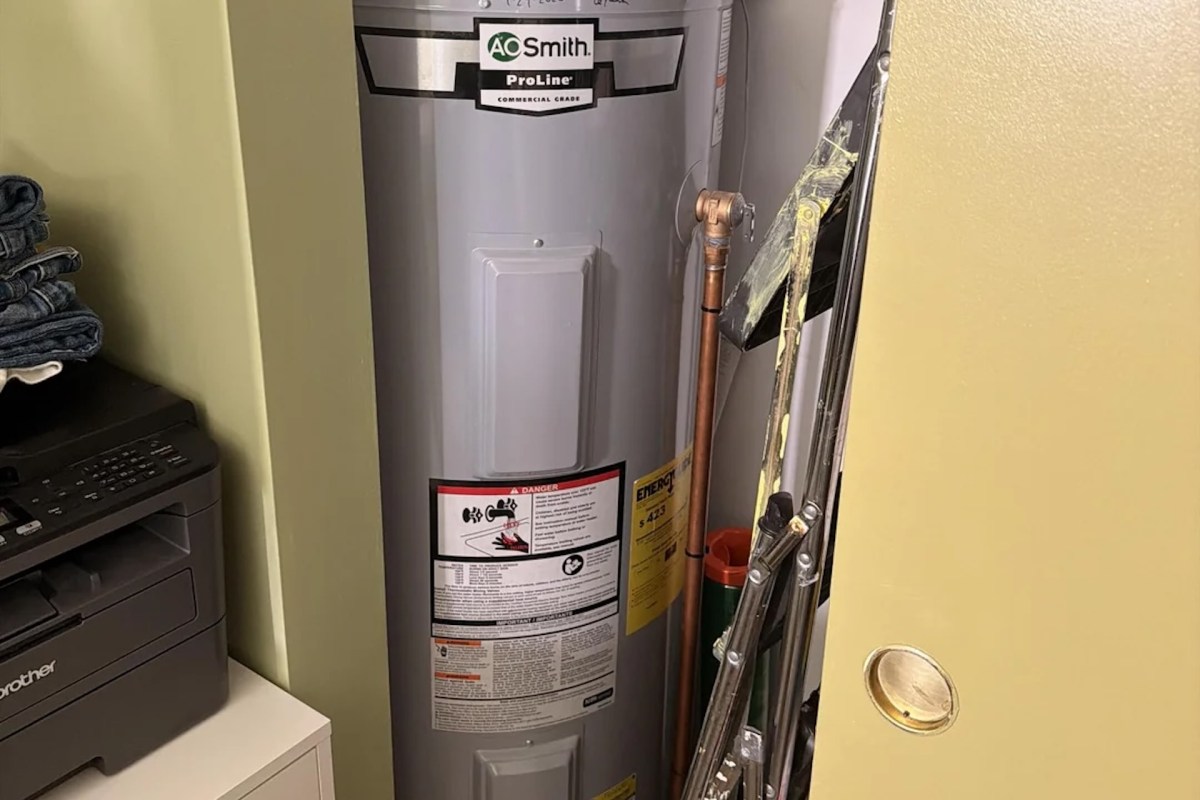
For households dealing with sky-high electricity rates, a heat pump water heater can seem like an easy way to cut monthly bills. But as one New England condo owner found out, the savings only matter if the unit can actually fit the space.
Here's what to know
In a Reddit post, a third-floor condo resident in New England said their home uses electricity for heat, their power rate is $0.36 per kilowatt-hour, and a $750 state rebate would bring the price of a heat pump water heater to about $800.
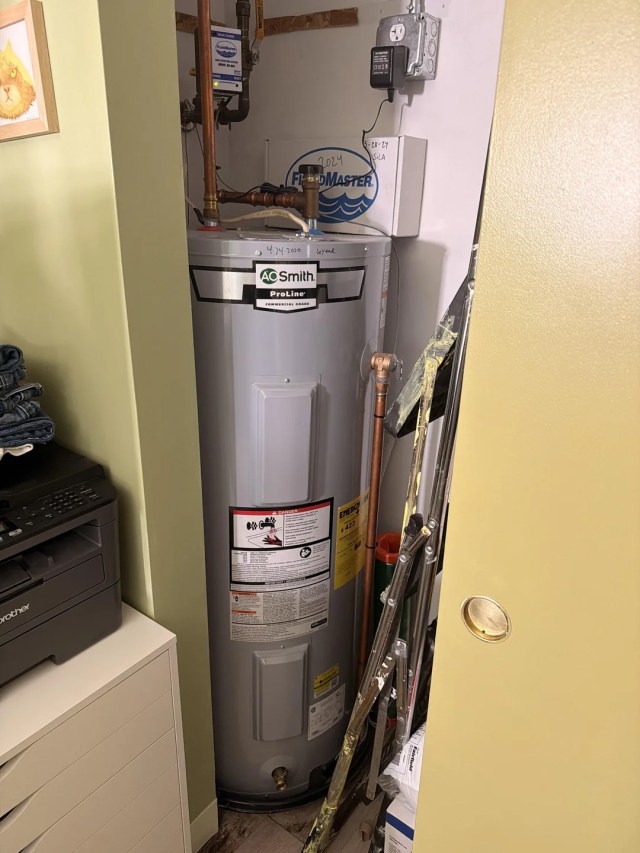
What gave the owner pause was the layout around the current unit, not the sticker price. Their 37-gallon electric water heater is squeezed into a closet with vertical room but almost no side clearance.
There is no nearby place to drain condensate, and the closet sits next to the wife's desk, with only a sliding door between her workspace and the heater.
Heat pump water heaters do not work like standard electric resistance models. While they typically use less electricity and can help lower utility bills, they also need surrounding air to operate and produce condensate that must be drained away.
In a tight closet, those requirements can turn an upgrade into a design problem.
Commenters on the thread quickly zeroed in on the space limitations.
One wrote, "In all the product manuals it says they need like 10" clearance around the entirety of the unit."
Save $10,000 on solar panels without even sharing your phone number Want to go solar but not sure who to trust? EnergySage has your back with free and transparent quotes from fully vetted providers in your area. To get started, just answer a few questions about your home — no phone number required. Within a day or two, EnergySage will email you the best options for your needs, and their expert advisers can help you compare quotes and pick a winner. Solar panels can save you more than $50k over their 25-year lifespan, and EnergySage can help you save as much as $10k on installation. Which begs the question — isn't that worth an email or two? |

Another was even more direct: "Probably not in that spot , to confined."
More background
Heat pump water heaters can be a good option in homes with sufficient ambient air volume, a workable condensate drainage path, and a location where cooling and operating noise will not be disruptive.
For households paying high electric rates, the benefits can be significant, especially since conventional electric water heaters are often among the biggest energy users in a home.
Still, the drawbacks become more obvious in colder climates and smaller spaces. Because these systems pull heat from the surrounding air, they can make a compact room feel cooler while running.
In a condo closet next to a home office, that effect could be much more noticeable than in a basement or garage.
Another complication was the building policy: the owner said their HOA requires water heaters to be replaced every six years to reduce flood risk.
What can be done?
Projected savings depend on the installation requirements. Manufacturer clearance rules, a realistic condensate drain solution, and sufficient air volume in the room all affect whether the system runs efficiently.
It can also help to compare newer options, including smart designs. For example, Cala makes customizable smart heat pump water heaters that help homeowners reduce their energy bills by heating water only when needed.
Condo owners may want to get an installer's opinion on whether a unit from Cala or another manufacturer can be adapted to their building before making the investment.
After weighing the feedback, the Redditor replied, "Yeah. That kills the idea right there."
Where can I learn more?
For condo owners considering a heat pump water heater, rebates and electric rates are only part of the equation. The articles below look at the savings these systems can deliver, the installation hurdles that still arise, and how they perform for households in colder climates.
• In Australia, heat pump water heaters cut household power use, even if placement still matters.
• Across the US, a retired plumber says the word is getting out on efficient tanks.
They all point back to the same issue the condo owner ran into: A heat pump water heater can save money, but only if the setup makes sense.
If you're pricing out a replacement, that added context can help you tell the difference between a good deal on paper and a workable upgrade at home.

Get TCD's free newsletters for easy tips, smart advice, and a chance to earn $5,000 toward home upgrades. To see more stories like this one, change your Google preferences here.