


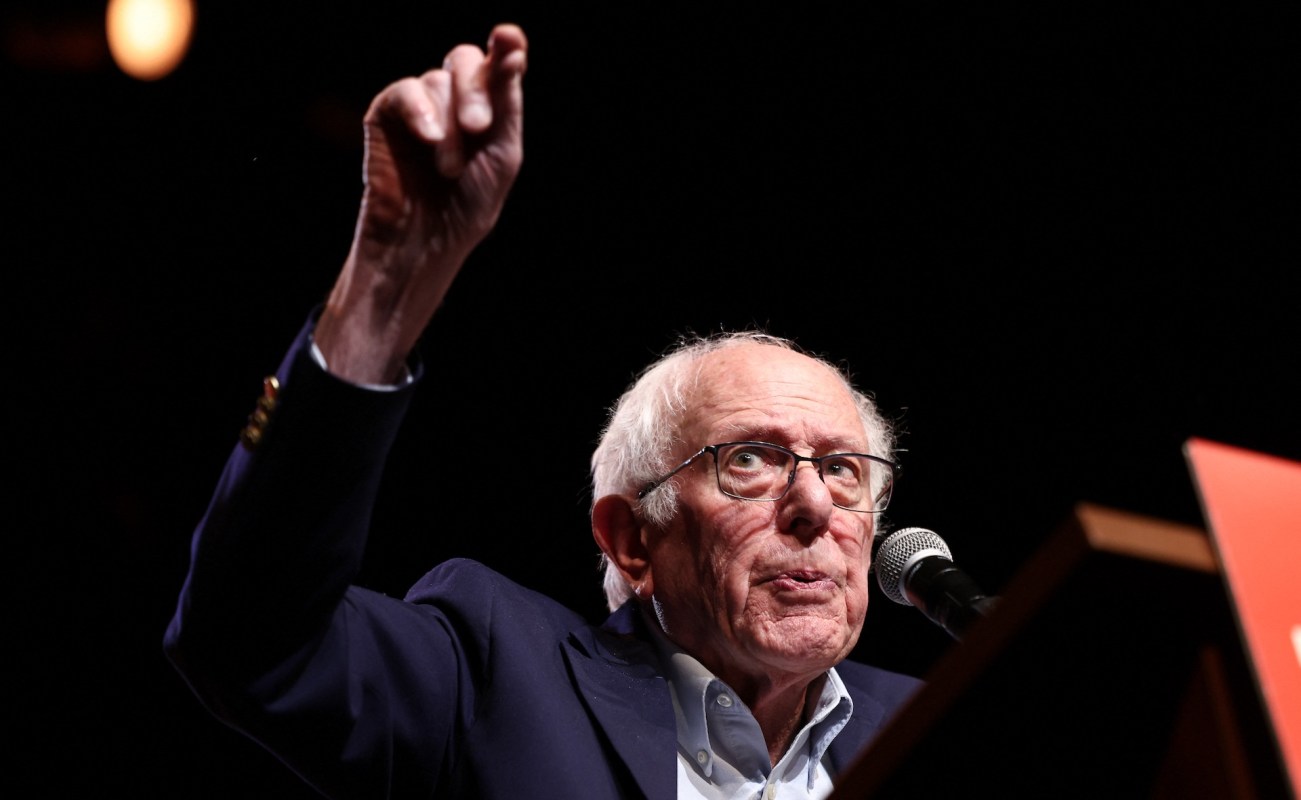
With AI-equipped camera systems spreading through American communities, Sen. Bernie Sanders (I-Vermont) wants federal legislation to curb their expansion, echoing civil liberties advocates who argue that neighborhoods are being subjected to constant monitoring, according to Truthout.
The company says its surveillance cameras are operating in more than 6,000 communities nationwide, a scale that has intensified fears about privacy, government power, and the money to be made from tracking people's movements.
Here's what to know
Sanders said Flock's rapid growth is helping create a far more intrusive surveillance landscape.
The Senator from Vermont warned that many Americans may already be watched by AI without realizing it and said he plans to introduce legislation to "stop Flock and AI mass surveillance."
Police departments use Flock's system as a searchable record of passing vehicles.
The company describes the cameras as automated license plate readers that capture details such as a car's make, model, and plate so officers can review that information during investigations.
TCD Picks » Quince Spotlight
💡These best-sellers from Quince deliver affordable, sustainable luxury for all




Opponents say that explanation elides the breadth of the technology's uses.
"Newer Flock cameras do not just record vehicles. They record people," Sanders wrote. He also warned that, when paired with other databases, the system can show who a person is, where they are headed, and why.
The concerns are not confined to one side of the political aisle.
Truthout noted that Sen. Josh Hawley (R-Missouri), who leads the Senate Judiciary Subcommittee on Crime and Counterterrorism, also opened an inquiry into how much data Flock is collecting.
More background
To critics, the impact is intensely personal: ordinary activities like taking children to school, visiting a doctor, going on a date, or running errands can become part of a searchable record.
Sanders put that concern in viscerally direct terms.
"If you are dropping your kids off at school, Flock knows. If you are going to a doctor, Flock knows. If you are going out on a date, Flock knows," he said.
Flock and its supporters have pushed back on those claims. The company says it "only captures vehicles," not biometric information on individuals, and CEO Garrett Langley has said the cameras "do not track people's every movement."
Still, critics cautioned the public about misuse and errors.
Truthout cited cases in which law enforcement agents reportedly used Flock data to stalk romantic interests, along with incidents in which people were wrongly detained or jailed.
According to the ACLU, Flock's technology also misidentifies a license plate's state 10% of the time.
What's being done?
Sanders' proposed legislation could become part of a broader push to limit AI surveillance tools before they become even more deeply embedded in public life.
As Truthout observed, since the start of 2025, over 100 cities and municipalities either canceled or chose not to renew agreements with Flock and other license plate reader companies.
Opponents of tighter restrictions will likely argue that automated plate readers can help solve crimes.
The growing pushback suggests many communities want safety tools that do not come at the cost of constant monitoring.
"We cannot allow America to become a surveillance state where a handful of AI oligarchs profit by giving the government the power to track our every movement," Sanders explained.
Where can I learn more?
Sanders' pledge is part of a much bigger argument over how far AI should be allowed into public life.
The same questions are coming up in Congress, statehouses, national security debates, and local fights over technologies that collect data at scale.
• In Congress, senators are pushing limits on military AI used to spy on Americans.
• In Washington, lawmakers rejected broader AI rules even as warnings grew over public harms.
• Across the U.S., backlash over AI growth intensified as security and resource fears spread.
• In Pennsylvania, lawmakers moved to ban AI surveillance pricing that could charge consumers differently.
Across these debates, one thing is clear: questions about AI oversight now reach well beyond any one company or camera network.
That helps put Sanders' proposal in the context of a broader push to set limits before surveillance systems become even harder to unwind.

Get TCD's free newsletters for easy tips, smart advice, and a chance to earn $5,000 toward home upgrades. To see more stories like this one, change your Google preferences here.






