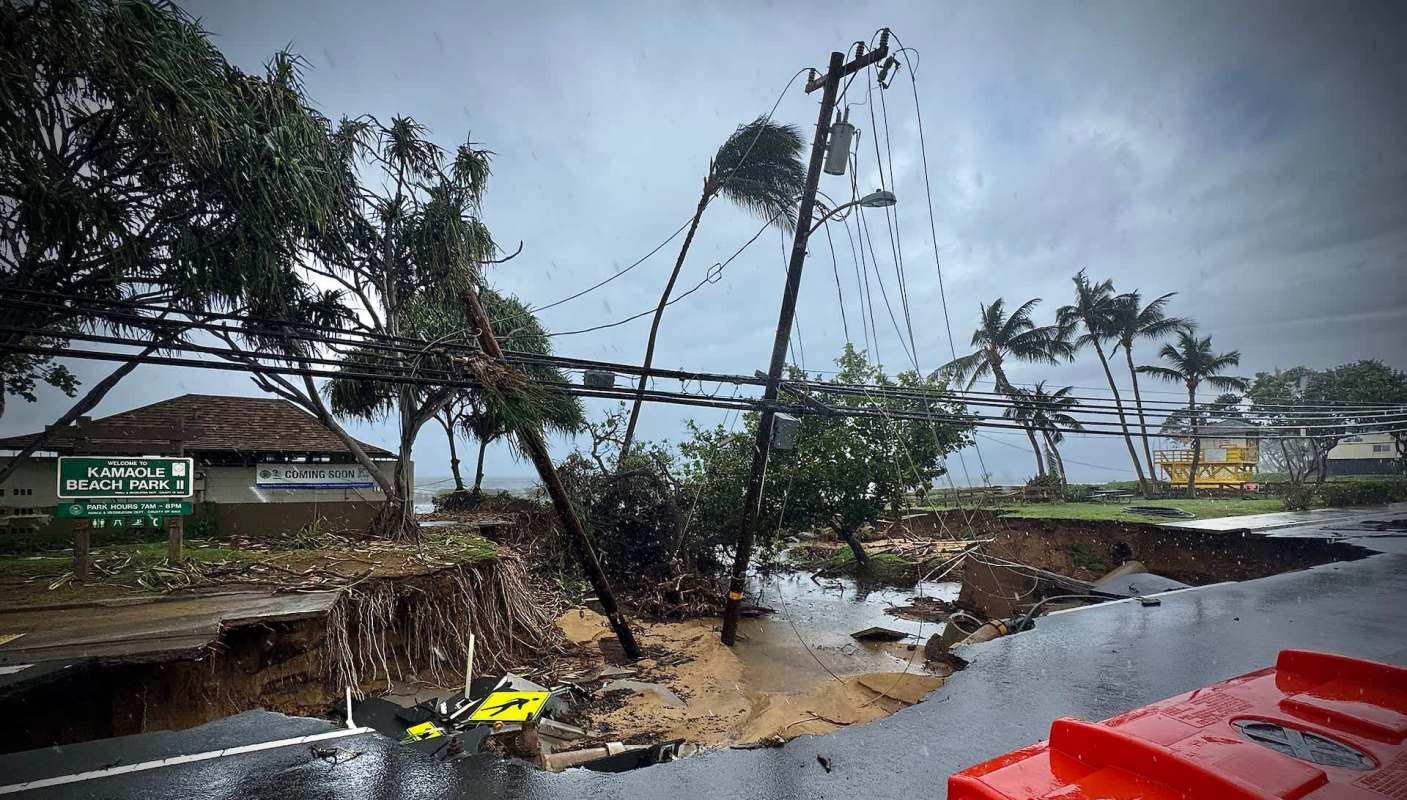
Hawaiʻi Island is facing a dangerous overlap of crises as communities continue recovering from Hurricane Lala while bracing for the possibility of more severe weather before repairs are complete.
For many residents in Kona and Kaʻū, the most immediate concern is the loss of backup power, as thousands of people are still dealing with outages and damaged water systems.
Here's what to know
According to Hawaii News Now, State Rep. Jeanne Kapela, D-South Kona, said Hawaiʻi Island currently has no generators available as residents and officials prepare for another round of difficult conditions. She said, "We have no generators available on the island at this point, so unless people are donating their personal generators or we're shipping them in, our community is really trapped."
Donations and supply distribution are being handled through several community sites. Tradewinds Hawaii, beside the Kona Costco, has been distributing water and other supplies to residents and animals in hard-hit parts of Kaʻū, while the Hawaiʻi Island Humane Society and Kona Dance are accepting donations during business hours.
Damage to water systems is another major problem. Many households depend on catchment setups for drinking water, regular household use, and toilets, and Pacific Blue Catchment owner Corey Yeaton said the business is dealing with a few hundred systems damaged by Hurricane Lala.
As of 8:30 a.m. on August 21, Hawaiian Electric said power had been restored to about 83% of affected customers on Hawaiʻi Island.
TCD Picks » Quince Spotlight
💡These best-sellers from Quince deliver affordable, sustainable luxury for all




More background
Losing power during a storm affects far more than lights and appliances. In places where residents depend on pumps and catchment tanks, outages can also cut off access to water, making it harder to drink safely, clean up, and maintain basic sanitation.
Repair work can become much harder when roads are blocked and supplies are scarce. In Hōlualoa, for example, a fallen tree struck the catchment system of one home.
Worsening extreme weather disasters threaten lives and livelihoods by damaging homes, disrupting access to clean water and electricity, and slowing business activity. They can also put community safety at risk by blocking roads for emergency crews and creating new hazards for residents trying to clear debris or protect their property.
The fallout is economic as well as physical. Families may have to replace tanks, pumps, and food lost during outages, while local businesses are stretched thin as they try to restore services at scale.
What's being done?
To prevent supply points from becoming overwhelmed, officials are trying to coordinate the distribution of relief. Kapela said state and county teams are focused on supporting residents, clearing roads, and helping communities prepare with tarps and generators where possible.
Community groups are also acting as local collection and pickup points for essential items, including supplies for animals in affected areas.
Even as utility crews continue restoration work and catchment companies handle widespread damage, Yeaton said some residents are already thinking more about prevention, including taking down vulnerable trees before another storm arrives.
At the household level, residents are trying to store what they can, protect water access, and gather tools that may help if conditions worsen again before full recovery is possible.
Where can I learn more?
What's happening on Hawaiʻi Island reflects a wider pattern, from wildfire prevention efforts in Hawaii to major storms elsewhere that leave communities without power.
Hawaiian Electric has ramped up seasonal shutoffs as drought raises wildfire risks across Hawaii. On Kauai specifically, evacuation orders spread quickly as wildfire threatened hundreds of homes.
Across the US, extreme heat and storms are driving longer outages in vulnerable communities. From Florida to Maine, an unusually intense storm knocked out power and triggered flooding, and in Washington state, crews struggled to reach damaged lines.
Kona resident Kimberly Evans summed it up, saying, "I feel like, as prepared as we thought we were, we are not prepared enough."

Get TCD's free newsletters for easy tips, smart advice, and a chance to earn $5,000 toward home upgrades. To see more stories like this one, change your Google preferences here.