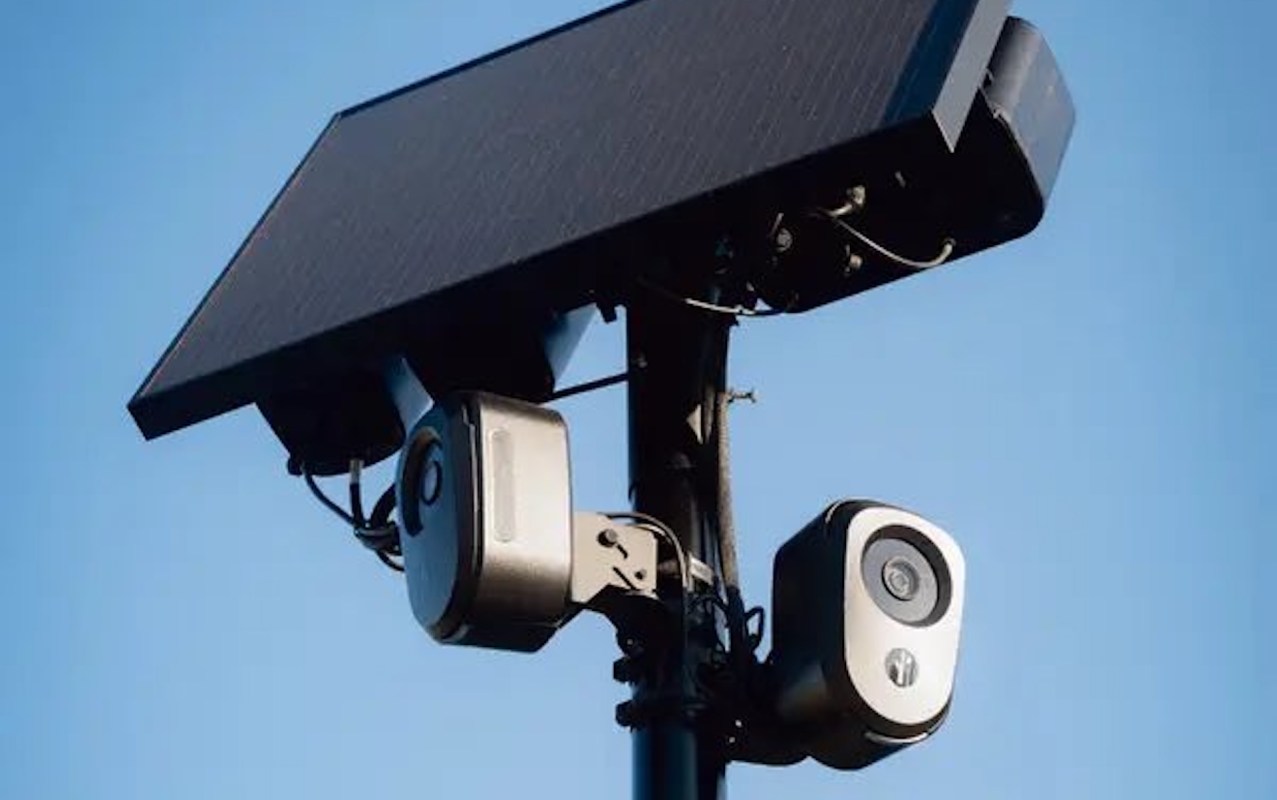
Australians reacting to a Reddit discussion about U.S. surveillance company Flock Safety raised a pointed concern.
Once police begin relying on AI to monitor roads, neighborhoods, and daily routines, ordinary people can be the first to lose their privacy as a tool marketed as public safety infrastructure appears to be expanding into something much broader.
Here's what to know
Attention spiked after a post on r/australia linked users to a WIRED piece about Flock Safety.
In that reporting, the company's camera network was said to collect roughly 20 billion license plate reads each month across more than 6,000 communities.
New website "Have I Been Flocked" lets drivers check whether law enforcement has searched their license plate in Flock camera databases. pic.twitter.com/GkPVHYId9t
— SAY CHEESE! 👄🧀 (@SaycheeseDGTL) August 16, 2026
According to WIRED, Flock's AI product, OS Investigate, does more than just check whether a car is connected to an alleged crime.
The system reportedly offers 69 prewritten prompts and 45 tools, allowing officers to search by travel behavior, repeated presence in certain areas, and physical descriptions, and to connect plate-reader results to names, home addresses, relatives, and other records.
TCD Picks » Quince Spotlight
💡These best-sellers from Quince deliver affordable, sustainable luxury for all




Flock has long said its technology "cannot recognize, identify, or track individuals," but the capabilities described by WIRED appear far broader.
Jay Stanley, a senior policy analyst with the ACLU's Speech, Privacy, and Technology Project, spoke to WIRED.
"But we're increasingly seeing the aggressive deployment of AI by Flock—and in some ways, like China, very little space between what can be done and what is being done," he said.
WIRED also reviewed examples of specific prompts.
One was reportedly built to identify possible "witnesses" by finding the cars most often seen in a neighborhood, while another could reportedly identify a vehicle's "top three associates" by tracking which other cars repeatedly appeared nearby.
More background
Some of the searches described reportedly do not start with a plate number, a named suspect, or even a defined crime.
Instead, WIRED noted that an officer could putatively begin with a place, a time range, and an assumed travel pattern — for example, vehicles making stops at multiple banks, retail locations, or gas stations.
The concern is that a search built this way can absorb routine behavior.
A person simply making normal trips across town could still end up flagged, mapped, and cross-referenced through police files and commercial identity databases.
Where can I learn more?
Questions about Flock's reach and search tools are part of a much bigger shift, as police departments bring camera-based enforcement deeper into everyday public life.
The stories below illustrate how quickly surveillance can move beyond a specific investigation and into routine monitoring, whether in Ohio or Alabama.
• In Toledo, police cameras became a friend to officers during a disputed traffic stop.
• In Russellville, Alabama, officers used strategically placed cameras to turn dumping into arrests.
• Elsewhere, police relied on surveillance footage to catch an offender who tried to lie.
That broader trend matters because once camera systems become accepted as the fix for one problem, their use can expand fast.
The same boundary issue sits at the heart of concerns over AI-powered plate-reader networks.

Get TCD's free newsletters for easy tips, smart advice, and a chance to earn $5,000 toward home upgrades. To see more stories like this one, change your Google preferences here.