


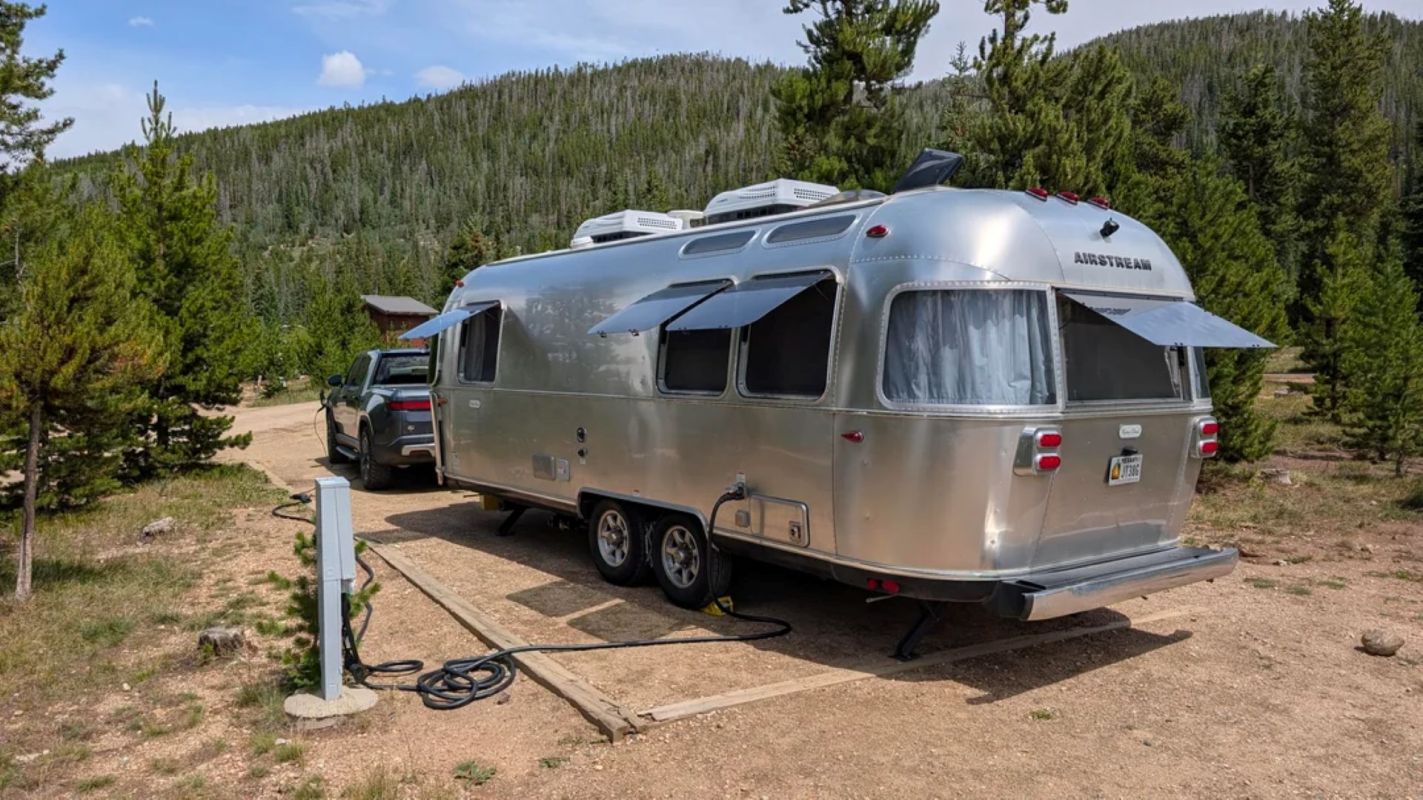
A mountain towing trip in Colorado is giving would-be electric truck buyers a real-world look at one of their biggest questions: Can an EV handle a full-size travel trailer at altitude without turning every leg into a charging emergency?
One Rivian owner's answer appears to be yes — even with a 25-foot Airstream in tow and a route that topped 12,200 feet.
Here's what to know
In a post on Reddit's r/Rivian, the original poster described taking a rented 25-foot Airstream Flying Cloud with a first-generation Rivian R1T Quad from Denver to Fort Collins and then farther up into the mountains.
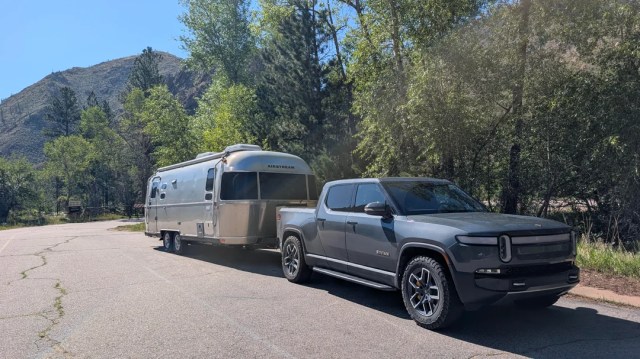
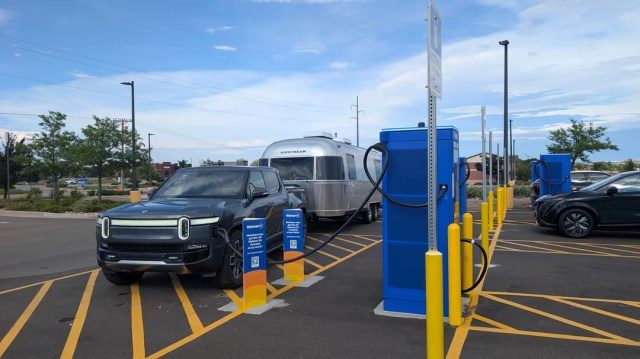
Aside from one DC fast-charging session, the rest of the trip's charging came from campground hookups.
After driving Old Fall River Road in Rocky Mountain National Park and Rollins Pass Road, the owner summed up the truck's performance this way: "Truck did fantastic on all this."
According to one commenter, a stock 25-foot Flying Cloud typically carries "1000 to 1100 pounds" of tongue weight.
TCD Picks » Quince Spotlight
💡These best-sellers from Quince deliver affordable, sustainable luxury for all




On the toughest day of towing, the truck used about 70% of its battery over 95 miles while climbing 4,000 feet.
More background
Elsewhere in the thread, one towing report cited "1.3 mile per kWh" with a smaller 4,500-pound Airstream Bambi.
Another commenter was in the process of acquiring an Airstream, admitted they were concerned about their Rivian's "real-life range" while towing, and asked what to expect.
"Probably half your normal range. It's been shown that regardless of length or weight of the trailer, the major impact to range is frontal area of the trailer," the original poster replied.
In other words, shape can matter nearly as much as weight, especially at highway speeds.
Efficiency changed dramatically with elevation.
One commenter said their R1T fell to about 0.9 miles per kWh on a 4,000-foot climb, while the original poster reported roughly 20% energy recovery through regenerative braking.
EV owners may be able to charge at campsites and avoid some separate fueling costs altogether, though exact savings still depend on campground policies and electricity rates.
What can be done?
Charging access mattered as much as battery size on this trip.
While campground charging handled nearly all of this journey, the original poster said not every RV park is willing to let EVs plug in.
"Yes, but the campground needs to be OK with it. Some aren't, because their electrical systems are not built for high amp continuous usage."
"The experience was essentially flawless, as far as the hardware was concerned," the original poster wrote. "The people and the dog had a few rough spots ;)"
Where can I learn more?
Towing range is only part of the EV ownership equation.
These stories look at what happens after that, from Ford turning a pickup into backup power to homeowners using solar to cover charging with less grid dependence.
• Ford's F-150 Lightning can keep a house running during outages through new energy tech.
• One homeowner used 900W of portable panels to avoid a costly upgrade for EV charging.
• Another homeowner added an EV charger without a battery and said the solar still worked.
They round out the picture of electric driving once the towing is done, showing how owners charge up and make use of that power at home.
Infrastructure, energy costs, and trip planning all shape the EV experience, so those details matter too.

Get TCD's free newsletters for easy tips, smart advice, and a chance to earn $5,000 toward home upgrades. To see more stories like this one, change your Google preferences here.






