


The U.S. Food and Drug Administration has alerted the public to multiple recalls of injectable medications due to possible contamination in products sent to health care providers and distributors across over a dozen states.
Here's what to know
The FDA issued its first alerts in the matter on August 25, after Baxter International Inc. voluntarily recalled lots of dextrose injection and anticoagulant sodium citrate solution. The medications are used to provide nutrition and reduce blood clotting, respectively.
In this case, the affected lots of dextrose may have been contaminated by stainless steel particles, while the anticoagulant may have been contaminated by fiberglass.
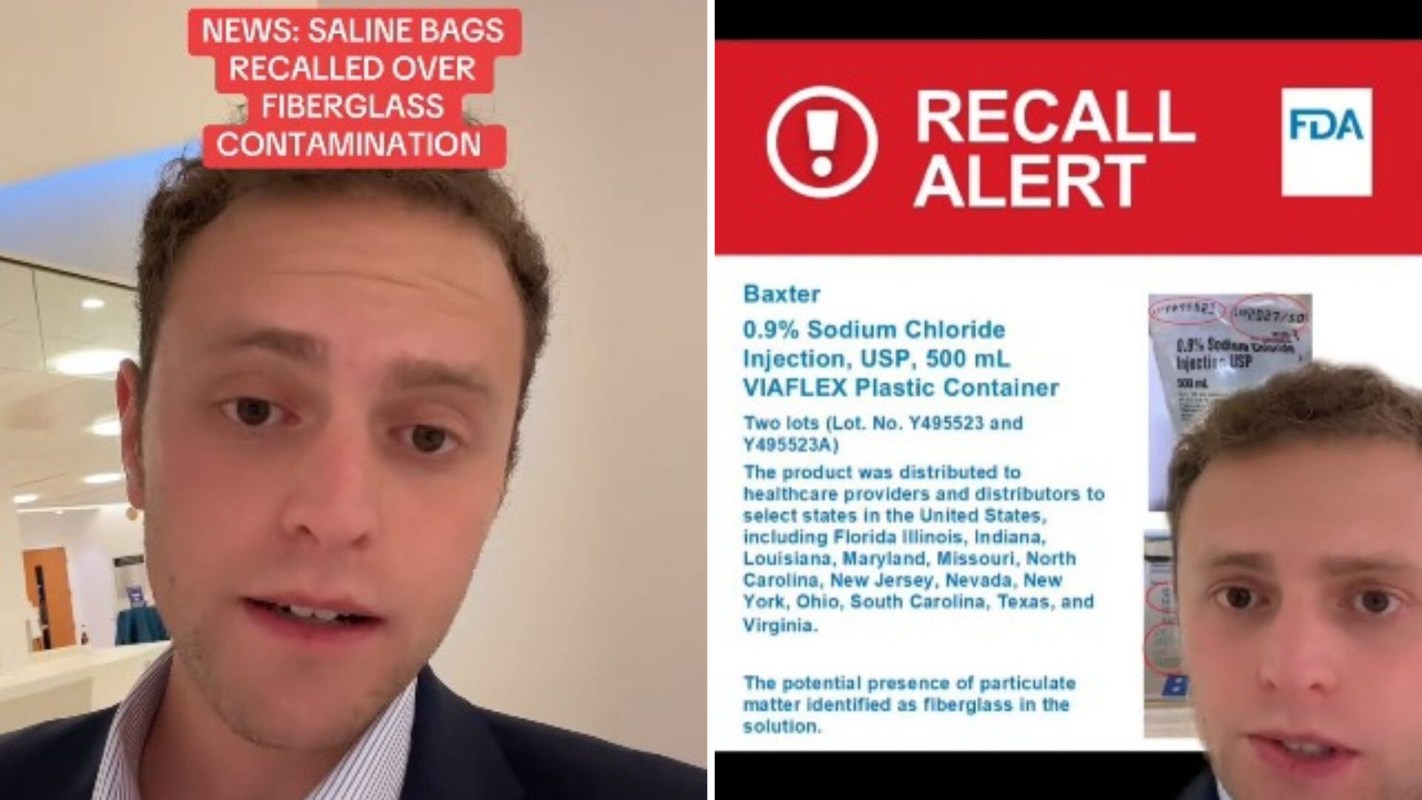
As journalist and content creator Aaron Parnas (@Aaron-Parnas) later described in a short video posted on social media, a third recall of saline solution was also issued across 14 states due to potential fiberglass contamination.
@aaronparnas1 #greenscreen ♬ original sound - Aaron Parnas
Saline is used in many routine medical settings for hydration, medication delivery, and other forms of patient care. The states affected by the saline recall include: Florida, Illinois, Indiana, Louisiana, Maryland, Missouri, North Carolina, New Jersey, Nevada, New York, Ohio, South Carolina, Texas, and Virginia.
Recalls like these are intended to prevent the use of questionable products while health systems identify and remove any affected inventory. Hospitals, clinics, and distributors in the states affected by the recall may need to verify their stock, isolate recalled bags, and follow instructions issued by regulators or suppliers.
TCD Picks » Quince Spotlight
💡These best-sellers from Quince deliver affordable, sustainable luxury for all




More background
Even a small amount of foreign material in an injectable medication may pose a serious concern because the product is intended to enter the body.
A recall does not automatically mean every facility in an affected state used the product or that every patient was exposed. It does mean the issue is serious enough that institutions need to trace distribution and take effective precautions.
What's being done?
The main response to this kind of recall happens at the institutional level. Regulators publish the recall notice, distributors and providers determine whether they received affected stock, and medical facilities pull any products included in the recall from circulation while reviewing next steps.
If you or a family member are receiving infusion treatment or hospital care in one of the listed states and have questions, ask your provider whether the facility has reviewed the relevant recalls and whether any affected lots were in its inventory.

Get TCD's free newsletters for easy tips, smart advice, and a chance to earn $5,000 toward home upgrades. To see more stories like this one, change your Google preferences here.






