


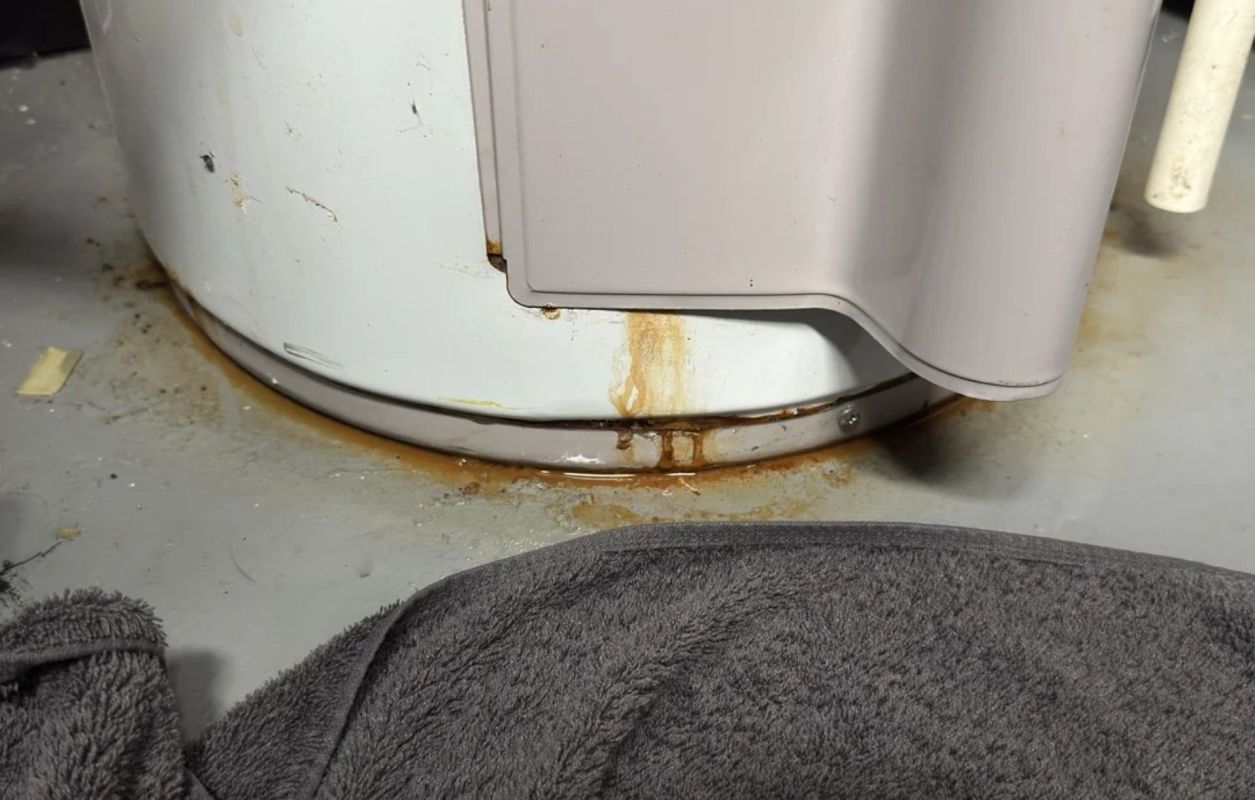
A homeowner who posted on Reddit about water slowly seeping from the bottom of a rusting water heater got a clear answer from commenters: A leak at the base of the tank usually means the unit has reached the end of its life and should be replaced before it causes more damage.
Here's what to know
A homeowner asked Reddit for help after posting, "Water seems to be slowly seeping out from the bottom of our water heater, with what seems like it might be rust. Is she a goner?"
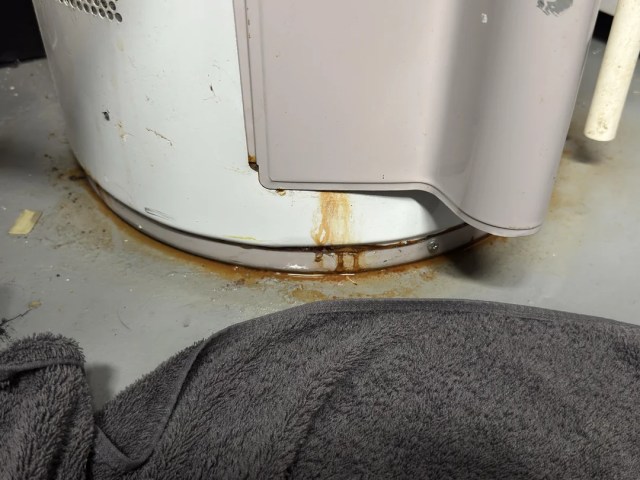
In the discussion, the answer was almost uniformly yes.
One commenter replied, "Yep, she's gone."
Another warned, "This is not going to get better. A leak in your water heater is a warning that you need to get it replaced now. It's only going to leak more and more, or have a catastrophic leak and cause damage to your house."
When seepage comes from the tank's base rather than a valve or connection, the problem is often inside the unit. The inner tank may have corroded through, and once that happens, repair is typically no longer the answer.
Before purchasing a new heater, some commenters suggested checking whether the old one is still covered.
One Redditor shared, "I had a water heater replaced for free on warranty after 15 years. I had to cover the labor."
Save $10,000 on solar panels without even sharing your phone number Want to go solar but not sure who to trust? EnergySage has your back with free and transparent quotes from fully vetted providers in your area. To get started, just answer a few questions about your home — no phone number required. Within a day or two, EnergySage will email you the best options for your needs, and their expert advisers can help you compare quotes and pick a winner. Solar panels can save you more than $50k over their 25-year lifespan, and EnergySage can help you save as much as $10k on installation. Which begs the question — isn't that worth an email or two? |

More background
The concern is not just losing hot water. A minor leak can become a major rupture that soaks floors, walls, and anything nearby.
As one commenter put it, homeowners should replace it "before your basement becomes a pond."
Rust around the bottom is another troubling sign. It can point to internal corrosion, not just surface wear. Traditional tank-style heaters store hot water continuously, and over time, that constant exposure to water and heat can wear down the tank lining and other components.
For households already facing a replacement, efficiency becomes part of the decision. Water heating is one of the bigger energy demands in many homes, so choosing a more efficient system can lead to lower utility bills month after month.
What can be done?
A water heater that is leaking from the bottom should be replaced quickly rather than left to fail completely. Before buying a new one, check the unit's age, look up the model's warranty status, and ask an installer to confirm the leak is coming from the tank itself, not a fitting above it.
For homeowners replacing an electric unit, Cala is one company worth knowing about.
A forced replacement is never ideal, but it can be a good time to compare operating costs over time instead of focusing only on the upfront price.
Commenters kept returning to the same bottom line.
As one put it: "The good news is you discovered this now before it got worse."
Another added the clearest warning of all: "Replace it ASAP."
Where can I learn more?
The Reddit thread raised two practical questions: how to tell when rust and seepage mean a tank is finished, and what to replace it with once that point arrives.
These stories cover both sides, from warning signs that pushed homeowners toward a new unit to maintenance habits and heat pump upgrades that can help cut future energy bills.
• A homeowner with a corroded 10-year-old unit weighed replacement options at home.
• A home expert showed how to keep your water heater running longer.
• Many households found heat pump water heater upgrades cut bills after old tanks failed.
If your water heater is leaking and rusting at the base, these pieces can help you size up the problem and think through what comes next. They give a better sense of when replacement is urgent, what warranty questions are worth asking, and how efficiency could shape your costs over time.

Get TCD's free newsletters for easy tips, smart advice, and a chance to earn $5,000 toward home upgrades. To see more stories like this one, change your Google preferences here.






