


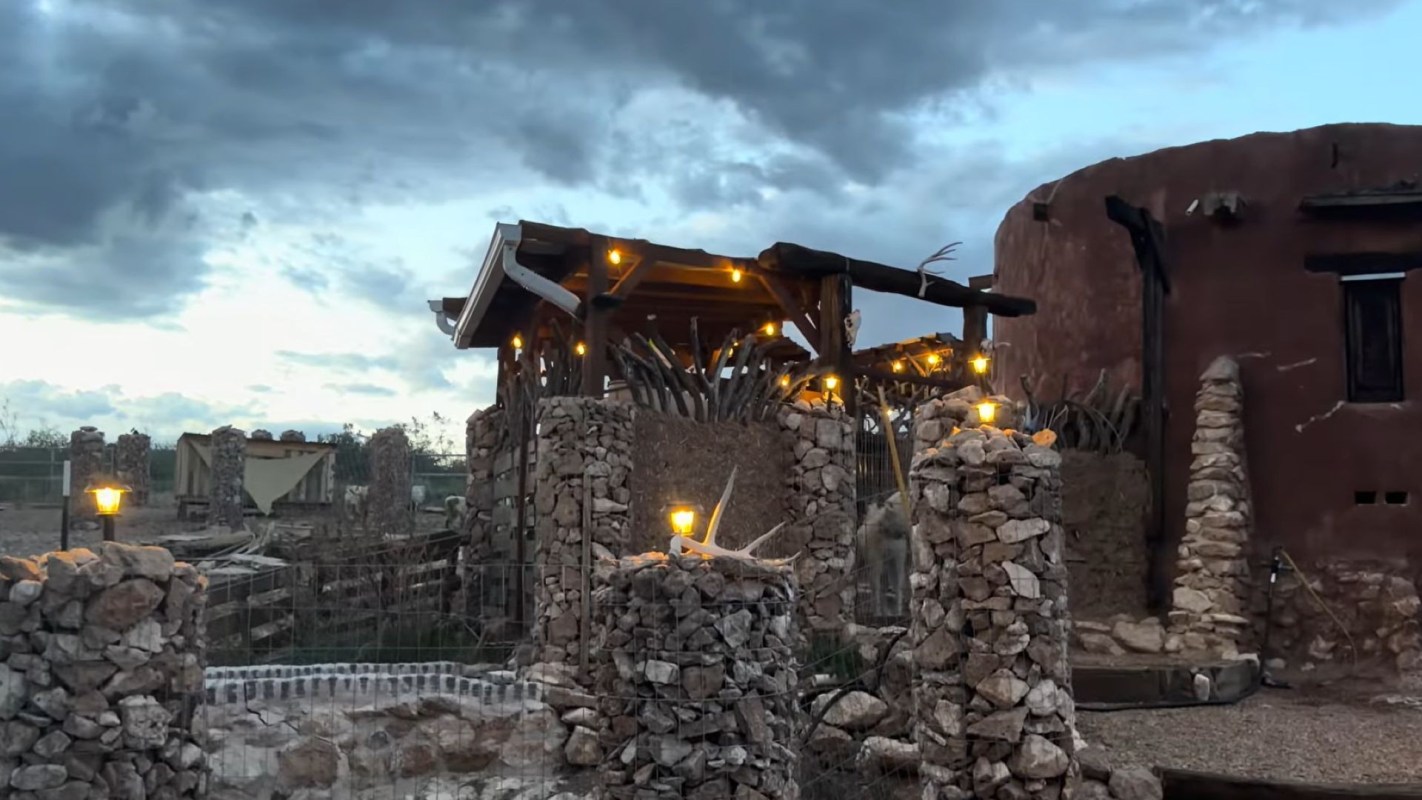
On a 36-acre off-grid homestead in southeast Arizona, every light has to earn its keep.
For content creators Douglas and Keri of Two Rebels Off Grid (@tworebelsoffgrid), that means lighting paths, gates, and animal areas without drowning out the stars overhead — or missing a rattlesnake underfoot.
Here's what to know
In a YouTube video, Douglas and Keri explain that they light their property with solar fixtures, rechargeable headlamps, battery-powered lights, and electricity from their main solar system, not the grid.
Where they live heavily influences those choices. Douglas and Keri said Cochise County is known for dark skies, and they want lighting that supports chores and safety while preserving "one of the very best parts of why we live here, which is the night sky."
They also said, citing Explore Cochise, that Arizona has more certified Dark Sky Places than any other state in the world.
Because of that approach, they focus their lighting on the areas that matter most at night, including sheds, pathways, gates, and animal spaces. Those are also the places where predator checks and rattlesnake awareness become especially important.
TCD Picks » Quince Spotlight
💡These best-sellers from Quince deliver affordable, sustainable luxury for all




They added that Arizona's heat, dust, wind, and monsoon storms can quickly expose weak solar products, so durability plays a big role in whether a light is actually cost-effective.
More background
Even outside an off-grid setup, their advice can still apply. Warm-toned bulbs, lower-lumen lighting, and motion-sensor fixtures can help avoid unnecessary power use while reducing glare for nearby neighbors.
Douglas and Keri recommend fixtures that aim light downward and say lights should not shine upward or outward, especially in rural settings where illumination can carry farther than people often expect.
They also discussed objections some people have to bright white or blue-toned LEDs at night, including glare, flicker, sleep disruption, and added light pollution, according to the video. Even so, LEDs are still particularly practical for off-grid systems because they draw relatively little power.
One commenter wrote, "Great tips! Can't wait to get some more solar lights. Love the practical, yet chill vibes those non harsh lights give your homestead!"
What can be done?
Their recommendations are fairly straightforward: use motion-sensor lighting when possible, pick warmer color temperatures, and turn to portable tools like headlamps and flashlights when fixed lighting is unnecessary.
They also say solar panels should be placed where they receive full sun, and smaller panels need to be kept clean because dust can interfere with charging. In tougher climates, they said, build quality matters too.
For example, Douglas and Keri said a more rugged solar light they bought for about $150 lasted about four years on their chicken tower, while cheaper options in the roughly $30 range failed much sooner. They also cautioned against flimsy plastic components and thin gooseneck mounts that can snap in strong winds.
Their conclusion was straightforward: "So, off-grid lighting is not about lighting every single thing. It's about lighting the right things."
Where can I learn more?
Douglas and Keri's lighting setup is part of a larger off-grid solar equation: making the most of limited power and choosing equipment that can handle real conditions.
The articles below explore that same balancing act, from winter performance and family-size systems to policy changes that can shape the cost of going solar.
• In the Rocky Mountains, 1,000 watts of solar keeps an off-grid family of five running.
• For bigger home systems, EnergySage broke down solar panel costs and the tradeoffs behind installation decisions.
For anyone trying to balance everyday homestead needs with careful energy use, that broader view adds helpful context. It also reinforces Douglas and Keri's point that thoughtful lighting choices matter more than blanketing a property with light.

Get TCD's free newsletters for easy tips, smart advice, and a chance to earn $5,000 toward home upgrades. To see more stories like this one, change your Google preferences here.






