


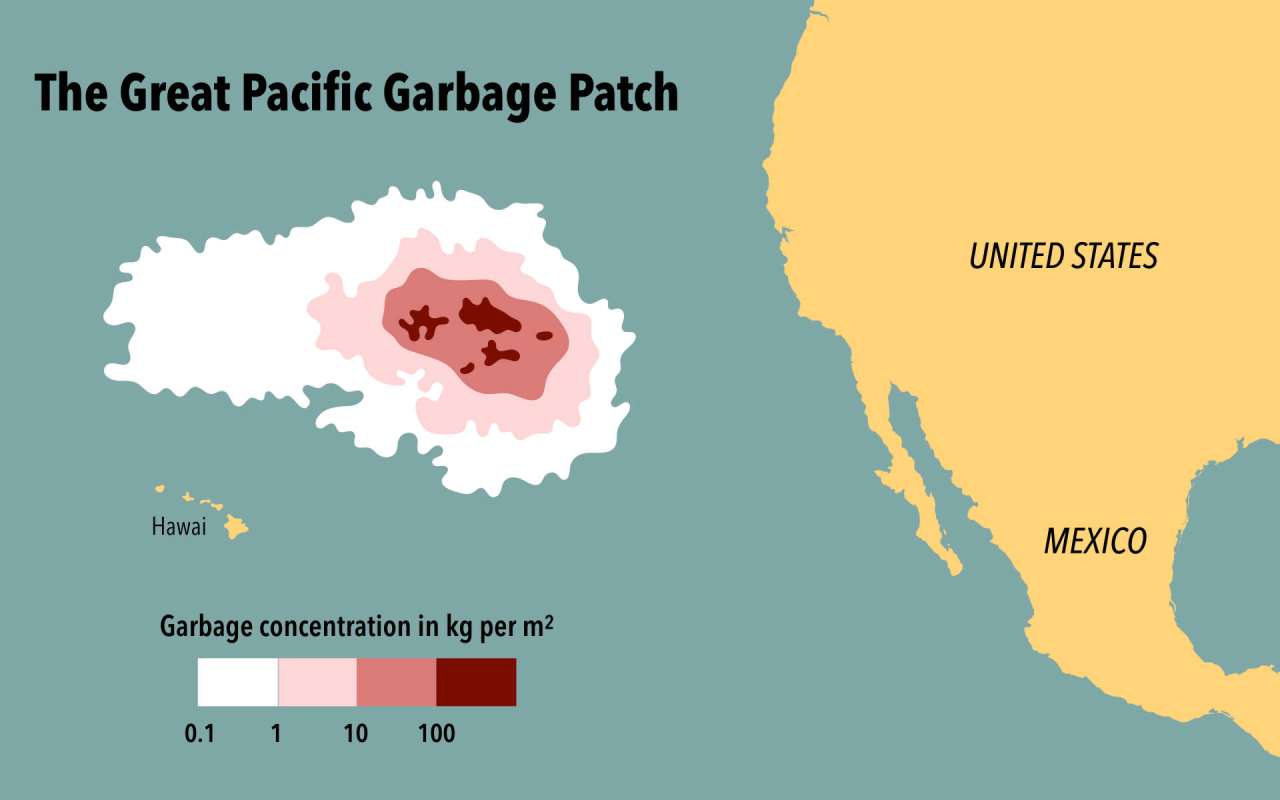
A new explainer from The Ocean Cleanup is challenging a familiar misconception online: The Great Pacific Garbage Patch is not a floating island of trash.
What exists instead is a broad stretch of ocean between Hawaiʻi and California where currents concentrate plastic across a huge area. That makes the pollution far less visible — and far more difficult to remove — than the phrase "garbage patch" suggests.
Here's what to know
To show what that looks like in practice, The Ocean Cleanup shared TikTok footage filmed in the patch itself.
@theoceancleanup The Great Pacific Garbage Patch (GPGP) is the largest of the five offshore plastic accumulation zones in the world's oceans. It is located halfway between Hawaii and California in the Pacific Ocean. PLASTIC ACCUMULATION It is estimated that 1.15 to 2.41 million tonnes of plastic are entering the ocean each year from rivers. More than half of this plastic is less dense than the water, meaning that it will not sink once it encounters the sea. The stronger, more buoyant plastics show resiliency in the marine environment, allowing them to be transported over extended distances. They persist at the sea surface as they make their way offshore, transported by converging currents and finally accumulating in the patch. Once these plastics enter the gyre, they are unlikely to leave the area until they degrade into smaller microplastics under the effects of sun, waves and marine life. As more and more plastics are discarded into the environment, microplastic concentration in the Great Pacific Garbage Patch will only continue to increase. ESTIMATION OF SIZE The GPGP covers an estimated surface area of 1.6 million square kilometers, an area twice the size of Texas or three times the size of France. LOCATION Due to seasonal and interannual variabilities of winds and currents, the GPGP's location and shape are constantly changing. Only floating objects that are predominantly influenced by currents and less by winds were likely to remain within the patch. By simulating concentration levels in the North Pacific, the researchers were able to follow the location of the patch, demonstrating significant seasonal and interannual variations. On average the patch orbits around 32°N and 145°W. However, the team observed seasonal shifts from west to east and substantial variations in latitude (North to South) depending on the year.
♬ do i clench my fists? (slowed + reverb) - ridgeclub
The organization's caption explained: "The Great Pacific Garbage Patch (GPGP) is the largest of the five offshore plastic accumulation zones in the world's oceans. It is located halfway between Hawaii and California in the Pacific Ocean."
Rather than a dense, walkable mass, the patch is a vast region with elevated plastic concentrations, with debris scattered across the surface and into the upper part of the water column.
The organization also noted that the problem continues to grow. "It is estimated that 1.15 to 2.41 million tonnes of plastic are entering the ocean each year from rivers," the caption said.
TCD Picks » Quince Spotlight
💡These best-sellers from Quince deliver affordable, sustainable luxury for all




Since more than half of that material floats, it can stay near the ocean's surface long enough for currents to carry it offshore and concentrate it in these circulation zones.
Misunderstanding the patch can make ocean plastic sound either exaggerated or easy to fix. It is neither.
More background
The Great Pacific Garbage Patch has become shorthand for the plastic crisis, but the real danger is not just what people can spot from a boat.
Sun, waves, and salt break larger items into smaller fragments over time, creating risks for marine life, which can mistake plastic for food or become entangled in larger debris.
That pollution can also affect people. Cleaner oceans help protect fisheries, food systems, and coastal economies, while reducing plastic in the marine environment may lower the likelihood of harmful substances moving through ecosystems that humans depend on.
The Ocean Cleanup's explainer arrives at a time when plastic waste is facing growing scrutiny worldwide. As awareness spreads, so does interest in technology that can remove existing pollution and stop more of it from reaching open water in the first place.
What's being done?
The Ocean Cleanup is one of the best-known groups working on large-scale technology aimed at the problem.
Prevention is usually cheaper and more effective than trying to recover broken-down debris after it has spread.
Reducing unnecessary single-use plastic where possible is one practical step. Small swaps will not solve a global pollution crisis on their own, but they can cut household waste, reduce demand for throwaway packaging, and sometimes save money over time by favoring reusable products.
Cleanup technology and personal choices work best together: One helps address plastic already in the environment, while the other helps slow the flow of new waste into it.

Get TCD's free newsletters for easy tips, smart advice, and a chance to earn $5,000 toward home upgrades. To see more stories like this one, change your Google preferences here.






