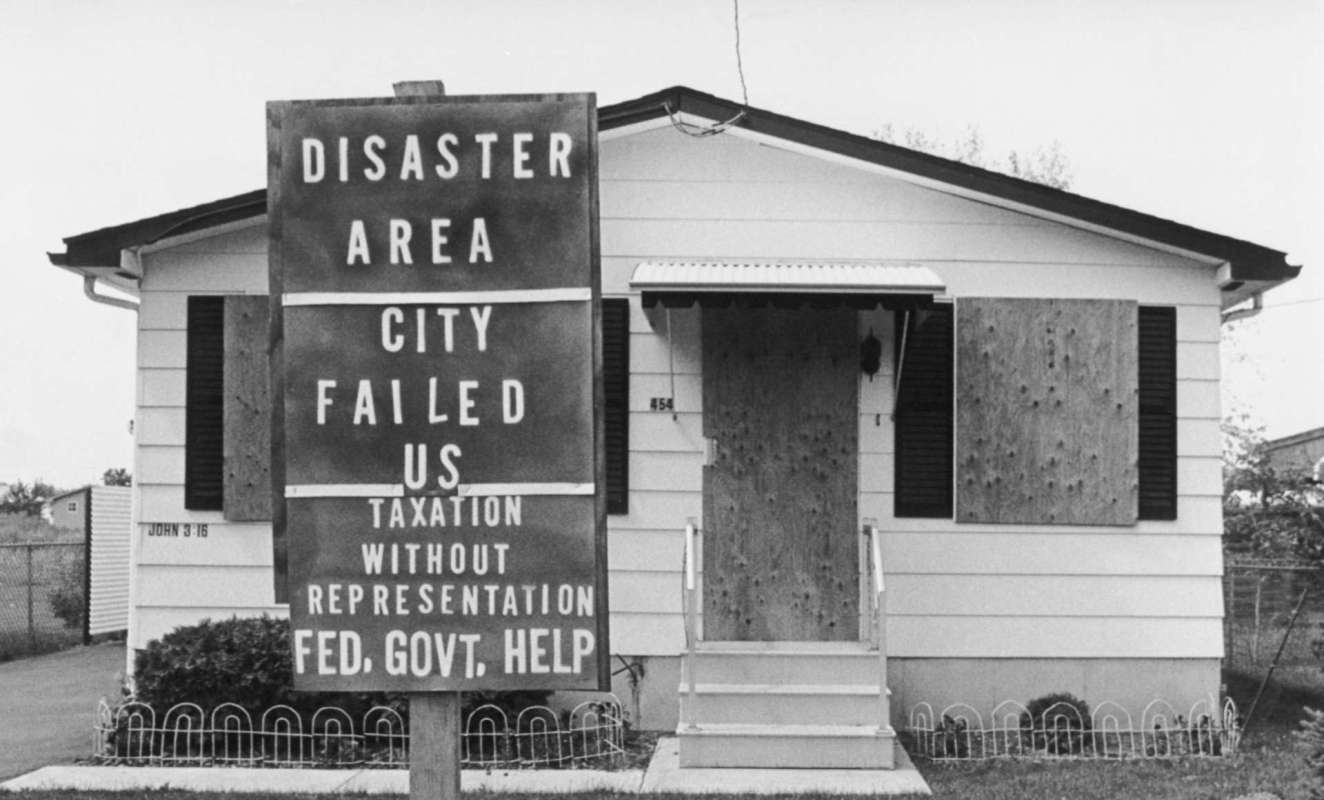
For many people in Western New York, Love Canal is not just part of the region's history — it remains a warning about what can happen when contamination is allowed to threaten entire communities. That fear is coming back into focus as Luella Kenny, a longtime Love Canal advocate, joins Niagara Falls residents seeking answers about radioactive and chemical contamination, according to WIVB.
Here's what to know
At a community meeting hosted by Save Our Backyards WNY, Kenny spoke to residents facing contamination concerns. The group says it is working to ensure the people affected are heard. Her message was direct and urgent: "This is a fight. It's a fight that has to be done."
Her fight for answers stems from a painful chapter of her family's history. In 1969, Kenny and her husband bought a home in Niagara Falls, in the area that WIVB later described as Love Canal.
While the family lived there, their youngest son, Jon Allen, was born; after being diagnosed with an immune disorder, he died on Oct. 4, 1978, at age 7.
Kenny told WIVB that after her son's death, she began looking into whether exposure to toxic chemicals could have played a role in his illness at such a young age. That effort to find answers went on to shape decades of advocacy.
She is backing the McKiernan family, who live on 99th Street and want to be relocated because of contamination concerns. WIVB reported that industrial fill was found on their property, and testing showed elevated lead in the soil along with chemical traces in sump pump water.
TCD Picks » Quince Spotlight
💡These best-sellers from Quince deliver affordable, sustainable luxury for all




More background
Love Canal became a warning of what can happen when toxic waste is left beneath neighborhoods, schools, and homes, forcing families to live with the consequences.
According to the EPA, the site was originally dug in the 1890s as a canal between the upper and lower Niagara Rivers to generate power, but the project was never completed due to economic fluctuations. In the 1920s, the area became an industrial and chemical dumping site, before being sold to the city for a dollar in 1953, after the owners dumped earth onto the chemical dump. Homes were built, and in 1979, the buried problem became a major issue after a massive rainstorm. Chemicals began to leach into the soil, and it became one of the most infamous environmental disasters in American history.
The aftershocks of the incident have continued to this day, as Kenny and others point out.
In her remarks, Kenny connected that history to what residents are facing. Referring to the McKiernan family, she said, "I'm so concerned about the McKiernan family whose house is three blocks down from where I was."
What's being done?
Residents and community groups are organizing as they press public agencies for accountability. Save Our Backyards WNY is helping residents bring their concerns into public view, while Kenny's involvement adds the perspective of someone who has spent years warning of what can happen when contamination is downplayed or ignored.
WIVB reported that the McKiernan family is pushing for relocation after being told they would not be moved. Meanwhile, the outlet said the state DEC plans to continue testing the property.
Kenny has made clear that she believes immediate caution is necessary. "They just have to be moved out," she said. "This is a child's life, and it has to be done, and no argument over it, and it has to be done today."
For Kenny, the reason she keeps fighting remains deeply personal: "We just have to keep advocating and protecting our children … they're our future."
Where can I learn more?
Contamination fights like this stretch far beyond Love Canal. Communities in New York and across the country are pushing for cleanup, transparency, and health protections, whether the issue is radioactive waste, toxic waterways, or vulnerable cleanup sites.
• Across the country, federal Superfund sites face rising climate threats that could endanger nearby communities.
• In New York, plans for radioactive waste onto beaches have intensified Indian Point outrage.
• In Pennsylvania, officials aim to contain waste at one of the largest nuclear dump sites.
• In Brooklyn, a lawsuit is surfacing shocking details about 'mutant water' in the Gowanus Canal.
Each case is a reminder that contamination battles often turn into drawn-out fights over health, trust, and accountability. That broader backdrop helps explain why Kenny is pushing to protect families before more harm is done.

Get TCD's free newsletters for easy tips, smart advice, and a chance to earn $5,000 toward home upgrades. To see more stories like this one, change your Google preferences here.