


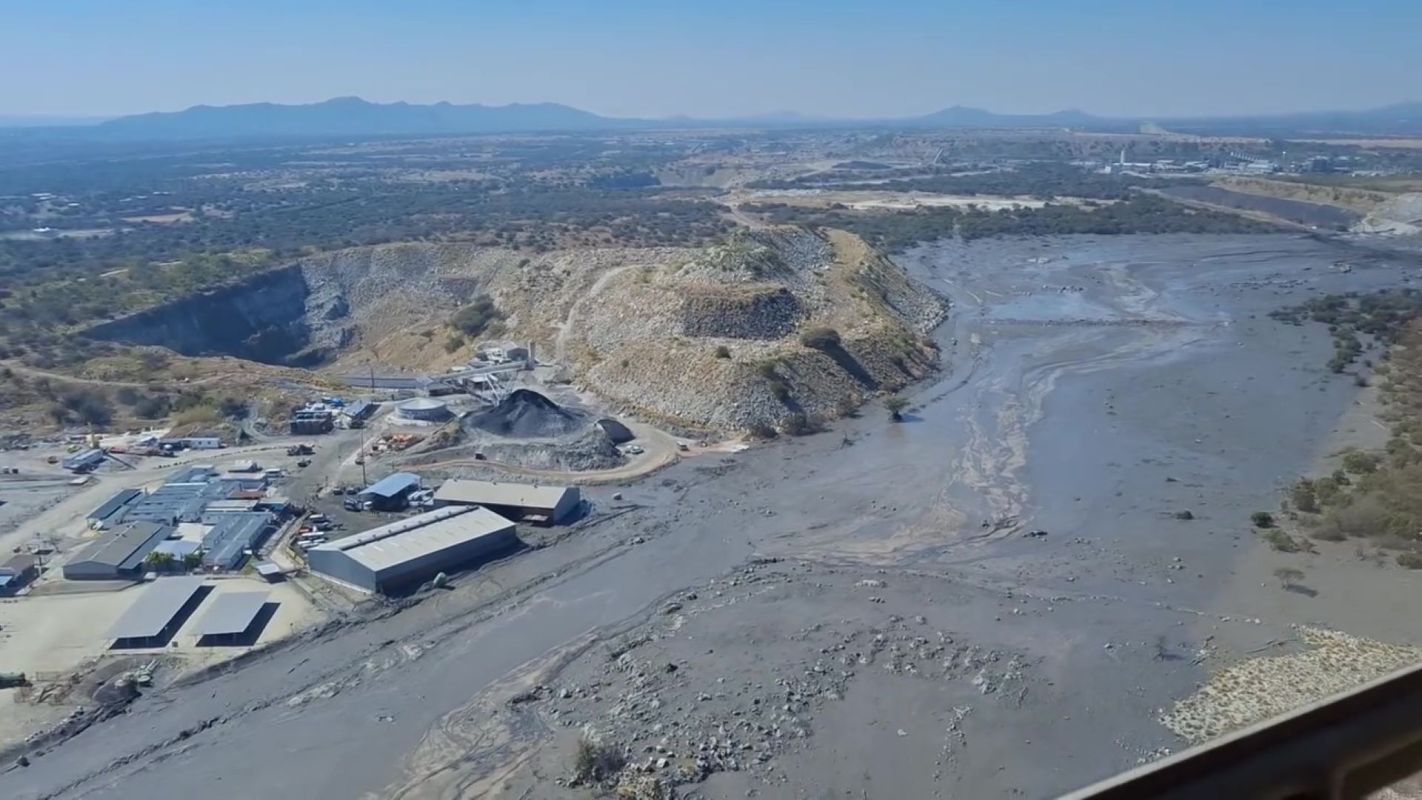
New aerial images are offering a stark look at the damage left behind after the August 13 tailings storage facility failure at the Semancor Dikwena Chrome Mine in South Africa, and they are raising difficult questions about how the site was managed before the breach.
Here's what to know
The two photos were released by South Africa's Department of Mineral and Petroleum Resources. Dave Petley, a landslide expert who writes The Landslide Blog, reviewed them.
The images provide both a wider view of the tailings storage facility and a closer look at the area where it ruptured.
Petley said the photos appeared to show several unusual features and possible warning signs. He highlighted minor failures along the wall in the front of one image, calling it "interesting to note the small-scale slope failures on the tailings wall in the foreground."
He also pointed to the elevation of the failed area, saying that part of the facility had been built up higher than the sections on either side. Petley said older Google Earth imagery helps trace how the site changed over time, starting with a single facility visible in August 2015.
By June 2022, the eastern portion — the section that ultimately failed — looked vegetated and showed "little sign of human activity," while work appeared to be underway on the western end. In July 2025, the configuration had changed again: the facility had been raised, split into sections, and was receiving deposition in both parts.
TCD Picks » Quince Spotlight
💡These best-sellers from Quince deliver affordable, sustainable luxury for all




Petley noted that the failed area, known as 1b, was "notably higher" than the section to its west.
More background
Tailings storage facilities are used to hold leftover waste from mining operations, often including wet, fine-grained material sometimes called slimes.
When one of these structures fails, the damage can reach far beyond a mine's property line, harming roads and infrastructure, polluting land and waterways, and putting nearby communities at risk.
Although Petley cautioned, "I'm no expert on TSF construction," he said the imagery and timeline appear to suggest a complex construction history at the site.
Mine waste disasters can create disruptions that last for years, from damaged public infrastructure and expensive cleanup efforts to ongoing concerns about whether companies will fully restore affected areas. Those burdens often fall hardest on workers and residents living closest to industrial sites.
Corporate environmental promises can sound reassuring in the immediate aftermath of a disaster, but follow-through is what matters most. That is why claims about remediation should be watched closely.
What's being done?
Petley said Semancor's public acceptance of responsibility was encouraging, and the company has committed to "the repair of any infrastructure and the rehabilitation of the affected area." Still, accountability will depend on what happens next.
Cleanup, repair, and ongoing monitoring are the kinds of steps that determine whether a response is meaningful or merely public relations. Communities near industrial operations often need transparency around timelines, risks, and the protections being put in place.
The aerial imagery and historical satellite record could also prove important for regulators. Side-by-side comparisons over time can help investigators understand how a facility changed, whether warning signs were visible, and whether operating decisions may have increased risk.
When outside experts and publicly available imagery can be used to scrutinize industrial failures, it becomes harder for companies to simply move on without answering hard questions.
As Petley put it, "It is good to see that Semancor has taken full responsibility for 'the repair of any infrastructure and the rehabilitation of the affected area', noting of course that the global mining industry does not have a good track record of actually delivering against such commitments."

Get TCD's free newsletters for easy tips, smart advice, and a chance to earn $5,000 toward home upgrades. To see more stories like this one, change your Google preferences here.






