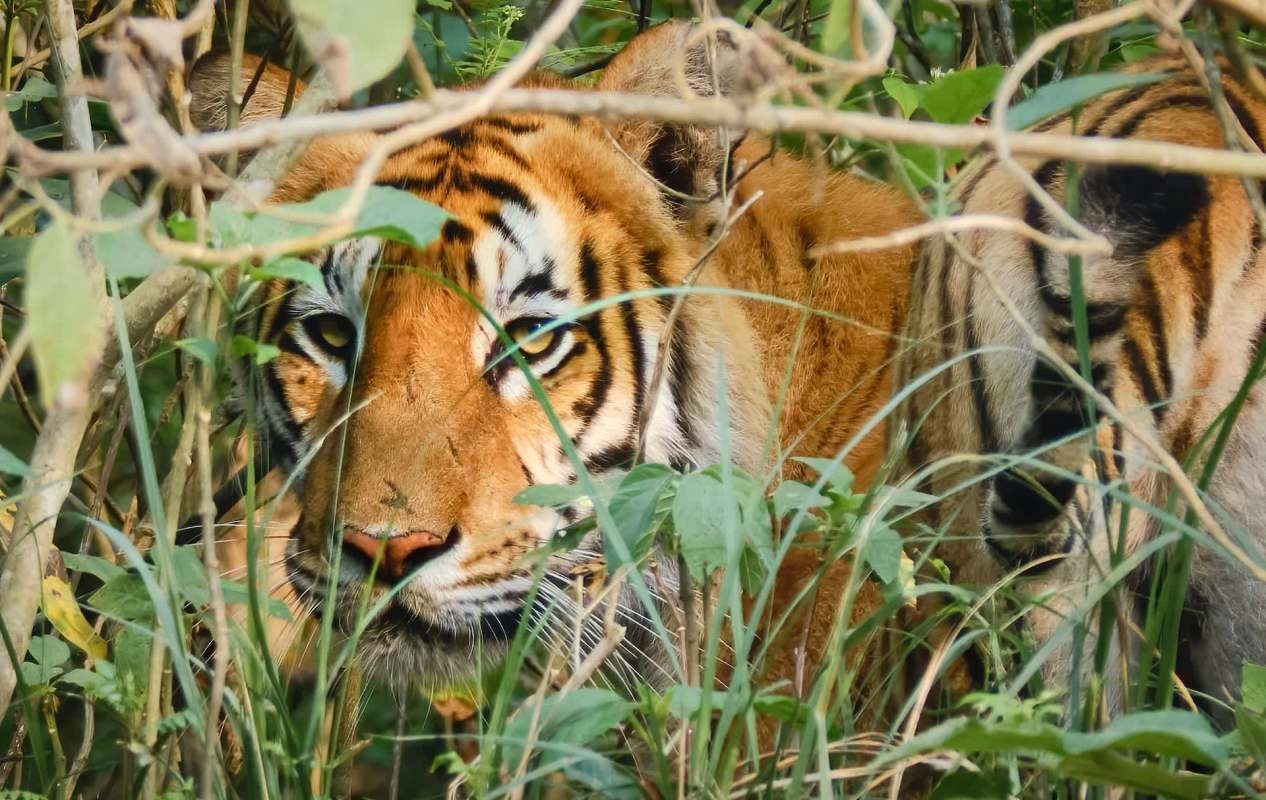
Nepal is considered a conservation bright spot for tiger recovery. Yet with the country's wild tiger population estimated at 429 animals, researchers say that rebound is concentrated in some places more than others, bringing new pressures for wildlife and the people living near protected areas.
Here's what to know
A national count found 355 tigers in Nepal in 2022, and a 2026 estimate raises that total to 429 — nearly four times higher than it was in 2010, as Mongabay's Abhaya Raj Joshi reported.
Healthy tiger populations can signal healthier forests, more stable ecosystems, and stronger protections for the water, land, and tourism economies tied to them.
For Bed Kumar Dhakal, spokesperson for Nepal's Department of National Parks and Wildlife Conservation, the survey results "reflect the positive outcomes of ongoing efforts in the field of tiger conservation in Nepal, such as habitat conservation and management, poaching control, conservation of prey species, and biological corridor conservation."
But the gains have not been shared evenly across Nepal's protected areas. Mongabay reported that the country's newer parks — Banke, Parsa, and Shuklaphanta — account for most of the increase, while Bardiya, Nepal's second-oldest park, saw its tiger numbers decline.
That pattern has raised new questions about where expanding tiger populations can be accommodated, how changing habitat conditions are shaping their movement, and what bigger predator populations could mean for communities along park boundaries.
TCD Picks » Quince Spotlight
💡These best-sellers from Quince deliver affordable, sustainable luxury for all




Why is this important?
Scientists say the different outcomes across parks appear to be tied more to environmental conditions than to how the parks are administered.
Shant Raj Jnawali, a researcher and conservationist, pointed to water availability, invasive weed spread, and stronger links with tiger habitat across the border in India as important factors.
Water infrastructure may be especially important. A 2025 study cited by Mongabay found that proximity to artificial waterholes predicted tiger distribution more strongly than prey abundance, suggesting that parks with more man-made ponds may be attracting more tigers even when older parks still support abundant prey.
That contrast was evident in Bardiya, where Mongabay reported that prey density rose 74% from 2022 to 2026 — more than in any other park — even as the tiger population there fell.
Older habitats are also being degraded by invasive plants such as bitter vine and common lantana, while some younger parks benefited from past livestock grazing that helped stop those weeds from taking over.
Research also suggests that as tiger populations grow, common leopards can be pushed out of core habitat and into human settlements, increasing conflict risks for farmers and families living near park edges.
What's being done?
Nepal's tiger recovery has been built on anti-poaching work, habitat management, prey protection, and the conservation of biological corridors. Still, the next phase may require more targeted action.
If water access is helping shape tiger movement, maintaining and expanding water infrastructure in vulnerable parks could help stabilize habitats and reduce pressure on other landscapes. Managing invasive weeds in older parks could also improve conditions for both prey and predators.
Because tiger movement does not stop at political boundaries, coordination between Nepal and India can help animals disperse more naturally instead of crowding into limited protected areas.
Better monitoring, early-warning systems, and support for communities facing crop, livestock, or safety risks could help address conflict as tiger and leopard ranges shift.

Get TCD's free newsletters for easy tips, smart advice, and a chance to earn $5,000 toward home upgrades. To see more stories like this one, change your Google preferences here.