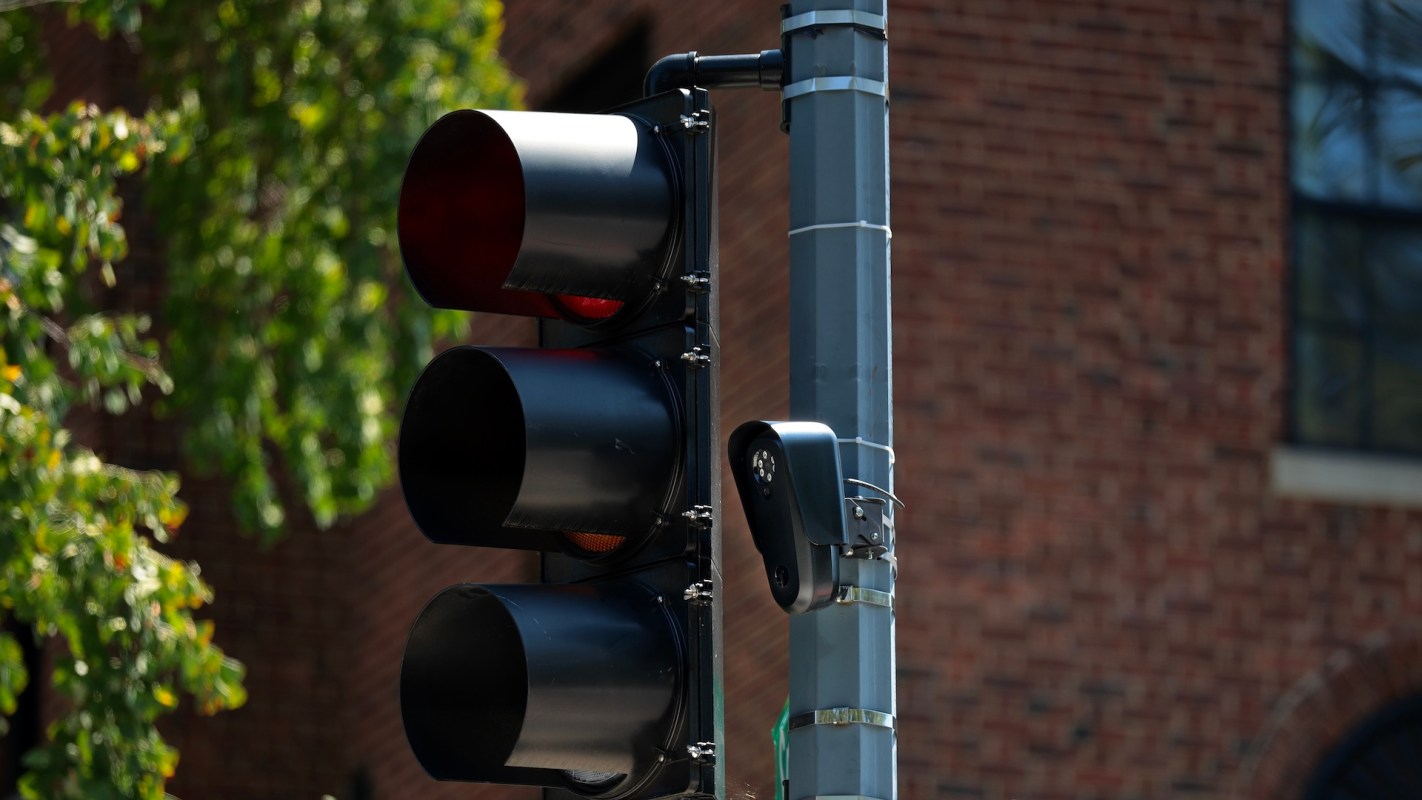
At an August 17 Harris County Commissioners Court meeting, dozens of Houston residents urged officials to scrap the county's AI-powered Flock camera system for privacy concerns.
Here's what to know
According to Houston Public Media, speakers at the meeting focused their criticism on Flock Safety — the Atlanta-based company whose cameras are used around Texas. For critics, the debate goes far beyond a single surveillance company. It centers on whether ordinary people should be able to move through their communities without being constantly tracked.
Among those calling for the county to end the program was Texas Civil Rights Project member Christopher Rivera. "You promised to protect us, but we see the abuse has come and there's still no protections. We need to eliminate Flock," he said.
The company says its products are used by about 5,000 law enforcement agencies and 6,000 communities across the country. Texas advocacy groups say the statewide total exceeds 13,000 cameras.
Harris County is one of the system's biggest users. The Harris County Sheriff's Office says it manages 20 Flock license plate reader networks with 480 cameras altogether.
More background
Opposition has intensified as additional allegations of misuse have emerged. In 2025, a Johnson County sheriff's deputy used more than 83,000 Flock cameras nationwide to track a woman suspected of trying to get an abortion, without a warrant.
TCD Picks » Quince Spotlight
💡These best-sellers from Quince deliver affordable, sustainable luxury for all




Harris County says three sheriff's deputies lost access to Flock while possible misuse is investigated. In Fort Bend County, a deputy was suspended after repeatedly searching the plates of two people. Officers in Baytown, Deer Park and Pasadena have also been accused of improper use.
Critics say the consequences extend beyond police work. In their view, systems that enable broad, warrantless tracking of vehicles can affect everyday activities, including commuting, medical care, and civic participation. Privacy advocates and immigrant-rights groups argue that this kind of monitoring makes communities feel less safe rather than more protected.
Another complication is ownership as counties often do not directly control many of the cameras. Homeowners associations, municipal utility districts, retailers and other groups can purchase the systems themselves and choose whether to share footage with police.
What's being done?
A number of officials have started to respond to the concerns. McKinney Republican U.S. Rep. Keith Self has proposed legislation that would require federal agencies to get warrants before accessing Flock data.
Guadalupe County and Hood County have canceled their contracts, and Bandera, Lago Vista, Magnolia, Austin and San Marcos are among the cities that have dropped or backed away from the cameras.
Hood County Constable John Shirley condemned the systems in a social media post. "These cameras were constantly scanning and recording regular folks just going about their day. That kind of permanent, warrantless tracking doesn't belong in a free society," he wrote.
Flock has revised several policies, reducing default data retention from 30 days to seven, requiring a case code before searches and creating an "Evidence Mode" for active investigations. Even so, some departments are increasing their use and Dallas police plan to keep camera data for a full year.
Residents are still organizing through public meetings, ballot campaigns, yard signs, and outreach to lawmakers. Even so, contracts remain a major barrier, especially after ACLU Georgia reported that newer terms make Flock agreements harder to exit and allow the company to keep rights to customer data even after a government relationship ends.
Harris County Commissioner Rodney Ellis described the issue in terms of balancing two public obligations. "Public safety and privacy are not mutually exclusive. Residents deserve both, and county policy should protect both."

Get TCD's free newsletters for easy tips, smart advice, and a chance to earn $5,000 toward home upgrades. To see more stories like this one, change your Google preferences here.