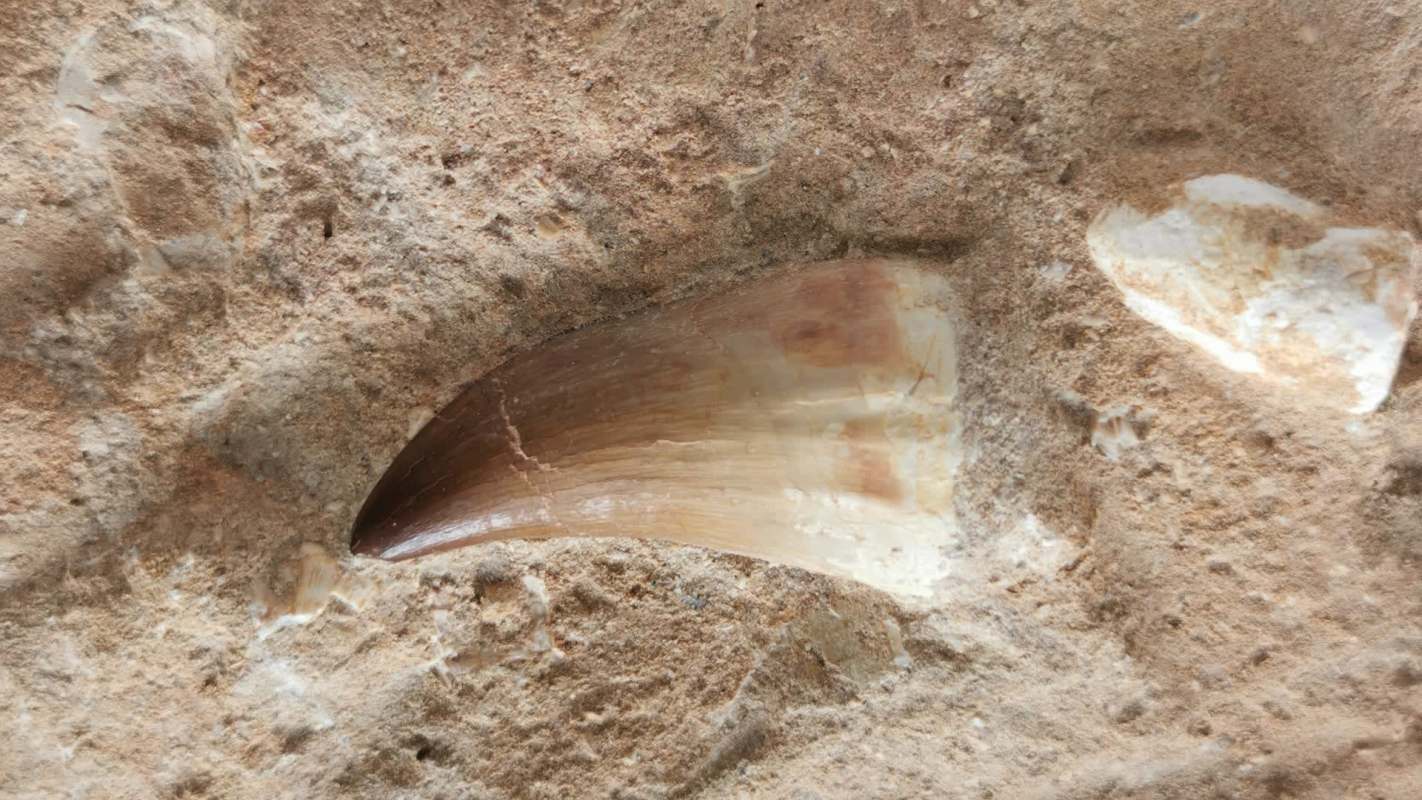
A stretch of Egypt's Western Desert is giving scientists a startling glimpse of a world that long ago disappeared. Researchers have uncovered fossil shark teeth across the Abu-Tartur Plateau, revealing that a place now defined by heat and sand once supported a rich marine food web.
Here's what to know
In a study published in Cretaceous Research, scientists described millions-of-years-old shark teeth from seven species that were gathered during expeditions carried out from 2020 through 2022.
According to Live Science, the fossils were recovered from Egypt's Abu-Tartur Plateau, part of the Late Cretaceous Duwi Formation, which spans sections of the nation's Eastern and Western deserts. The finds included one species not previously reported from Africa and two that had not been identified before in Egypt.
Tarek Yassin, a paleontologist at Cairo University in Egypt and the study's first author, told Live Science the site shows that "the area now occupied by the plateau was once a sea with flourished marine life, with environmental conditions suitable for its development and prosperity, including favourable temperatures, sunlight, and appropriate oxygen levels."
Among the standout finds was Scapanorhynchus raphiodon, an ancient relative of the modern goblin shark. The researchers also identified Serratolamna serrata and Squalicorax bassanii, two species not previously recorded in Egypt.
More background
Earth was generally warmer during the Cretaceous, which lasted from about 145 million to 66 million years ago, and the Natural History Museum in London, as Live Science reported, says sea levels may have been as much as 558 feet higher than they are now.
TCD Picks » Quince Spotlight
💡These best-sellers from Quince deliver affordable, sustainable luxury for all




Those conditions allowed shallow seas to spread into regions that are dry today, including parts of Egypt's desert. Work in the same area had already uncovered fossils from fish, sea turtles, and other marine reptiles, suggesting a once-thriving marine environment.
Phosphorite is plentiful on the plateau, and this sedimentary rock often forms from marine shells and bones. Yassin said, as the outlet reported, the team anticipated vertebrate fossils in phosphate-rich deposits, though the shark remains were still an "exciting surprise."
A barren desert today can preserve evidence of an ancient sea, helping scientists better understand climate shifts, sea-level changes, and the evolution of marine life.
What's being done?
Researchers are continuing to investigate the Abu-Tartur Plateau and nearby areas in hopes of uncovering more fossils and building a clearer picture of the ecosystem that once existed there.
The authors cautioned that the sediment may have mixed remains from different time periods, so the discovery does not show that all seven species lived there at once. Still, the volume of teeth suggests the sea was nutrient-rich enough to support multiple apex predators.
The discovery adds to the fossil record in Egypt and Africa, providing paleontologists with more evidence as they track where ancient species lived and how marine habitats shifted over time.

Get TCD's free newsletters for easy tips, smart advice, and a chance to earn $5,000 toward home upgrades. To see more stories like this one, change your Google preferences here.