


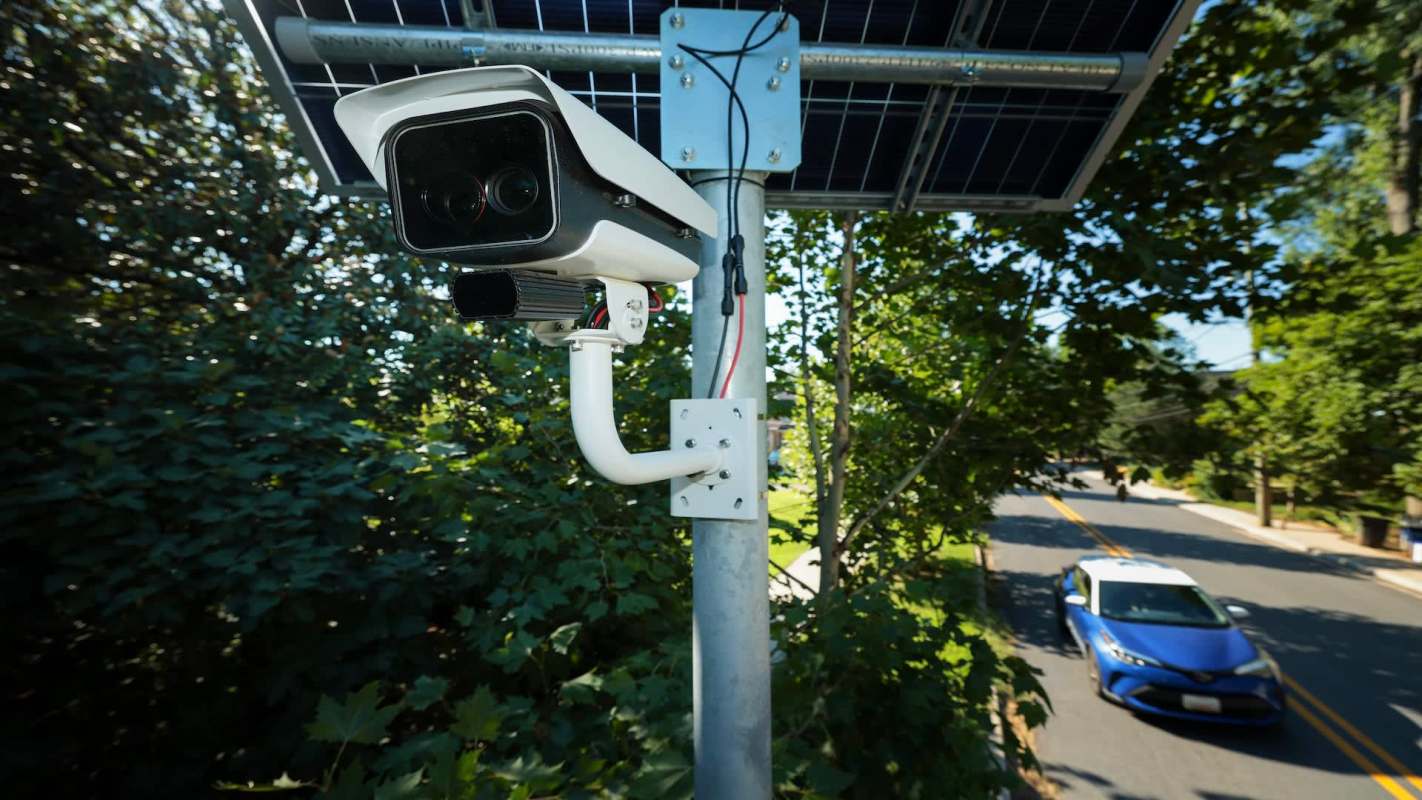
In Hamilton, Ohio, opposition to Flock's automated license plate cameras is intensifying as residents debate how much monitoring should be tolerated in the name of public safety.
One of the biggest points of concern for critics is the fact that police say other nearby agencies can access vehicle data.
Here's what to know
Attention around the dispute sharpened after a reporter with WCPO9 News posted a TikTok video about the growing protest movement in Hamilton seeking the removal of Flock cameras.
In the video, the reporter, Stephen Knobel (@stephen_knobel), explained, "Hamilton police say agencies within 50 miles can automatically access their Flock camera data."
@stephen_knobel Flock cameras are at the center of a protest in Hamilton, Ohio. Protesters want them gone, raising questions about privacy, 50-mile data access and alleged misuse of Flock data #FlockCameras #FlockSafety #HamiltonOhio #OhioNews ♬ original sound - stephen_knobel
Knobel spoke with residents about the issue.
One person told him, "I don't believe it's the government's job to track us everywhere."
TCD Picks » Quince Spotlight
💡These best-sellers from Quince deliver affordable, sustainable luxury for all




Knobel also reported that Hamilton police said most records are automatically deleted after 30 days. The department also says the system does not use biometrics, facial data, or live video feeds. Police say the cameras photograph license plates and connect them with visible characteristics of the vehicle.
Yet, protesters argue those limits still do not go far enough.
Knobel noted a slew of national incidents cited by opponents in which officers were accused or charged with using Flock data to "stalk or harass people without a warrant."
In the comments, one person wrote, "Even if HPD did delete it, who says the company with no elected oversight will as well? There's so many things wrong with this."
Why is this concerning?
Even without facial recognition, license plate tracking can raise serious privacy concerns because it can help create a record of how people live their lives without their knowledge.
For cities using this kind of technology, transparency is one of the biggest pressure points. Residents want to know who can access the data, how searches are logged, how long information is stored, and what happens when the rules are broken.
But transparency has been woefully inadequate in most places that use Flock license plate readers. Thankfully, public pressure is already doing some of the work in Hamilton by forcing the debate into the open.

Get TCD's free newsletters for easy tips, smart advice, and a chance to earn $5,000 toward home upgrades. To see more stories like this one, change your Google preferences here.






