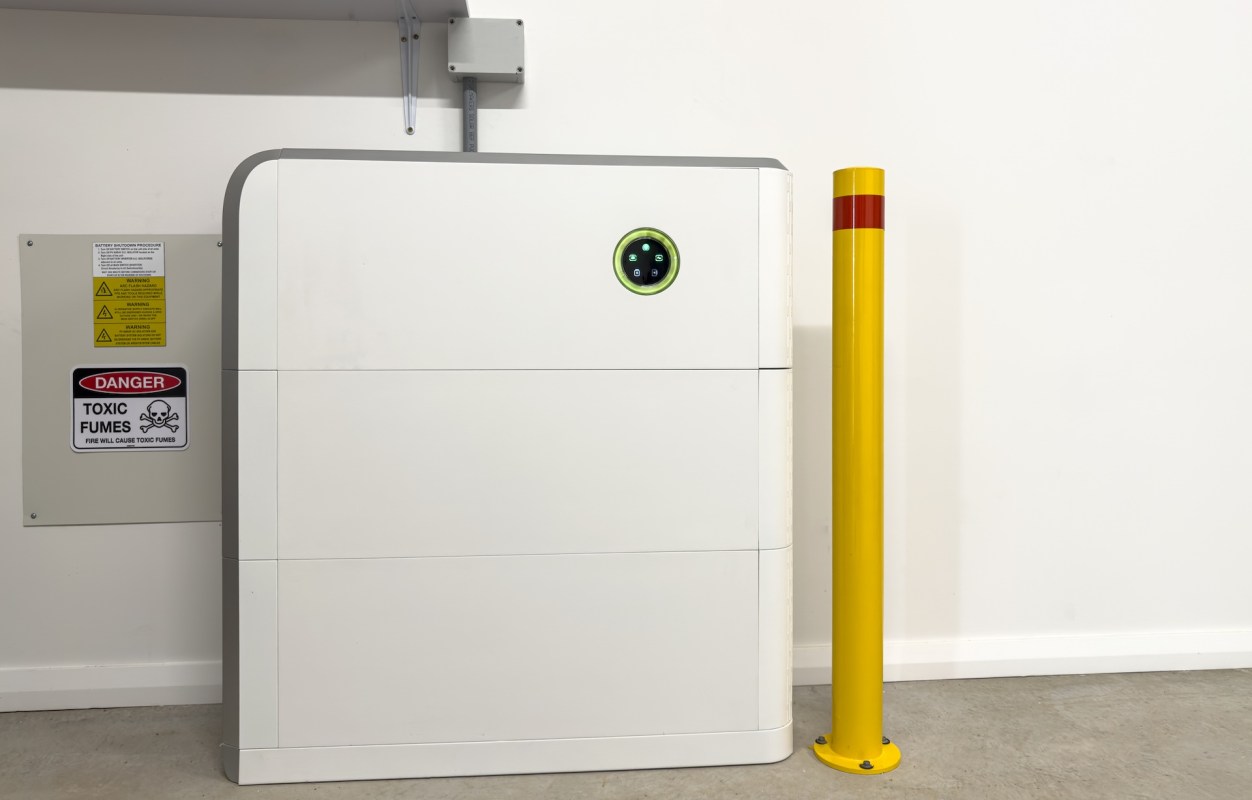
For anyone planning on adding a home battery backup, placement is one of the first practical decisions to sort out, especially when your main options are a garage installation or mounting the system outside on an exterior wall.
Here's what to know
In Reddit's r/TeslaSolar community, one homeowner asked others about indoor and outdoor battery placements and specifically raised the question of whether garage installs required bollards.
The responses reflected the reality that for home battery projects, local code requirements and site conditions can matter just as much as the battery brand itself.
For at least one garage installation, inspection requirements ended up driving the final setup. As the commenter explained, "Indoors (in the garage) initially there were no bollards, but had to get bollards installed to pass inspection and get PTO."
That means that final approval may still depend on added safety hardware designed to protect the unit from accidental damage.
That commenter, from Colorado's Denver metro area, added that the battery was mounted on the "back wall, that's an exterior wall in Colorado." They said the site experiences a "temp swing from ~100F in the summer to 20F-ish in the winter when it gets super cold."
A different user explained that "indoors keeps your home lovely and warm in the cold winter months."
A third commenter wrote, "Installed mine in my garage. Bollards were not required. Just had to have a smoke alarm installed. I wanted them inside where people on the outside didn't know I had them or tempting kids to mess with them."
Save $10,000 on solar panels without even sharing your phone number Want to go solar but not sure who to trust? EnergySage has your back with free and transparent quotes from fully vetted providers in your area. To get started, just answer a few questions about your home — no phone number required. Within a day or two, EnergySage will email you the best options for your needs, and their expert advisers can help you compare quotes and pick a winner. Solar panels can save you more than $50k over their 25-year lifespan, and EnergySage can help you save as much as $10k on installation. Which begs the question — isn't that worth an email or two? |

More background
Installation location can affect permitting, inspection outcomes, weather exposure, and how much space the system takes up inside the home.
Yet battery systems strengthen household resilience no matter where they're placed. During severe weather or grid disruptions, they can keep medical devices, refrigeration, lights, internet service, and other essentials powered. In some cases, pairing a battery with rooftop solar can reduce dependence on the grid and lower electricity bills.
If you're weighing your own setup, it may be worth exploring EnergySage for information about home battery storage options. For people who do not need whole-home backup, Pila offers smaller-scale options worth considering, including backups that can power single appliances, such as refrigerators.

Get TCD's free newsletters for easy tips, smart advice, and a chance to earn $5,000 toward home upgrades. To see more stories like this one, change your Google preferences here.