


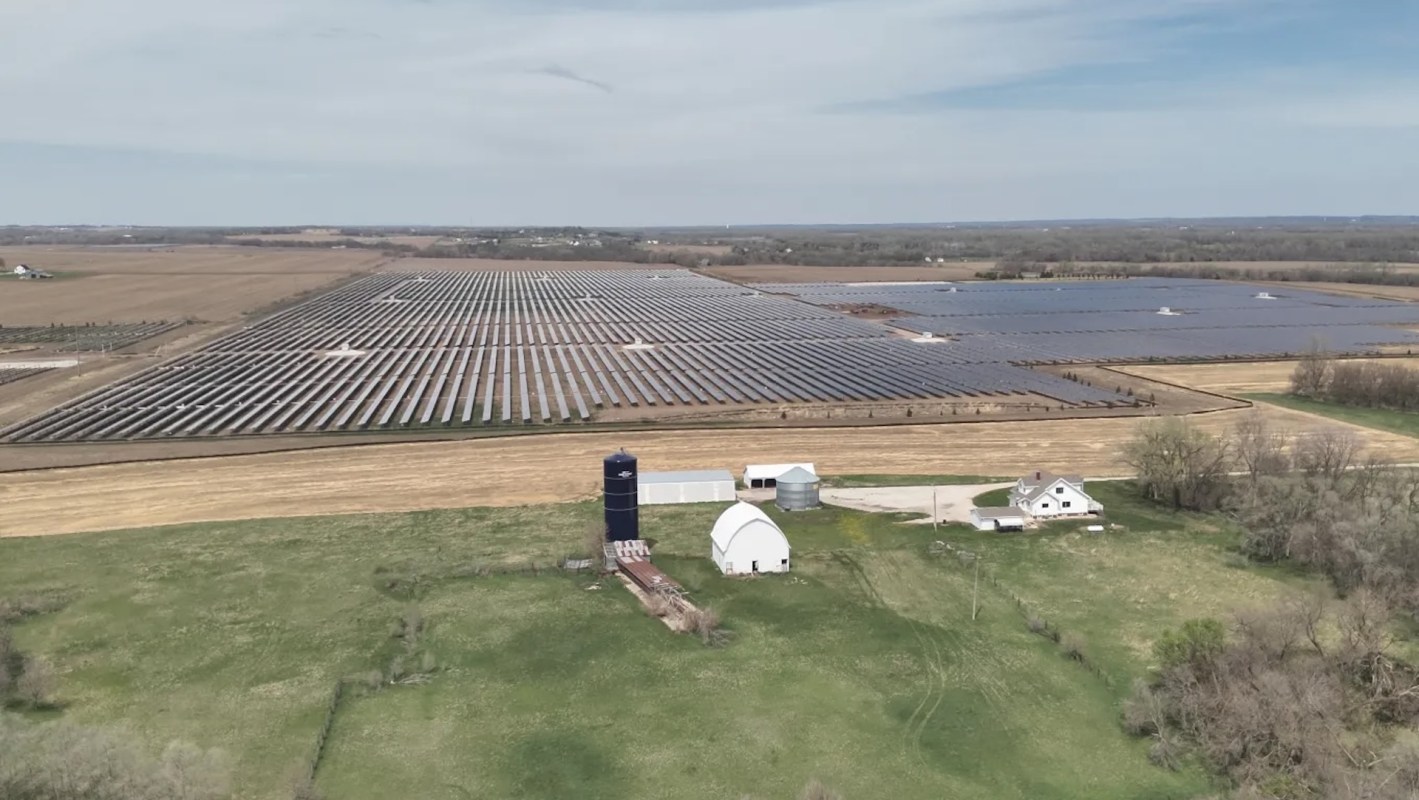
Across Nebraska, renewable energy facilities are affecting more than the power supply. Wind turbines and solar farms are also generating tax dollars for county budgets to help pay for schools and other public services even as resistance to new projects persists.
Here's what to know
Across Nebraska, 44 counties received revenue from wind and solar projects through the state's nameplate capacity tax. In Saunders County, that included about $266,000 in 2025 from Platteview Solar, the AES Corporation-owned solar farm, according to the Flatwater Free Press and Grist reporting.
County treasurers distribute those tax dollars among local jurisdictions, such as county governments, school districts, community colleges, and natural resource districts. The money comes from Nebraska's nameplate capacity excise tax, which requires qualifying renewable projects to pay $3,518 each year for every megawatt of rated generating capacity.
In Holt County, after roughly 10 years of discussions and a failed bond issue, O'Neill Public School District was able to advance a $13.2 million expansion of its junior-senior high school, aided by about $7.6 million in renewable energy tax revenue received over nine years.
For homeowners, solar can also deliver direct savings. Going solar is one of the best ways to save money on home energy, and those interested can explore EnergySage to get free solar installation estimates and compare quotes.
More background
In Nebraska, disputes over renewable energy often focus on zoning battles, visual impact, or land use. But those projects can send recurring revenue back to local communities.
Property taxes are a persistent issue for many people in the state. Supporters of wind and solar have argued that renewable development can broaden local revenue sources and reduce some pressure on taxpayers, and these county payments offer a measurable example of that argument.
According to the Flatwater Free Press and Grist, the money in O'Neill helped pay for extra classroom space, upgraded science labs, and a gym at an aging junior-senior high school. Then-superintendent Amy Shane said, "We could get something good for our students without putting a huge burden on our taxpayers."
Save $10,000 on solar panels without even sharing your phone number Want to go solar but not sure who to trust? EnergySage has your back with free and transparent quotes from fully vetted providers that can help you save as much as $10k on installation. To get started, just answer a few questions about your home — no phone number required. Within a day or two, EnergySage will email you the best local options for your needs, and their expert advisers can help you compare quotes and pick a winner. |

In other counties, similar revenue can help fund essential services or give budgets more stability than they might have with a heavier reliance on local tax bases alone.
What's being done?
Nebraska already has a system for directing renewable energy tax revenue back to local jurisdictions, and 2025 figures show that it is producing meaningful income. As additional projects are considered, the effect on county and school budgets will likely remain part of the debate.
For households considering their own energy upgrades, free comparison tools can make the process much easier. EnergySage's services are free to use, and with its help, the average person can save up to $10,000 on solar purchases and installations. That kind of saving can make rooftop solar far more realistic for families trying to cut utility costs.
Meanwhile, EnergySage's solar map shows the average cost of a home solar panel system on a state-by-state level, as well as details on local solar panel incentives. Together, those resources can help you get the best price for rooftop solar panels.
More From EnergySage
💡Go deep on the latest news and trends shaping the residential solar landscape

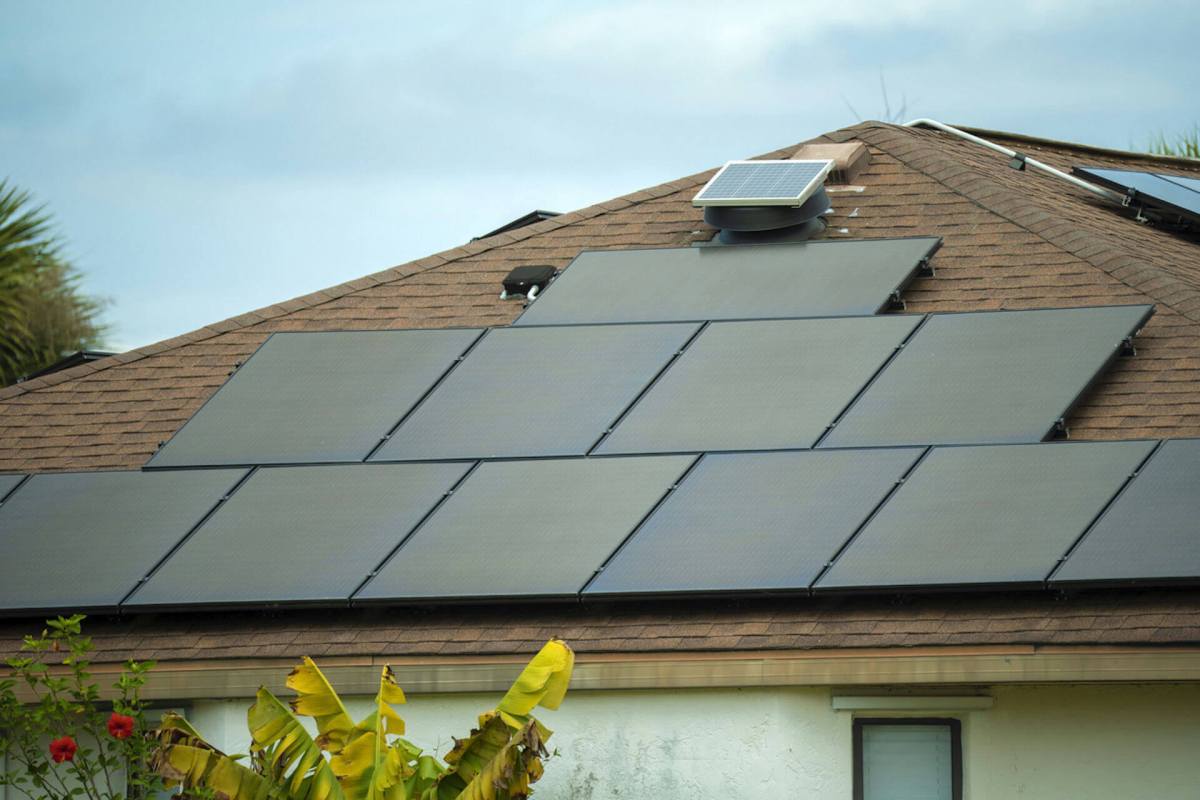


Adding battery storage to a solar setup is also one of the best ways to protect your home during outages, save money on energy, and go off-grid. It can give households more control over when and how they use electricity. EnergySage provides information about home battery storage options, including competitive installation estimates.

Get TCD's free newsletters for easy tips, smart advice, and a chance to earn $5,000 toward home upgrades. To see more stories like this one, change your Google preferences here.






