


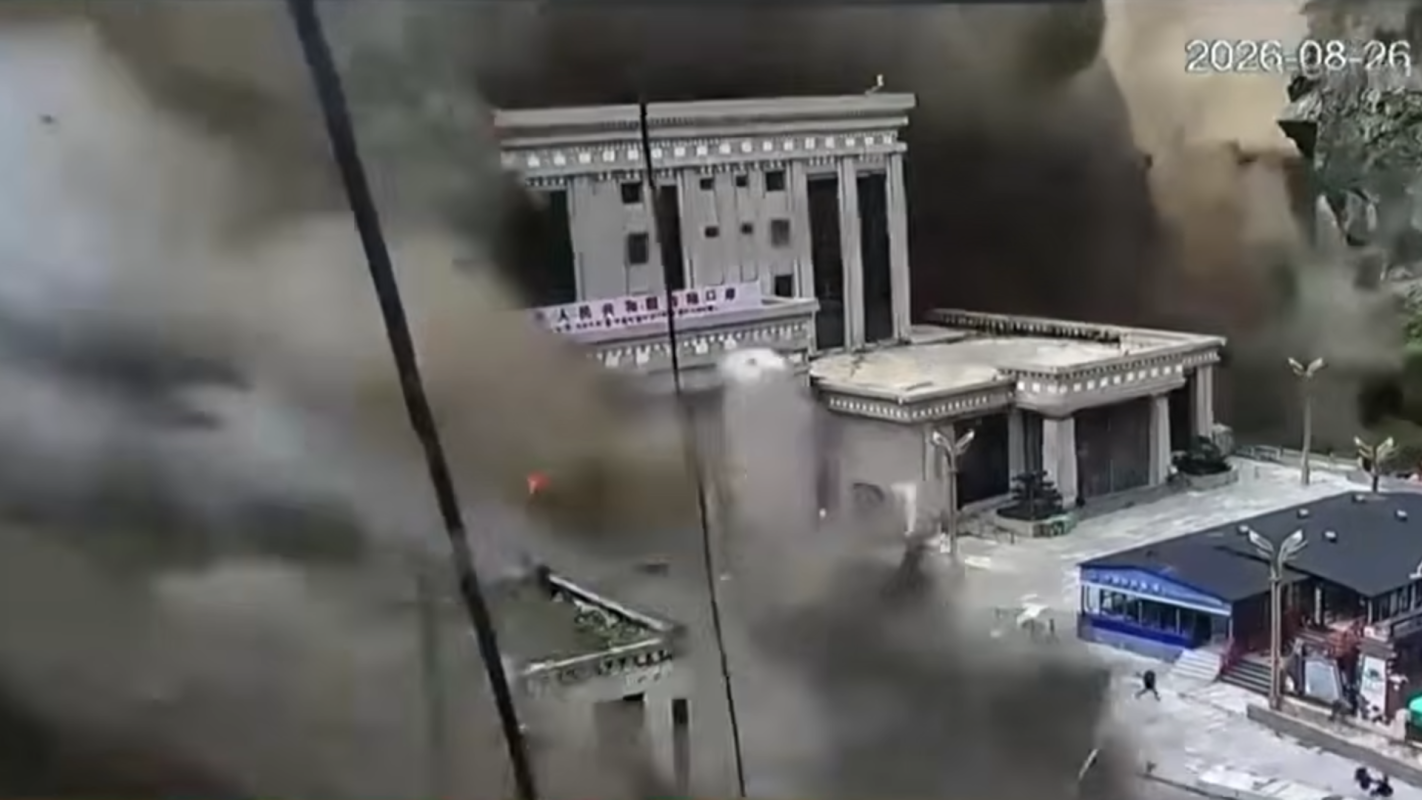
A wall of mud and debris tore through the Nepal-China border crossing at Rasuwagadhi during a flash flood on Wednesday, sweeping buses and whole bridges aside and trapping fleeing crowds.
Authorities now say at least 359 people have died in Nepal and a further three in Tibet, according to BBC News, and at least 1,450 more are still missing between the two countries
Here's what to know
NBC News and CBS News verified video and satellite images showing how quickly muddy water overtook Himalayan valleys.
The Nepal Tourism Board said people from India, Ukraine, Malaysia, the United Kingdom, the United States, and Canada were among those unaccounted for in the hard-hit mountain corridor about 40 minutes north of Kathmandu, Nepal. Overall, authorities said more than 500 foreigners were missing, including at least 65 Americans.
Alton Byers, a faculty research scientist at the Institute of Arctic and Alpine Research at the University of Colorado Boulder, told NBC News, "It's just horrific. I've never seen a flood of this magnitude."
With power and communication lines swept away, officials have faced added difficulty confirming casualties and coordinating rescues. They warned the death toll could still rise as responders reach communities that remain cut off.
TCD Picks » Quince Spotlight
💡These best-sellers from Quince deliver affordable, sustainable luxury for all




More background
While investigators have not declared the exact cause of the flash flood with certainty, the Kathmandu-based International Center for Integrated Mountain Development said early evidence suggests a glacier avalanche most likely triggered the event.
Researchers have found that the pace of glacier ice loss across the Hindu Kush Himalaya region has roughly doubled since 2000 as global temperatures rise.
Byers told NBC News that thawing permafrost is destabilizing slopes and increasing the risk of events like landslides and avalanches.
Disaster risk reduction specialist Saswata Sanyal added that the river had now flooded twice in 14 months.
Flash floods can also contaminate water, interrupt medical care, sever transportation links, and destroy homes. Sanyal told NBC News the disaster underscores the need for stronger early-warning systems.
What's being done?
In Nepal and China, emergency declarations are in place, and rescue teams are rushing to respond as fears grow that casualty counts could climb. Nepali government spokesperson Sasmit Pokhare said that Nepal had sought rescue assistance from India and China.
The U.S. Department of State announced that it has deployed a disaster response advisor and is releasing $500,000 in assistance through a Catholic Relief Services award to support flood-impacted communities.
Canada is also closely tracking the situation, and Prime Minister Mark Carney said on X that the country "stands ready to provide support."

Get TCD's free newsletters for easy tips, smart advice, and a chance to earn $5,000 toward home upgrades. To see more stories like this one, change your Google preferences here.







