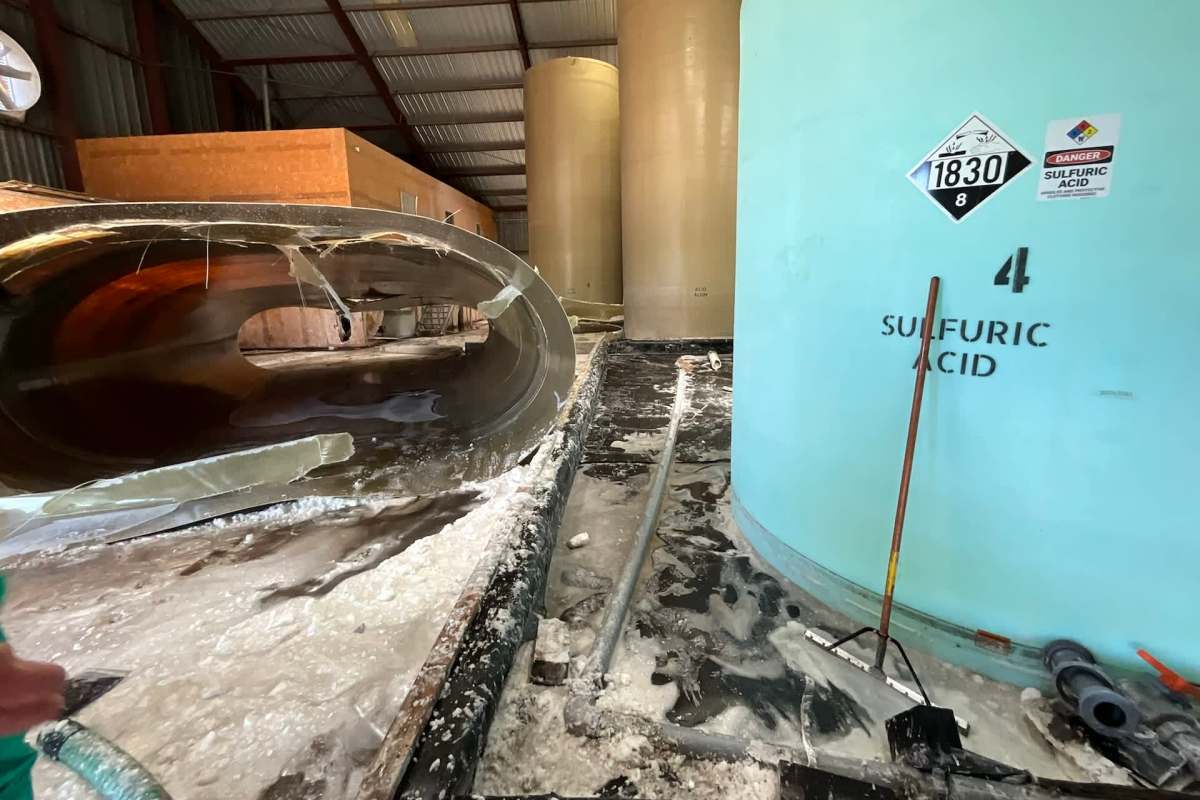
A chemical plant in Fort Smith, Arkansas, had been producing a sulfuric acid-based product since opening in November 2024, when a tank ruptured on May 2, spilling corrosive chemicals into a nearby creek.
The fallout killed thousands of fish, crossed state lines, and damaged a city fire truck, raising questions about how the facility could operate without required permits or chemical disclosures.
Here's what to know
Before the May 2 spill, Georgia-based C&S Chemicals had neither secured the stormwater permit required under the Clean Water Act nor reported its hazardous chemical inventory to Arkansas officials, according to Arkansas Advocate. Regulators said they did not know the facility was operating.
The city is still deciding whether a Fort Smith Fire Department ladder truck damaged during the response can be repaired or must be replaced. Officials at first thought they were dealing with flooding rather than a sulfuric acid release, and the truck later entered the spilled acid. A new ladder truck can cost about $2 million and may take years to obtain.
State officials said the company had up to 368,350 pounds of sulfuric acid on-site, more than 730 times the Arkansas reporting threshold, but had not filed the annual chemical inventory report used to help local agencies prepare for emergencies. The company finally submitted that report two hours after the spill on May 2.
That lapse drew a sharp response from Representative Zack Gramlich, a Fort Smith Republican: "You had this stuff for two years or more, and you didn't fill out the permits before you started filling tanks?"
TCD Picks » Quince Spotlight
💡These best-sellers from Quince deliver affordable, sustainable luxury for all




More background
Investigators say the contamination spread beyond the facility grounds. The release entered a stream along the property line and crossed into Oklahoma before reaching the Poteau River nearly 3 miles downstream.
Fish and other wildlife suffered extensive losses. Oklahoma Department of Wildlife Conservation fisheries biologist Brandon Brown said the acid "killed virtually every fish" between the plant and the river mouth.
Brown counted about 2,750 dead fish, while agency observations found 3,019 dead fish in the two states, along with 111 other animals.
In Pocola, Oklahoma, Odie Dillard, whose property includes part of the affected stream, said the water looked "dark, dark brown, like dark coffee," and that dead fish floated to the surface.
What's being done?
Authorities in Arkansas, Oklahoma, and the federal government are continuing to investigate the spill and weigh possible enforcement. The Arkansas Department of Energy and Environment has said that C&S Chemicals must obtain an NPDES stormwater permit, though it remains unclear whether the plant will resume operations.
The only confirmed penalty is a $790 fine from Arkansas' emergency management department for missing the March 1 chemical reporting deadline.
The EPA has declined to comment on possible enforcement action, and Arkansas officials say they are still deciding what penalties may be appropriate.
Wildlife agencies in both states want more than a flat restitution payment. They have proposed having C&S Chemicals pay for restoration work in the creek, including restocking sensitive fish species wiped out by the spill.
"This is an example of just how fragile it is," he said. "It can all be lost."

Get TCD's free newsletters for easy tips, smart advice, and a chance to earn $5,000 toward home upgrades. To see more stories like this one, change your Google preferences here.