


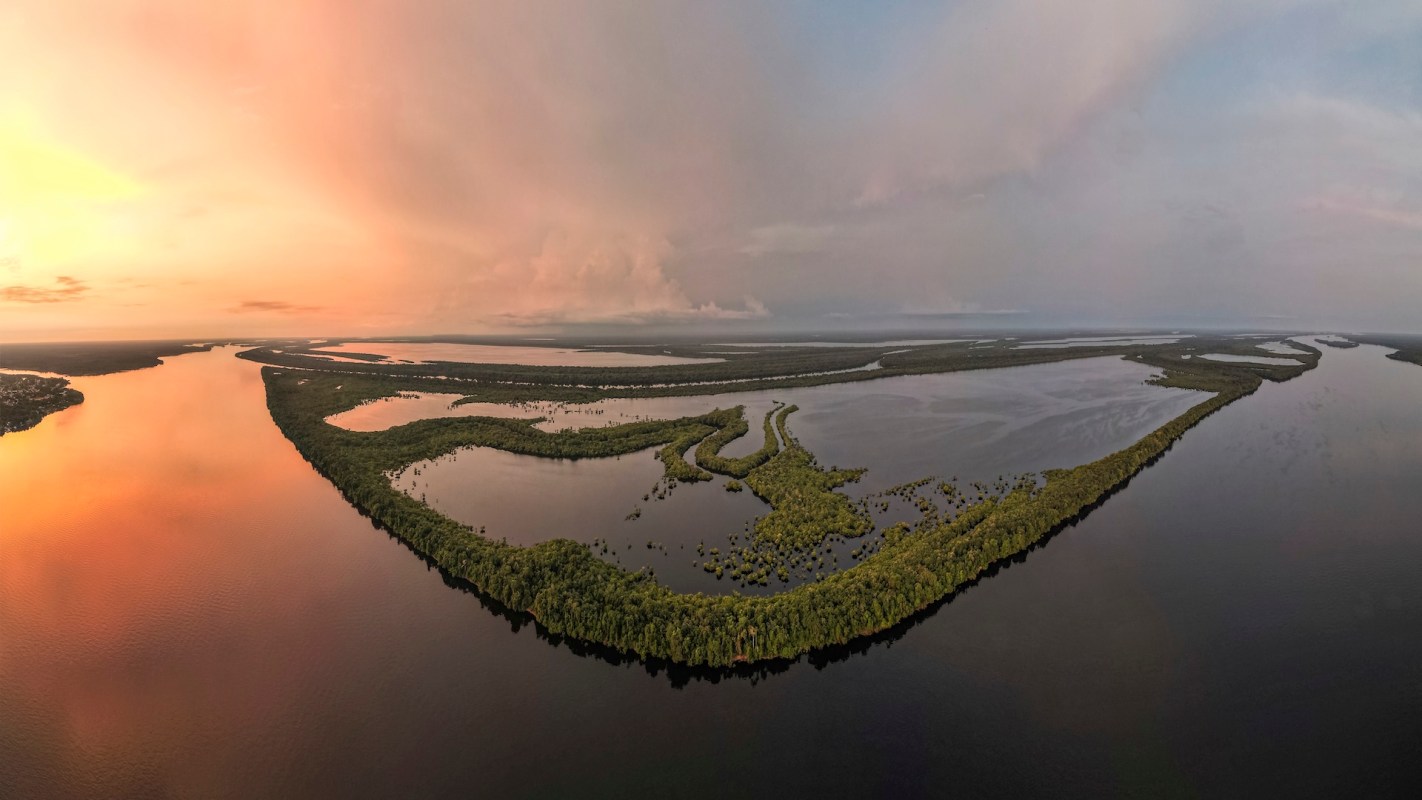
Even in one of the Amazon's most remote protected areas, plastic pollution is turning up where it should not be. Researchers found microplastics in fish living in Anavilhanas National Park, a sprawling freshwater archipelago several hours from Manaus, the capital city of Amazonas.
Here's what to know
In samples from Prato Lake, roughly eight out of every 10 fish were found to contain microplastics, according to a study cited by Mongabay.
The study also measured an average of 3.3 particles per fish and about 0.95 microplastic particles per gallon (0.25 per liter) of water, with contamination occurring regardless of feeding habits.
To Adalberto Val, whom Mongabay identified as a biologist at the National Institute of Amazonian Research, the results reflect how tightly connected Amazon waterways are. "As a result of the entire connectivity dynamic that exists between aquatic environments in the Amazon, plastic is found even in the most remote places," he said.
The report said the plastic likely comes from synthetic clothing fibers, discarded fishing nets, bottles, and packaging. Once those materials break into smaller pieces, rain, forest streams known as igarapés, and rivers can carry them onward. Flood season can spread that pollution farther still.
A separate set of measurements by Spanish researcher Andreu Rico found lower microplastic concentrations in Anavilhanas National Park, at about 4-6 particles per cubic yard. "But they show how plastics travel through water or air and how there is microplastic in any sample you take," Rico said.
TCD Picks » Quince Spotlight
💡These best-sellers from Quince deliver affordable, sustainable luxury for all




More background
The problem is not limited to the water. Studies cited in the report found microplastics in 95% of bats analyzed in parts of Pará state and in about 77% of tapir feces sampled across multiple Brazilian biomes, with the Amazon showing the highest average contamination.
Researchers have also raised concerns about what this could mean at the base of the food web. In one experiment, Amazonian caddisflies — insects that help break down leaves in streams and serve as food for fish and other animals — experienced extremely high mortality after exposure.
That potential for movement through the food chain is why Renato Tavares Martins, a researcher at the Adapta National Institute of Science and Technology, warned that the effects could spread quickly across the ecosystem, as reported by Mongabay.
"If a predator, such as a fish, eats a shredder insect, it will also be eating the microplastics inside that insect," he said.
What can be done?
Researchers are still working to understand the full health effects of microplastics on animals, but the pathways through which the pollution spreads are becoming clearer.
Improved sewage treatment, stronger waste collection, and less discarded fishing gear could all help cut the amount of plastic entering Amazon waterways. More monitoring is also needed in protected areas, not just near cities.
Scientists have already documented crested oropendolas building "blue nests" with plastic fibers, as well as contamination in estuary crabs that feed birds. Nicole Aleixo, who holds a master's degree in oceanography, said, "We know microplastics are there, but what do they cause?"

Get TCD's free newsletters for easy tips, smart advice, and a chance to earn $5,000 toward home upgrades. To see more stories like this one, change your Google preferences here.






