


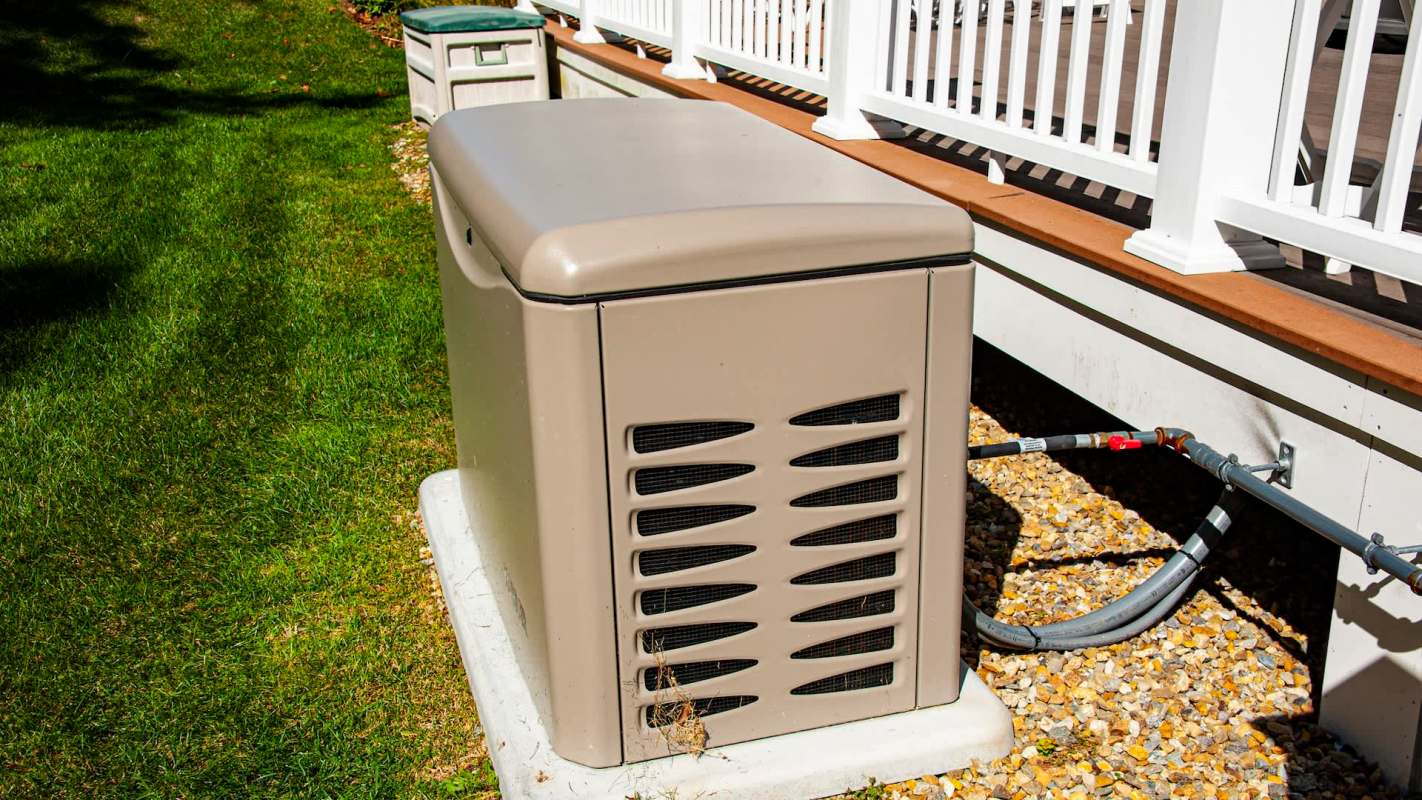
A whole-house generator can feel dependable right up until air conditioning enters the equation.
One homeowner's account of an aging standby unit struggling with even a modest AC load highlights a common backup power headache — and a potentially less expensive fix than replacing the system.
Here's what to know
Air conditioning had become the sticking point even though the rest of the backup setup was doing its job.
On Reddit, the original poster said a Siemens whole-house generator with a Generac engine was installed shortly after Superstorm Sandy in 2012.
After checking the equipment labels, the homeowner said the setup included a 17-kilowatt generator, a 5-ton air conditioner with 109-amp locked-rotor amperage, and a 2-ton AC unit with a 58.3-amp LRA.
The main AC no longer started on generator power, while the smaller unit was described as making the generator surge, LED lights pulse, and UPS battery backups beep.
TCD Picks » Quince Spotlight
💡These best-sellers from Quince deliver affordable, sustainable luxury for all




The discussion centered on what happens when compressors kick on, not just what they consume once running.
"Soft starts will make a huge positive difference for you," one commenter said, while others urged the homeowner to figure out which loads can run together safely since air conditioners often draw much more power at startup than during operation.
More background
By the homeowner's calculation, the two AC units used 42% of the generator's capacity. That is why the larger unit's startup surge appeared to be the bottleneck.
Flickering lights, voltage dips, and uninterruptible power supply alarms can signal unstable power, which can frustrate anyone trying to keep a home office, internet equipment, refrigerator, or sensitive electronics running.
Not everyone in the thread agreed on the cause. Some commenters saw an undersize setup for the home's cooling needs, while others suspected age-related wear in the generator.
One commenter said it may have been "on the border to begin with," while another wrote, "If the stepper motor is original, I would absolutely try replacing that before starting to look at bigger generators."
What can be done?
Across the discussion, the most common recommendation was a soft-start kit for the AC equipment because it can cut the inrush current that hits when a compressor starts.
If a soft start, maintenance visit, or component repair solves the issue, it would allow the homeowner to avoid replacing the generator too early.
Other suggestions included checking nameplates, measuring the combined load against the generator's output, and examining maintenance-related trouble spots such as the valve lash, throttle control behavior, fuel delivery, and compressor starting components.
One commenter also pointed to a side benefit of the soft-start approach, stating, "It's also easier on the AC unit and saves electricity running normally."

Get TCD's free newsletters for easy tips, smart advice, and a chance to earn $5,000 toward home upgrades. To see more stories like this one, change your Google preferences here.






