


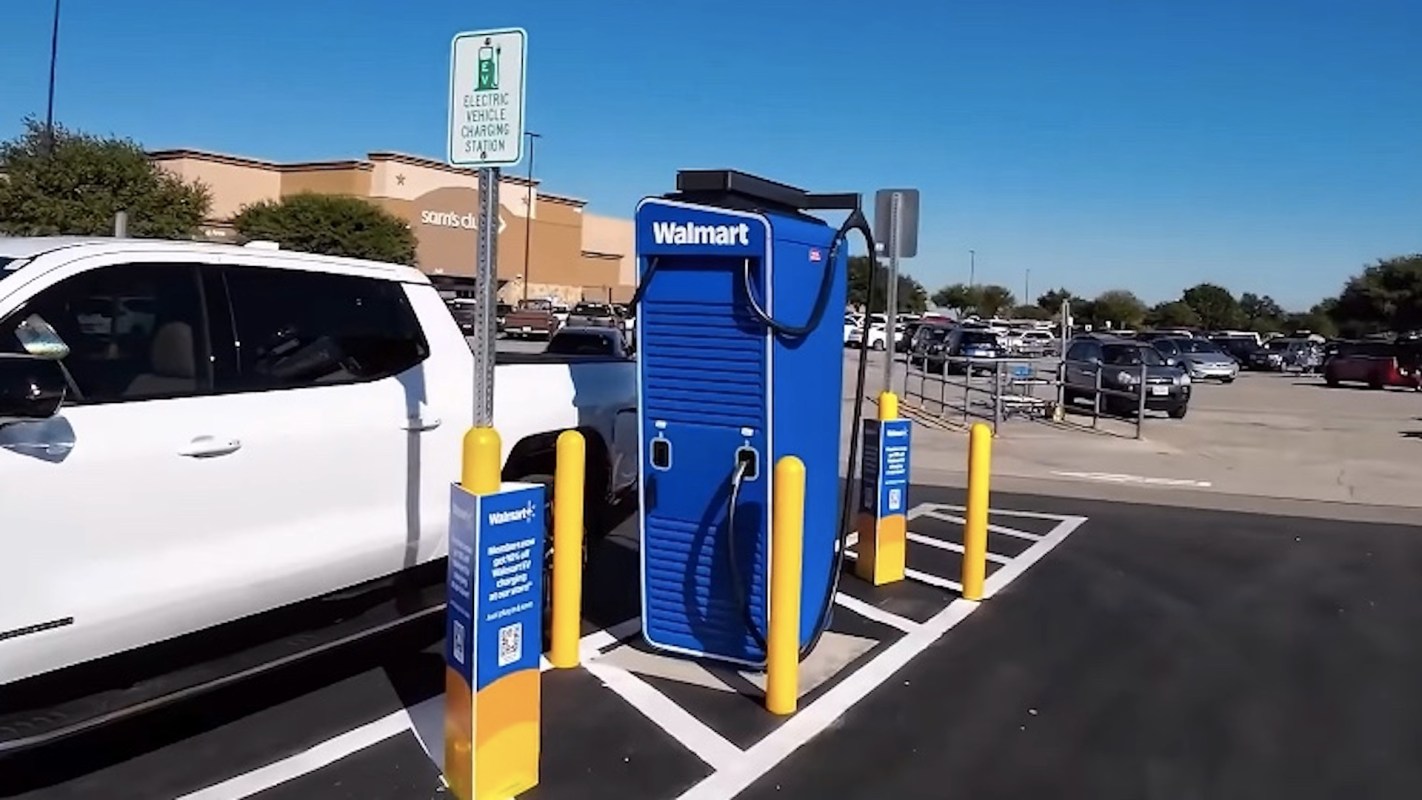
Walmart's move into EV charging is expected to do far more than add stations for EV drivers in its parking lots.
By pairing its store network with recharging rates below some of the biggest names in the industry, the retail giant could make public charging more affordable and convenient for drivers across the country.
Here's what to know
According to YouTuber The Electric Viking (@ElectricViking), who compared Paren's data on 17 fast-charging networks in the United States, Walmart ranks among the lowest-priced options among public EV charging stations.
The company averaged about 43 cents per kilowatt-hour, while Tesla Superchargers and Electrify America were near 56 cents. The result is, as The Electric Viking described, a "fast-charging price war."
"For years, fast-charging networks didn't have to compete on price because just finding a working charger was the challenge," he said. "But that era is over now. … For EV owners this is the best possible news."
Rather than relying on third-party partners, Walmart is building its own charging network, which could change what drivers expect from public charging. Walmart has more than 5,200 stores in the country, and about 90% of Americans live within 10 miles of one.
TCD Picks » Quince Spotlight
💡These best-sellers from Quince deliver affordable, sustainable luxury for all




"Walmart already owns the land, buys hardware at massive scale, and knows a charging customer spends 40 minutes inside the store, dropping 50, or 100, or 1,000 dollars," the Electric Viking explained. "The electricity is almost a loss leader to just get you through the door. Makes sense. Industry data shows chargers can lift store visits by around 5%."
Walmart has surpassed 100 charging stations and more than 800 stalls, with each site using 400-kilowatt chargers that include both Tesla-style NACS and CCS connections. The company has over 300 charging sites in the planning stages.
For drivers, having competing charging options could make refueling EVs cheaper and more convenient, particularly for people who would rather plug in during a shopping trip than make a stop just to charge.
More background
Public fast charging has long been a question of finding a working station before worrying about price. As networks grow, that balance may change, with cost playing a bigger role in where drivers choose to plug in.
For people thinking about buying an EV, that kind of price pressure could matter a lot, especially for renters, apartment residents, and shoppers who do not have a home-charging setup.
If Walmart's model works, consumers could see several upsides, including more fast-charging choices in familiar locations, lower costs to plug in, and pressure on other charging companies to keep prices competitive.
Retail charging could also solve a practical problem for households without garages or dedicated home chargers. If major stores offer fast chargers, a regular weekly shopping trip can also become a charging stop, making EV ownership more realistic for many families.
If Walmart, Ionity, and other expanding networks undercut older pricing models, drivers could end up with something long familiar at the gas pump: price competition.

Get TCD's free newsletters for easy tips, smart advice, and a chance to earn $5,000 toward home upgrades. To see more stories like this one, change your Google preferences here.






