


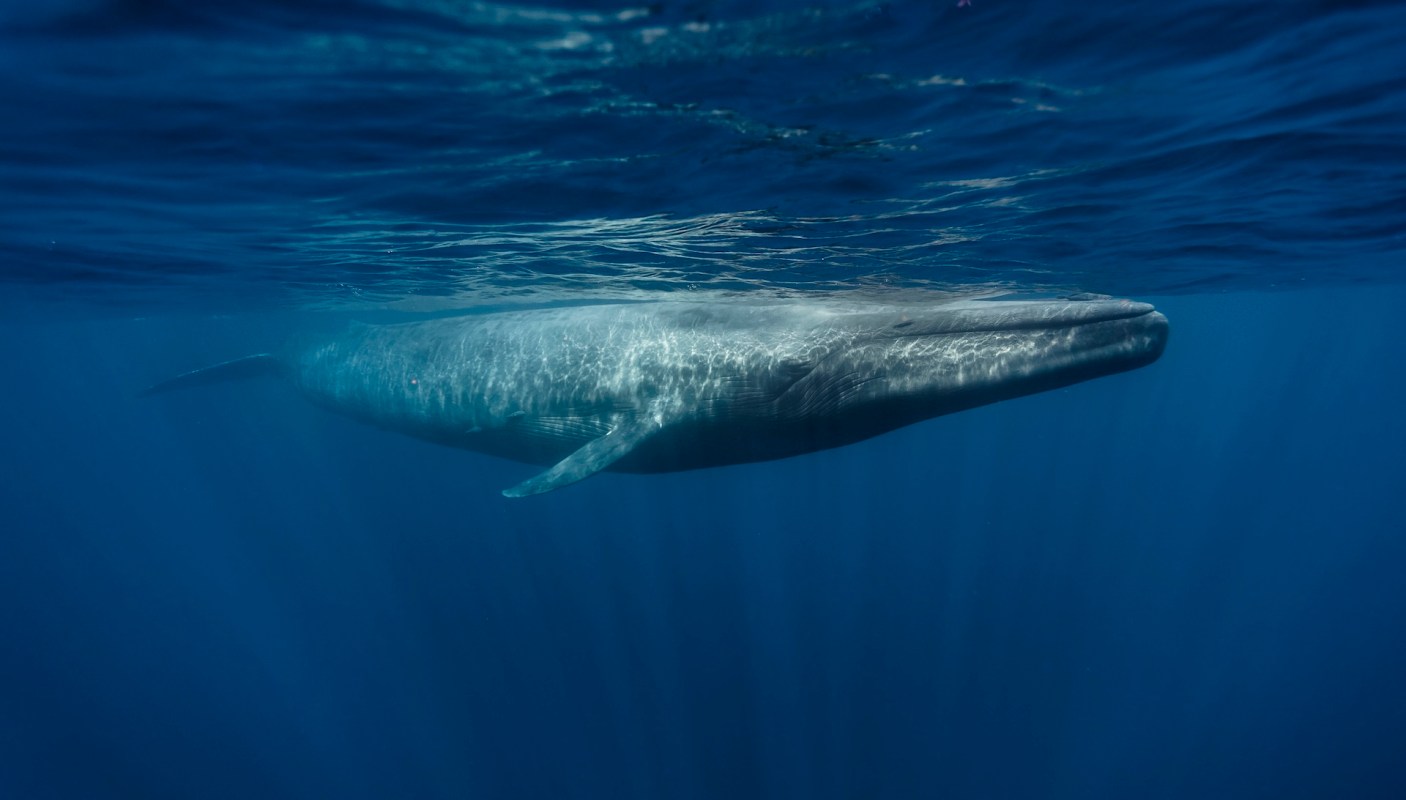
Off Namibia and South Africa, blue and fin whales are being seen more often — a modest but encouraging change in waters where industrial whaling once nearly wiped out the two largest animals on Earth.
For scientists and coastal communities alike, the sightings offer a rare piece of hopeful conservation news: Decades of protection may be helping some of the planet's most vulnerable marine giants slowly return.
Here's what to know
A review of southeastern Atlantic records suggests both species are turning up in the region more frequently, according to Earth.com.
To assess that trend, researchers assembled published studies, database entries, stranding reports, and sightings noted during unrelated work from May 1964 through March 2025.
Any recovery is unfolding from an immense historical loss. Between 1913 and 1978, commercial whaling killed about 350,000 blue whales and 725,000 fin whales, pushing both species out of many areas where they had once been common.
The study was led by Dr. Bridget James of the University of Cape Town's statistics-and-conservation center.
TCD Picks » Quince Spotlight
💡These best-sellers from Quince deliver affordable, sustainable luxury for all




"Our results provide important evidence that these giants of the ocean are slowly recovering from the devastating impact of 20th-century commercial whaling, which pushed them to the brink of extinction," Dr. James said, per Earth.com.
In the records the team reviewed, there were 12 confirmed blue whale sightings, as well as one stranding and five additional published records. Fin whales appeared more often, with 76 sightings and six strandings.
More background
Both species remain far below their pre-whaling population levels.
Researchers estimate Antarctic blue whales are still only around 3% of their former population, although they may be increasing by about 5% to 8% each year. Fin whales are believed to have rebounded further, reaching no less than 30% of their pre-whaling numbers with annual growth of roughly 4% to 5%.
The stretch of coast examined in the study sits within the Benguela upwelling ecosystem, where cold, nutrient-rich water rises and sustains abundant food. Historical whaling records suggest the area may once have functioned as a nursery for both species.
The Namibian blue whale records included two calves measuring under 33 feet, and Earth.com also reported a South African sighting of a mother with a calf.
Even so, there still are too few sightings to confirm that nursery theory.
What's being done?
The increase in sightings comes after commercial whaling officially ended in 1978.
For fin whales, the researchers kept only reports that could be verified by an observer or by photographs.
As a result, some possible sightings were left out.
Most blue whale records came from October to December, with additional observations in January, March, and April, but scientists say the sample is still too small to establish a dependable seasonal pattern. Still, there is mounting hope.
"Sightings remain rare, but they are becoming more frequent than in previous decades — and with sustained protection, there is reason to believe this recovery can continue," said Dr. James.

Get TCD's free newsletters for easy tips, smart advice, and a chance to earn $5,000 toward home upgrades. To see more stories like this one, change your Google preferences here.






