


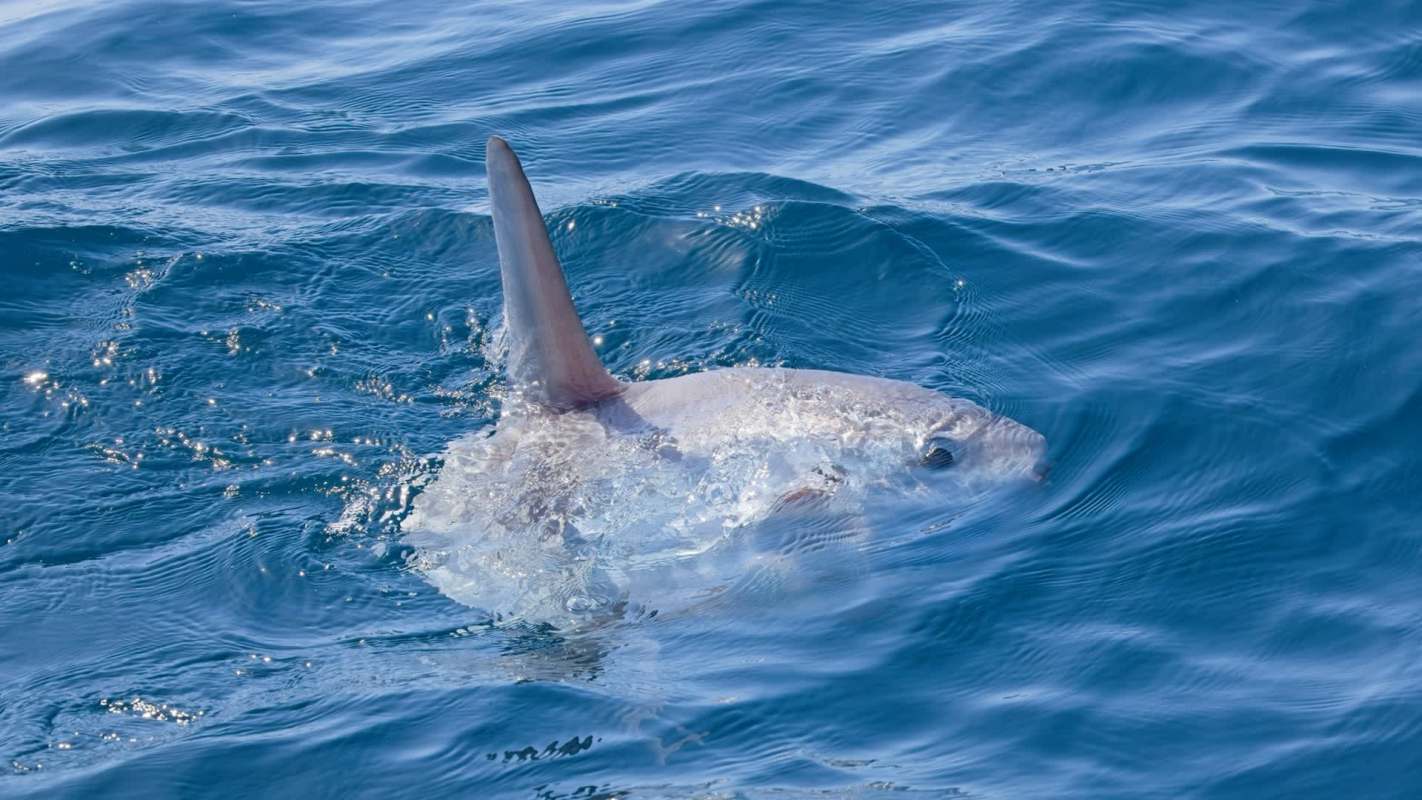
In an incident reported by The Guardian, a skipper in the English Channel mistook a pair of sunfish for someone signaling from the water. The fish were lying on their sides and beating their fins, which in itself is not abnormal, but it's not common to see them doing it that far north.
Here's what to know
As seas remain unusually warm, the makeup of British marine life is shifting. Species tied to colder conditions are edging north, and warm-water animals are appearing more often.
Accounts gathered by The Guardian from fishers, divers, and scientists suggest the story is much bigger than a few memorable sunfish encounters. In southern waters, colder-water fish are declining, while warm-water species and visitors once considered rare are turning up more frequently.
Brighton charter boat captain Kurt Lander said he has encountered sunfish before, but appearances in 2026 seem to fit a wider pattern. He explained their odd behavior, saying, "Apparently, they do it as a visual attraction to birds. They're trying to get the birds to eat the parasites off them," per The Guardian.
Sustained ocean warmth is driving much of this displacement of sea life. The Met Office described 2025 as "exceptional," with heatwave conditions lasting through roughly three-quarters of the year in parts of British waters, and 2026 is already following a similar course.
The change is also evident in what Lander brings in. Cod used to be a normal part of his catch, but now they are scarce. "I used to catch at least a couple of hundred cod a year," he said. Now, he added, "It's probably about one or two a year in the summer."
TCD Picks » Quince Spotlight
💡These best-sellers from Quince deliver affordable, sustainable luxury for all




More background
Scientists say this kind of redistribution is what they would expect in hotter seas. Dr. Zoe Jacobs, a senior researcher with the National Oceanography Centre in Southampton, said colder-water species have largely dropped out of the southern coastline and are doing better farther north, including in Scotland.
"Temporarily or permanently, we don't know," she said, per The Guardian.
Warmer-water species, meanwhile, are becoming more prominent. Lander said he is catching more bass, combers, and triggerfish, and The Guardian reported that the State of the South-West Seas report also found that sardines and anchovies are doing well.
The same pattern is showing up underwater. Gio Reale, a diver from Falmouth in Cornwall, said his favorite shark species, the small spotted catshark, is harder to find. The sharks prefer water around 61-63 degrees Fahrenheit, which may help explain the change.
"This summer, like every day, the water has been about 20 degrees Celsius (68 degrees Fahrenheit)," Reale said, per The Guardian, suggesting they may have moved into deeper, cooler waters.
Other marine animals are becoming more common, too. Since January 2025, common octopuses have surged in Devon and Cornwall, where warmer waters created favorable conditions. The Guardian noted that the species is native to the U.K., though it is not usually seen this often.
What's being done?
One of the most important responses is continued monitoring. Scientists, regional sea reports, fishers, and divers are all helping build a clearer picture of how marine heatwaves are transforming British ecosystems in real time.
Shifting species can affect food webs, local fisheries, and what coastal communities encounter on the water. That could mean changes in locally available seafood, different wildlife along the coast, and more strain on industries that depend on predictable marine conditions.
Because marine heatwaves often develop alongside long stretches of unusual heat on land, limiting the warming behind those extremes will be important for reducing future disruption. And while a single sighting cannot fix the problem, such observations can help communities understand the changes sooner and respond more quickly.
The changes are showing up in unexpected catches and sightings, and also disappearing species. As Reale put it, "Small water temperature changes have such big effects on marine life."

Get TCD's free newsletters for easy tips, smart advice, and a chance to earn $5,000 toward home upgrades. To see more stories like this one, change your Google preferences here.






