


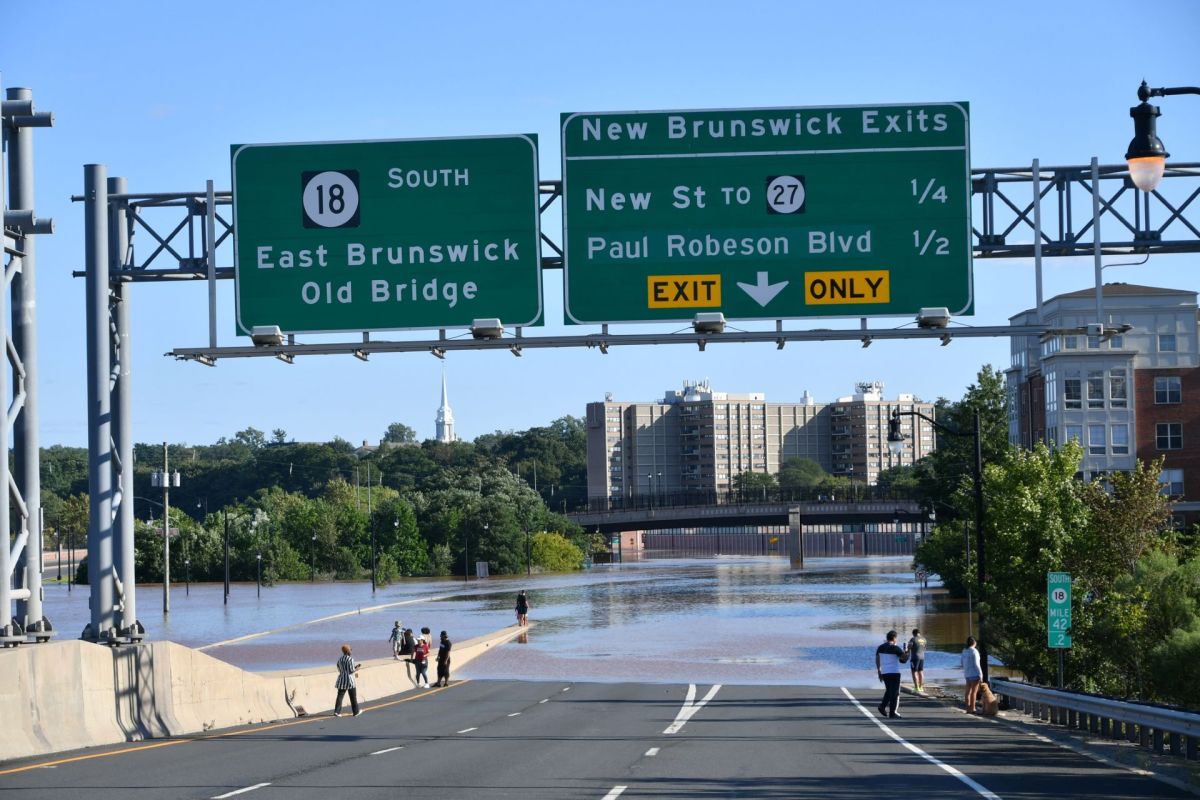
Hudson County elected officials, residents, and climate advocates rallied in Jersey City to push for the proposed Polluters Pay to Make New Jersey More Affordable Act.
They argued that families should not be left to absorb the growing costs tied to flooding, extreme heat, and infrastructure damage.
Here's what to know
At the Jersey City rally, speakers framed the legislation as a fairness issue, saying that communities dealing with climate harms should not be stuck paying while fossil fuel companies continue to rake in enormous profits.
The act would generate $50 billion over 20 years for resilience projects in New Jersey, according to a news release.
Food & Water Watch explained that the legislation "would require major fossil fuel extractors to pay for their role in driving the climate crisis and fund infrastructure upgrades to protect New Jersey communities."
By 2050, Rebuild by Design estimates that 184,000 Hudson County residents could be living in high flood zones. The same research found that 22.8% of properties in the county already carry high flood risk, with that share projected to rise to 31.7% by midcentury, per Food & Water Watch.
TCD Picks » Quince Spotlight
💡These best-sellers from Quince deliver affordable, sustainable luxury for all




At the event, Jersey City Mayor James Solomon said the bill was "about basic accountability." Because fossil fuel companies are the primary drivers of the changing climate and also profit from it, he said, they should cover the damage rather than leave residents and municipalities with the costs.
If the legislation becomes law, supporters say the revenue would be used for statewide infrastructure projects meant to lower flood and heat risks. That could include stronger protections for neighborhoods already dealing with overwhelmed stormwater systems and other costly vulnerabilities.
Food & Water Watch also connected the bill to job creation, saying it could produce 18,000 well-paying jobs over time while shifting the climate-cost burden from families and local governments to powerful companies.
More background
Climate policy is increasingly built around affordability. As floods become more routine and heat continues to drain the economy, the question is no longer whether communities will pay but who else should.
Residents bear climate change-related impacts in several ways, through repairs, insurance costs, disrupted commutes, business losses, health care expenditures, and public spending on cleanup and upgrades.
The proposed legislation comes as many states and local governments debate whether major fossil fuel companies should cover climate adaptation costs.
In New Jersey, advocates say the issue is about whether roads, drainage systems, schools, homes, and public spaces can be made safer before future disasters become even more costly.

Get TCD's free newsletters for easy tips, smart advice, and a chance to earn $5,000 toward home upgrades. To see more stories like this one, change your Google preferences here.






