


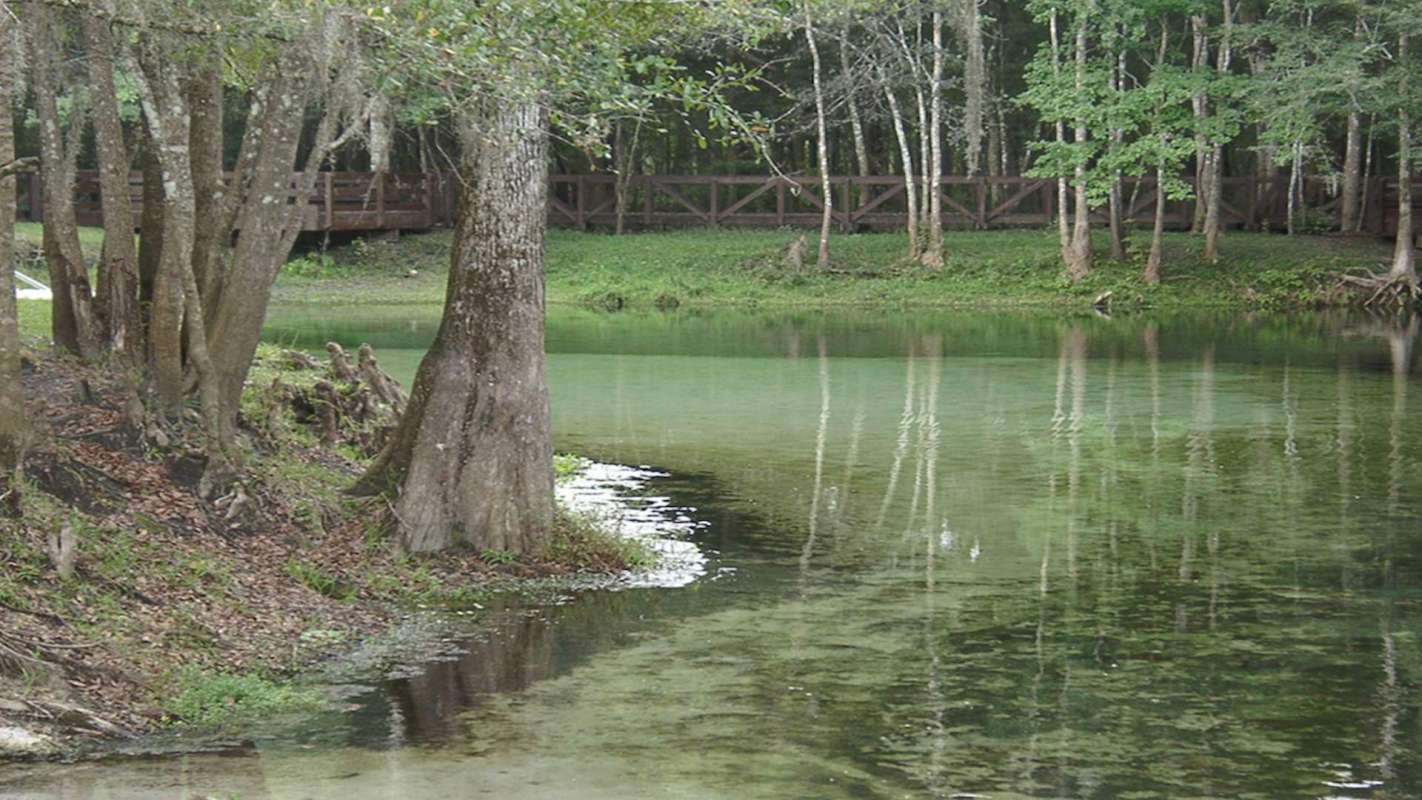
Florida's rainy season may be back above ground, but one of North Central Florida's springs has already reached a troubling milestone below the surface.
In Alachua County, WCJB reported that Poe Springs has stopped flowing, a sign that frequent summer rain is still not enough to overcome a severe drought and the longer-term strain on the aquifer that local communities depend on.
Here's what to know
Hydrologists are continuing to track drought conditions across North Central Florida while urging residents to conserve water as the aquifer recovers, per the station. Officials say the region's level 4 of 4 drought has improved somewhat, but river levels remain low and weak spring flow has led to some closures.
"A bad drought is like turning down the hose," Bill Hawthorne, an aquatic ecologist with the Florida Springs Institute, told WCJB. "Now with little rain, and groundwater pumping, Poe Springs has stopped flowing."
Despite daily rains, the Suwannee River Water Management District's update still shows a yearlong rainfall deficit in the area, with July precipitation totals coming in 30% below average.
The current conditions also fit into a much older pattern. WCJB noted that a 2016 Journal of Earth Science and Engineering study documented a 32% decline in spring inflow from Florida's aquifer, indicating that this drought is worsening an existing problem rather than introducing a new one.
TCD Picks » Quince Spotlight
💡These best-sellers from Quince deliver affordable, sustainable luxury for all




Falling groundwater levels can contribute to conservation orders, strain private wells, and push utilities toward costly infrastructure upgrades that can eventually affect household budgets.
More background
Florida's springs are fed by groundwater, meaning they reflect what is happening underground just as much as what is falling from the sky. Even when afternoon rain returns, a persistent shortfall over many months can leave aquifer levels struggling to recover.
The problem also reflects how human demand can compound natural dry spells. Groundwater pumping continues even during drought, which can make it harder for springs to recover. In practical terms, that means a community can feel surrounded by rain while still facing worsening water stress.
"The more groundwater we pump, the less water comes out of our springs," explained Hawthorne to WCJB.
What can be done?
Officials' clearest advice is to reduce water use. Conservation alone will not end a regional drought, but it can reduce pressure on the aquifer while rainfall gradually replenishes it.
On a broader level, continued monitoring by water managers and scientists can help guide restrictions, public messaging, and future infrastructure decisions.
Protecting aquifer health will require both natural recharge and sustained public buy-in. Without both, Florida's famous springs may become harder to access, more expensive to protect, and less reliable as a shared community resource.

Get TCD's free newsletters for easy tips, smart advice, and a chance to earn $5,000 toward home upgrades. To see more stories like this one, change your Google preferences here.






