


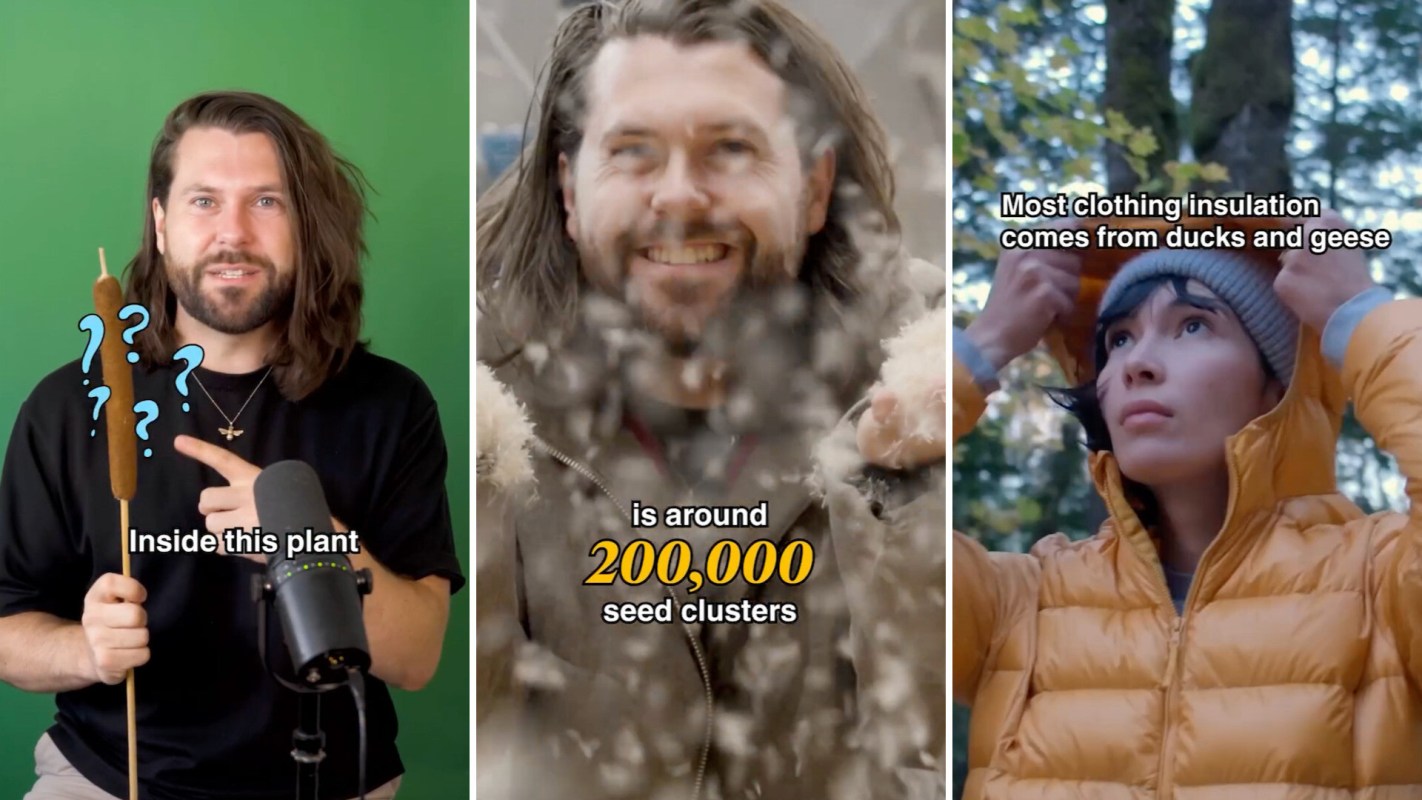
A fluffy marsh plant that many people overlook along the edges of ponds could help change what goes inside winter jackets.
In a widely shared Instagram reel posted on Aug. 21, climate creator Sam (@sambentley) highlighted cattail fluff as a possible alternative to both animal down and plastic-based insulation.
Here's what to know
With over 173,000 likes, the post spotlights a company called Ponda, which makes a plant-based insulation material called BioPuff from typha — the plant known as cattail in the United States.
To show why the material matters, the creator opens a cattail seed head, saying "inside each one of these corn-dog looking things is around 200,000 seed clusters that expand to about 300 times their dried size."
The idea is to replace two familiar insulation options: traditional down, which is obtained from duck and goose feathers, and synthetic fills such as polyester, which are plastic-based and can shed microfibers in the wash.
In the caption, the creator wrote that Ponda is already working with brands such as Stella McCartney and that more support for similar initiatives can give us warm clothes that help to heal the planet, too.
TCD Picks » Quince Spotlight
💡These best-sellers from Quince deliver affordable, sustainable luxury for all




Why is this significant?
Fashion's materials problem extends far beyond any single jacket. Cheap, overproduced clothing often relies on fossil-fuel-based fabrics, energy-intensive manufacturing, and supply chains linked to water contamination, air pollution, and exploitative labor practices.
Fast fashion is a bad deal for the environment and shoppers. Low-cost garments often wear out quickly, lose shape, pill, or tear, forcing people to replace them more often and spend more over time.
Insulation fill made from animal sources raises ethical questions, while synthetic alternatives add to the growing microplastics issue. The creator noted that polyester options "shed hundreds of thousands of microplastic fibers every time you wash them, ending up in our rivers and oceans."
Sam explained that typha grows in wetlands, which hold more carbon than all the forests worldwide. Unfortunately, many of these areas have been overrun, drained, and damaged. Ponda has partnered with farmers to bring these wetlands back to life by planting and growing typha on them.
What's being done?
Ponda's approach is tied to restoration rather than simply collecting a wild plant. The company pays farmers to rewet drained land so typha can grow, creating a business case for restoring damaged wetlands while producing raw material for clothing.
If that approach scales, it could give apparel brands another option besides petroleum-based insulation and animal-derived down. It could also help direct funding toward ecosystem recovery rather than more extractive production.
Using plant-based fills such as cattail fluff is great for reducing fashion's sizable carbon footprint. It also offers hope for a future in which quality clothes can perform well without relying so heavily on materials that warm our planet or harm wildlife.
"By switching to typha, we don't just avoid those problems, we actively rebuild one of the most important ecosystems on Earth as it grows!" Sam exclaimed in his post.

Get TCD's free newsletters for easy tips, smart advice, and a chance to earn $5,000 toward home upgrades. To see more stories like this one, change your Google preferences here.






