


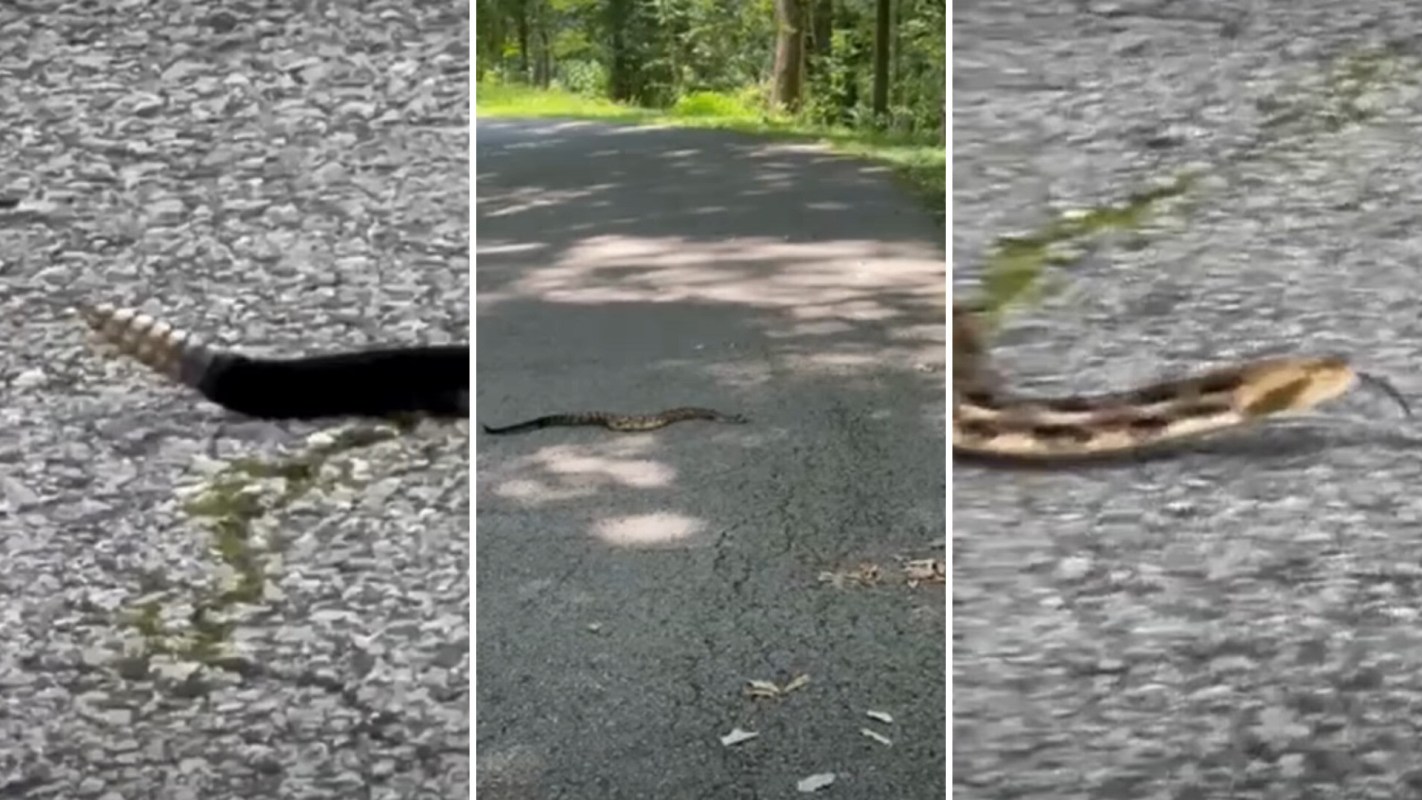
A Tennessee hiker's now-viral video out of Percy Warner Park shows an intimidating timber rattlesnake stretched out ahead just before a 5.8-mile route.
The Tennessee Wildlife Resources Agency says the species stands out among the state's venomous snakes as both the biggest and the most dangerous.
Here's what to know
During the park outing, local entrepreneur Renuka Christoph recorded the snake and later shared the footage with local TV station WSMV4 and Fox Nashville. As WSMV4 reported, the Tennessee Wildlife Resources Agency later said the animal was a timber rattlesnake.
The TWRA classifies the timber rattlesnake as Tennessee's most dangerous venomous snake and its largest. The agency describes the species as "a large, heavy-bodied snake with a large, triangular head, vertical pupils, and the characteristic rattle at the end of the tail." Tennessee's other venomous snakes are the pigmy rattlesnake, the cottonmouth, and the copperhead.
These snakes are usually between three and five feet in length. And while their appearance is variable, many are gray with dark crossbands, a black tail, and sometimes have a rust-colored stripe along the spine.
More background
Timber rattlesnakes are most often associated with older, thick forests on south-facing rocky slopes. They can also turn up near bluffs, ledges, wooded stream corridors, swamps, mountains, and other rural settings, where they may be found coiled beside downed logs or warming themselves on rocks.
TCD Picks » Quince Spotlight
💡These best-sellers from Quince deliver affordable, sustainable luxury for all




Even heavily used outdoor spaces remain part of wild animals' habitat. In places where hiking, running, and development overlap with forested land, people are more likely to cross paths with snakes and other wildlife.
The BBC's reporting on why wild animals attack humans notes that human expansion and activity can increase contact with animals that would otherwise avoid people. In a park like Percy Warner, a routine workout or walk can quickly become a wildlife encounter.
Coming across a rattlesnake is a situation where people should prioritize keeping their distance and avoiding confrontation. While these snakes usually do not act aggressively toward people unless they are scared or feel threatened, experts warn against shouting at them, waving objects, or trying to push them off a trail with a stick, per WSMV4.

Get TCD's free newsletters for easy tips, smart advice, and a chance to earn $5,000 toward home upgrades. To see more stories like this one, change your Google preferences here.







