


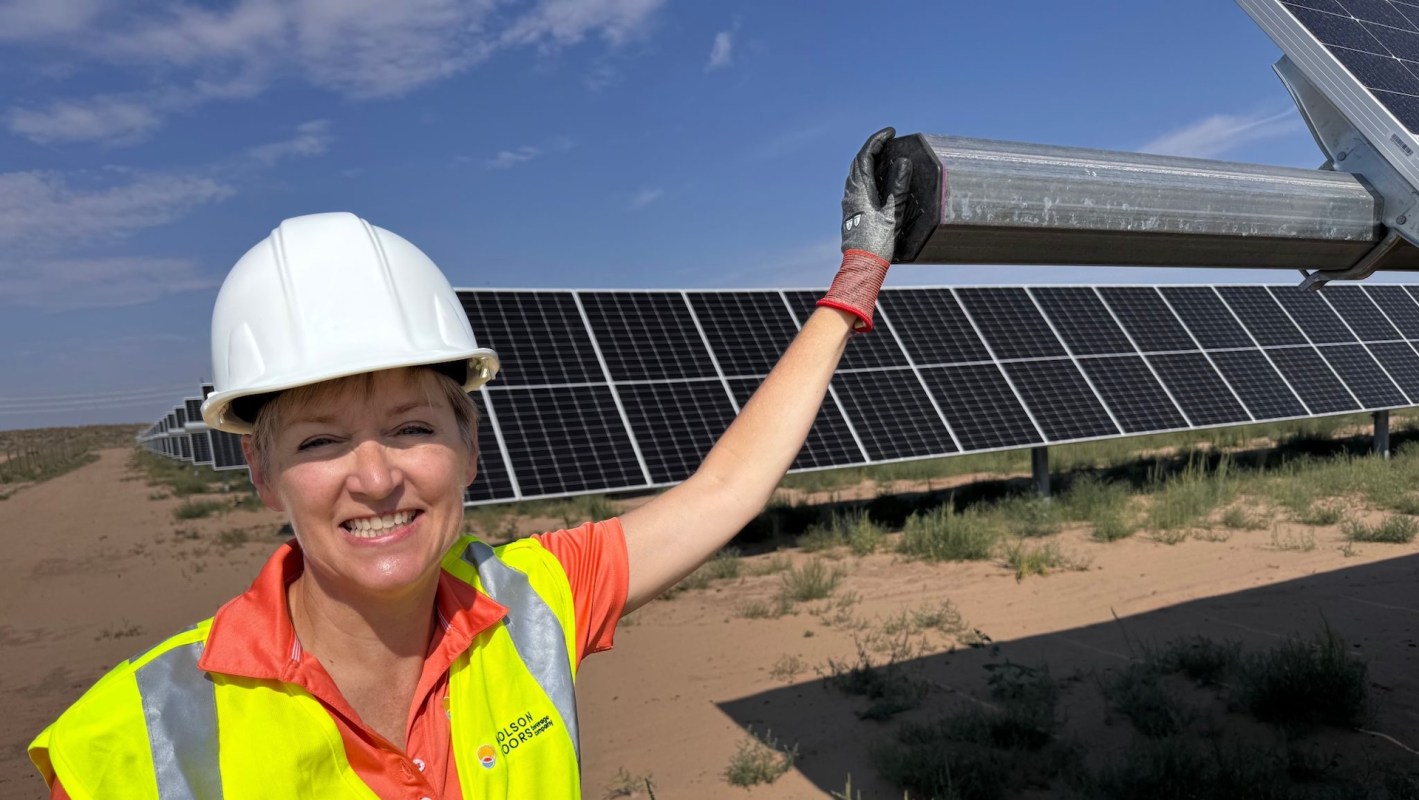
Molson Coors plans to source part of the electricity for its Golden Valley operations from an unusual place: a former coal mine in Keenesburg, Colorado, which is being converted into a solar farm.
Here's what to know
A rural property once used for coal production in the 1980s is now being redeveloped for solar — to the tune of 16,000 panels, according to Denver7. That means the property will be used instead of producing fossil fuels to generate clean, renewable solar electricity.
Once the project is complete, it's expected to produce about 7.2 megawatts of electricity. Denver7 reported that amount would cover roughly 7% of the annual power demand at Molson Coors' Golden Valley operations.
Molson Coors sustainability executive Rachel Schneider said the power will reach those facilities through the utility system they already use.
"This will feed directly into the Xcel grid that our Golden Valley operations pull from," she said.
Denver7 reported that the Golden Valley site includes more than just the brewery. There are also operations like yeast drying, canning, bottling, and distribution that are part of the complex.
TCD Picks » Quince Spotlight
💡These best-sellers from Quince deliver affordable, sustainable luxury for all




More background
Energy-producing regions often seek to build on their economic history while adapting to new technologies, and projects like this repurpose retired or underused industrial land rather than leaving it idle.
Solar can also help make operating costs more predictable over time. Electricity generated from sunlight is not subject to the same fuel-price swings as coal or gas, which can make planning easier for large facilities and, in some cases, help keep costs down across supply chains.
Replacing a portion of conventional power demand with solar can also reduce pollution from burning fossil fuels, cutting emissions that contribute to dirtier air and climate risks.
Colorado state Rep. Carlos Barron, who represents House District 48, said the project has broader significance for Weld County, a region with a long history of energy production.
What's being done?
Molson Coors is using the project to directly reduce the carbon footprint of a major manufacturing and distribution hub. Because the project feeds into the Xcel grid, its output can be folded into the same power network the company already uses.
Barron also highlighted potential benefits for communities around the county. More energy production can benefit municipalities across the county.
Plus, according to Denver7, Molson Coors said it has other land that may be suitable for future solar development. As Schneider put it: "We have plenty of land to do more solar out here, yes, for sure."

Get TCD's free newsletters for easy tips, smart advice, and a chance to earn $5,000 toward home upgrades. To see more stories like this one, change your Google preferences here.






