


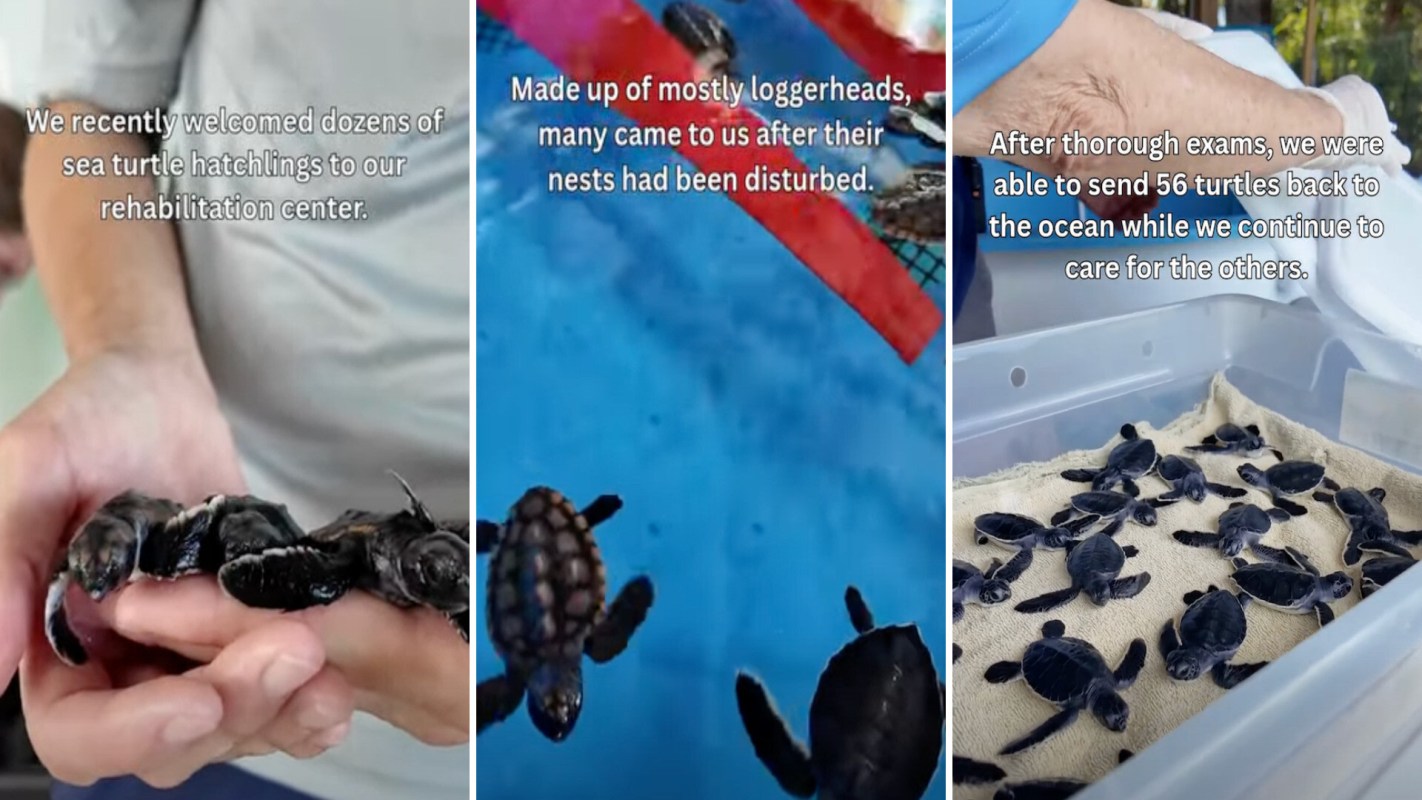
A group of 56 baby sea turtles in Florida made their way back to the ocean by an unconventional route: a boat ride out to the floating seaweed habitat where they have their best chance of survival.
After receiving care at a rehabilitation center in Brevard County, the hatchlings were taken offshore to sargassum weed lines instead of being released directly from the beach.
Here's what to know
The East Coast Zoological Foundation's first offshore hatchling transport of the nesting season came after dozens of baby sea turtles were recovered from disturbed nests on local beaches, Hoodline reports. As Hoodline reported, citing a Brevard Zoo video posted to Facebook, most of the turtles were healthy enough to return to the ocean after resting, receiving minor wound treatment, and being fed.
Because young sea turtles use offshore sargassum mats for food and protection, rescue teams may carry them as far as 20 miles from shore so they can be released directly into that habitat instead of having to fight through the surf on their own.
These rescue efforts are one reason the foundation opened its Sea Turtle Healing Center in April 2014, according to Hoodline. The facility has 14 holding tanks and treats about 100 marine turtle patients each year, including turtles with fibropapillomatosis, a contagious disease that causes tumors.
Much of Brevard County's coastline lies within the 20.5-mile Archie Carr National Wildlife Refuge, established in 1991. Hoodline notes the U.S. Fish and Wildlife Service describes it as the "most significant loggerhead nesting habitat in the Western Hemisphere and the top green turtle nesting area in North America."
TCD Picks » Quince Spotlight
💡These best-sellers from Quince deliver affordable, sustainable luxury for all




More background
Along Brevard County beaches, Florida Fish and Wildlife Conservation Commission data for the 2025 season cited by Hoodline recorded 22,716 loggerhead nests, 30,431 green turtle nests, and 129 leatherback nests.
Those nesting totals do not change the dangerous predicaments hatchlings can face. Hoodline, citing the Sea Turtle Preservation Society, says only about 1 in 1,000 survives long enough to reproduce, a process that can take 20 to 25 years.
Predators are only part of the problem. Artificial lighting can disorient both nesting females and hatchlings, pulling them away from the ocean, while holes, sand structures, and other beach clutter can block or trap them before they reach the water.
What's being done?
When stranded hatchlings are found, rehabilitation staff and the Sea Turtle Preservation Society recover them, help stabilize them, and release them into safer offshore habitat when needed.
During nesting season, which runs from May through October, officials are asking beachgoers to make simple changes. One recommendation is to use shielded, low-wattage amber, orange, or red lighting to reduce disorientation for turtles trying to reach the water.
People can also help by knocking down sandcastles, filling in holes, and removing chairs, toys, and trash before leaving the beach. Those small steps can remove serious obstacles for hatchlings emerging overnight.
Anyone who finds a distressed hatchling in Brevard County is urged to get guidance before handling it. The Sea Turtle Preservation Society can be reached at 321-206-0646, and interfering with sea turtles, nests, or eggs is also a felony under Florida's Marine Turtle Protection Act with penalties of up to 5 years in prison and a $100 fine per illegally owned sea turtle egg.
The region's response capacity may grow further, as the East Coast Zoological Foundation plans expanded rehabilitation space through its future Bowen Aquarium and Conservation Center.
The Sea Turtle Preservation Society gives one instruction clearly: "Never put a stranded or exhausted hatchling back into the ocean surf."

Get TCD's free newsletters for easy tips, smart advice, and a chance to earn $5,000 toward home upgrades. To see more stories like this one, change your Google preferences here.







