


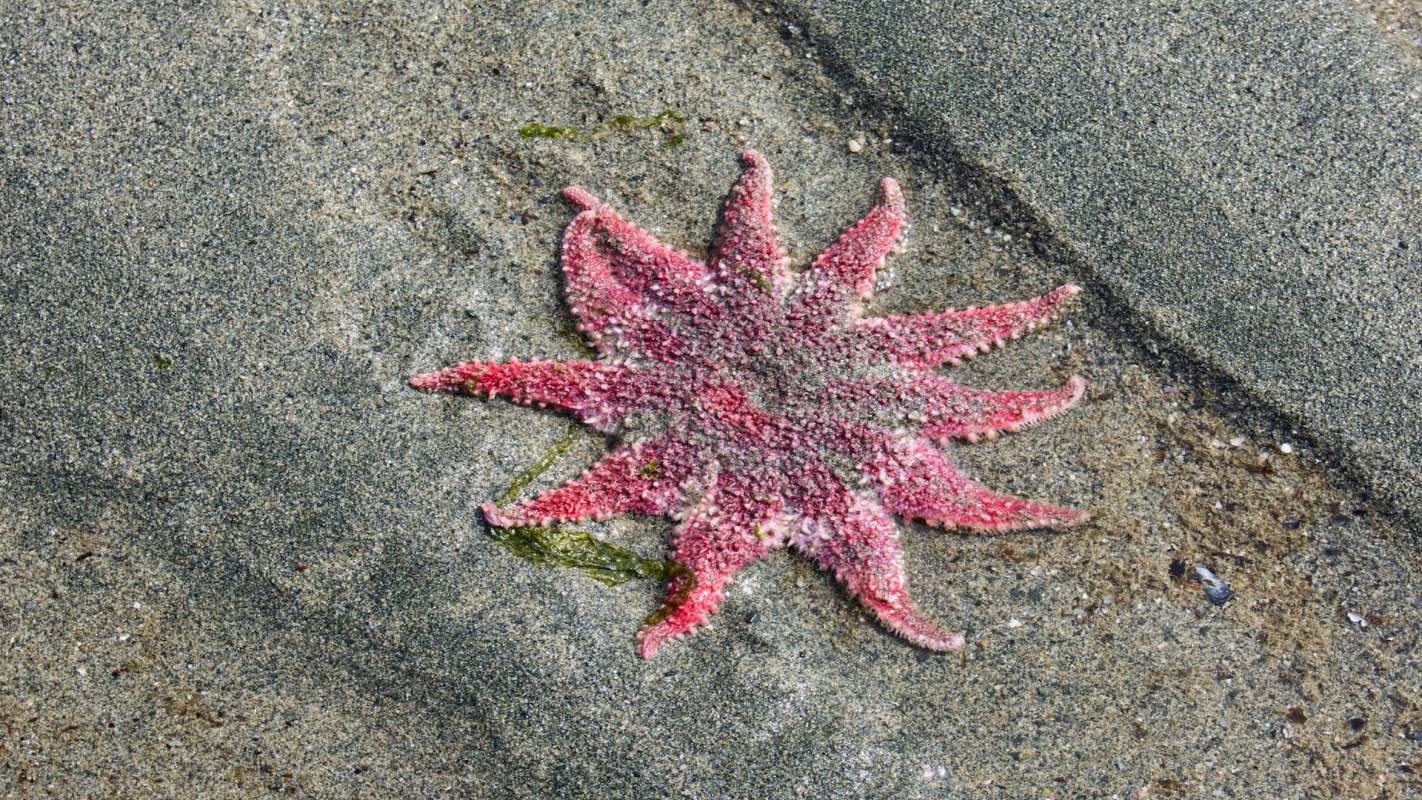
A Washington State tribe and University of Washington researchers have taken a rare step to help restore a damaged ocean ecosystem, releasing 20 lab-raised endangered sunflower stars into the Salish Sea off Decatur Island.
Here's what to know
The goal reaches beyond a single unusual sea creature. As NPR reported, the project is part of a wider attempt to rebuild kelp forests that sustain marine life, buffer shorelines and help coastal communities hold on to an important part of their environment and culture.
Sea-star wasting disease has ravaged the sunflower star, a fast-moving species that can span more than 3 feet. University of Washington research scientist Jason Hodin said to NPR, "We've lost 90% of our sunflower stars, we think."
As the outbreak moved from northern Mexico to Alaska, it affected dozens of sea star species, with the sunflower star suffering the most severe losses.
Because sunflower stars feed on sea urchins, their disappearance can allow urchin numbers to spike and chew through kelp forests.
Scientists say kelp beds are important habitat for fish and other marine species, and they also help shield coastlines from erosion.
TCD Picks » Quince Spotlight
💡These best-sellers from Quince deliver affordable, sustainable luxury for all




For the Samish Indian Nation, as NPR reported, that restoration effort also carries cultural significance. Samish tribal chair Tom Wooten said to the outlet that kelp is not only habitat but part of a living relationship with the water and with the tribe's history in its traditional territory.
More background
The stars released near Decatur Island came from the University of Washington's Friday Harbor Laboratories, where researchers have learned how to breed and care for a species that was not widely studied before the die-off.
The project has moved slowly and become deeply personal, with staff members naming some of the stars Nacho, Baby Carrot and Pluot before sending them into the wild.
The recovery work has also faced disruptions. After divers found wasting disease in the San Juan Islands, the release was delayed, highlighting how vulnerable the effort remains.
Ocean warming is adding to the difficulty. NPR reported researchers say heat waves at sea helped the Vibrio bacteria associated with wasting disease flourish.
Researchers say the sunflower star's collapse is part of a wider strain on marine ecosystems that people depend on for food, jobs and coastal protection.
Meanwhile, the tribe has been purchasing land, building housing and restoring habitat as it works to strengthen its community and help people reconnect with home.
What's being done?
Researchers are treating this first release as an initial trial, NPR reported. In the months after the release, divers had found 14 of the 20 stars and had seen no signs of disease.
They are also trying other approaches, including releasing thousands of tiny juvenile sunflower stars to test whether that method could support recovery on a larger scale.
Twelve labs along the West Coast are raising sunflower stars, and more limited releases are planned in Oregon and California.
NPR reported the Samish Nation has paired the species work with broader habitat and climate efforts. Its Department of Natural Resources has tracked kelp beds and replanted one in the San Juan Islands, and the tribe has ordered a zero-emission electric research boat that is expected in 2027.

Get TCD's free newsletters for easy tips, smart advice, and a chance to earn $5,000 toward home upgrades. To see more stories like this one, change your Google preferences here.






