


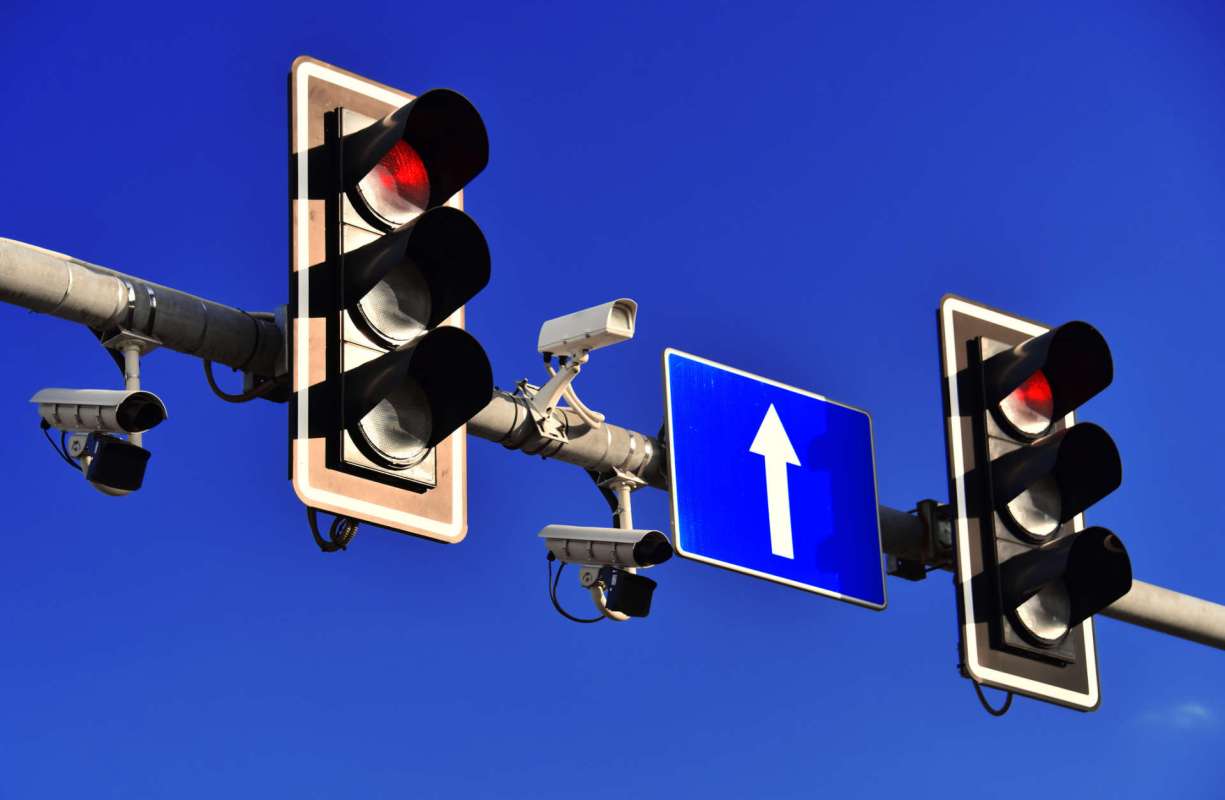
Across western Massachusetts, more municipalities are installing automated license plate readers on poles and streetlights to record passing vehicles.
Law enforcement agencies say the AI-enabled cameras can help move investigations along more quickly, while critics warn they make everyday driving searchable, as detailed in an investigation by The Shoestring.
Here's what to know
The outlet found the technology was in use in at least 13 western Massachusetts municipalities in 2026.
Between January and early June 2026, outside agencies included Holyoke's cameras in more than 3.5 million searches.
In April 2026 alone, a police officer in Midland, Texas, searched more than 4,800 Flock devices, including Holyoke's, and listed the reason as "Immigration (civil/administrative) — ASSIST ICE."
Unless an agency limits sharing, police departments using Flock Safety can search cameras run by other departments.
TCD Picks » Quince Spotlight
💡These best-sellers from Quince deliver affordable, sustainable luxury for all




Privacy advocates and some public officials say that broad access is especially concerning in communities that have tried to reduce cooperation with federal immigration enforcement.
The American Civil Liberties Union has described Flock's expanding reach as a "dangerous nationwide mass-surveillance infrastructure."
Easthampton offers one example of how those access settings can shape outcomes.
Logs from 2025 showed searches of its network labeled "ICE pick up," "immigration violation," and "ICE ERO." Easthampton Police Chief Chad Alexander said that after taking over in May 2025, he disabled out-of-state sharing.
In the 2026 records reviewed by The Shoestring, only Massachusetts agencies appeared in Easthampton's outside search logs.
More background
Concerns about automated plate readers extend beyond immigration enforcement.
A Washington Post investigation found that at least 50 law enforcement officers across the country had been charged or accused of misusing license plate reader systems, including to stalk women.
After that reporting, Flock said it would require criminal case numbers for searches and reduce its default data retention settings.
However, the Electronic Frontier Foundation described those steps as "cosmetic fixes that fail to address the fundamental dangers of this technology."
A vehicle can be logged and tracked even when its owner is not suspected of any crime.
That has fueled concerns about warrantless location tracking, data misuse, and security breaches if large databases are accessed improperly.
What's being done?
Some communities are already pulling back.
Easthampton ended its contract with Flock after the City Council cut $6,000 for annual software costs, and Alexander said the devices were no longer operating.
On July 16, Chad Marlow — a senior policy counsel with the ACLU — told Democracy Now! that nearly 60 municipalities nationwide either canceled Flock contracts or chose not to renew them.
Massachusetts lawmakers are also considering statewide limits.
State Rep. Lindsay Sabadosa, D-Northampton, and Rep. Steven Owens, D-Watertown, filed a bill that would set limits on police use of automated plate readers, data retention, and warrantless access to information gathered by other agencies.
The bill was sent to the House Ways and Means Committee in March 2026.
At the local level, critics say public oversight is just as important as statewide rules. Boston requires annual surveillance reports, and Northampton restricted the use of public-space surveillance technology in 2017.
In Agawam, City Councilor Christine Rickmon has pressed for more answers about how Flock devices were funded, placed, and approved.
Easthampton City Councilor Tom Peake acknowledged that the larger issue is who gets to decide how these systems are used.
"There needs to be a more complete conversation about what exactly that means for people, what the checks and balances are on that, who has access to that data."

Get TCD's free newsletters for easy tips, smart advice, and a chance to earn $5,000 toward home upgrades. To see more stories like this one, change your Google preferences here.






