


Many first-time vegetable gardeners buy the familiar wire tomato cages without realizing they are often too small for the plants they intend to grow. With indeterminate tomatoes in particular, those supports may be overwhelmed well before the harvest season ends.
One gardening pro says growers should skip that common setup for vining tomatoes and use something much taller and more durable instead.
Here's what to know
In a video posted on YouTube, the experts at Gardenary explained that indeterminate tomatoes tend to grow and fruit much longer than beginner gardeners expect, which is why typical tomato cages often fall short for those plants.
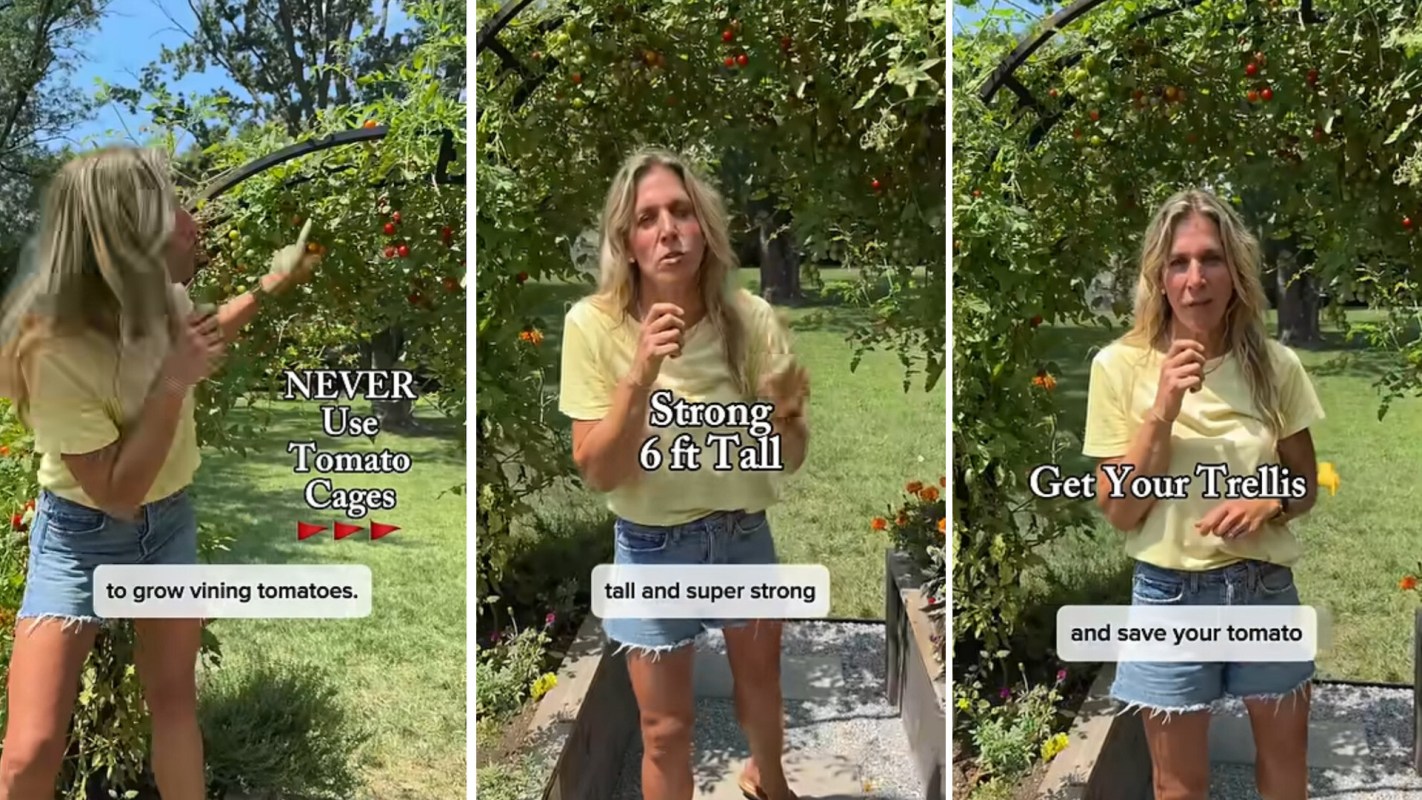
Pointing to vines that had already filled an entire arch support, the creator said, "These tomatoes still have two more months to grow, and they have completely covered this arch trellis," underscoring how quickly a small conical cage can be outgrown.
In the creator's view, a standard cage would have failed much earlier: "If these plants had been in a tomato cage, they would have fallen over two months ago."
The suggested alternative was a more substantial structure built for long vines and ongoing picking. As the creator put it, "When you grow vining tomatoes, you need a trellis that's at least 6 ft tall and super strong."
TCD Picks » Quince Spotlight
💡These best-sellers from Quince deliver affordable, sustainable luxury for all




One commenter related immediately, writing, "I wish I knew this beginning of the season. My tomatoes are completely bent over after growing out of their cages."
More background
Determinate tomatoes usually reach a fixed size and ripen over a shorter period, while indeterminate tomatoes continue to sprawl and produce fruit until disease or colder weather stops them.
That means support needs can vary dramatically depending on the variety.
A weak support system can lead to snapped stems, fruit resting on the ground, and a tangled plant that is harder to prune, inspect, and harvest. A sturdier trellis can also improve airflow and make plants easier to manage once they grow large and heavy with fruit.
More homeowners are looking for ways to make outdoor spaces both productive and easier to maintain, whether by adding vegetable beds or reducing the amount of thirsty grass around the home.
Even a partial lawn replacement with native plants, clover, buffalo grass, or xeriscaping can save money and time on upkeep while lowering water bills.
For anyone considering a yard makeover alongside a food garden, switching to a natural lawn or rewilding your yard can help create a space that supports pollinators while reducing mowing and watering demands.
What can be done?
The key fix for indeterminate tomatoes is choosing support based on how the plant grows. A substantial trellis or other heavy-duty framework is generally a better match for those long vines than the short cages often sold for tomatoes.
Reading plant tags before buying supports can also help set expectations. A variety labeled indeterminate is more likely to grow as a long vine than as a compact bush, which is why the creator suggested putting smaller cages to use on other crops instead: "And save your tomato cages for your eggplants."
Combining smart food-growing systems with low-maintenance landscaping can help stretch yard budgets further. Native plantings, clover, buffalo grass, and xeriscaping all offer alternatives to traditional turf, and even replacing only part of a lawn can reduce watering, mowing, and fertilizer use.

Get TCD's free newsletters for easy tips, smart advice, and a chance to earn $5,000 toward home upgrades. To see more stories like this one, change your Google preferences here.







