


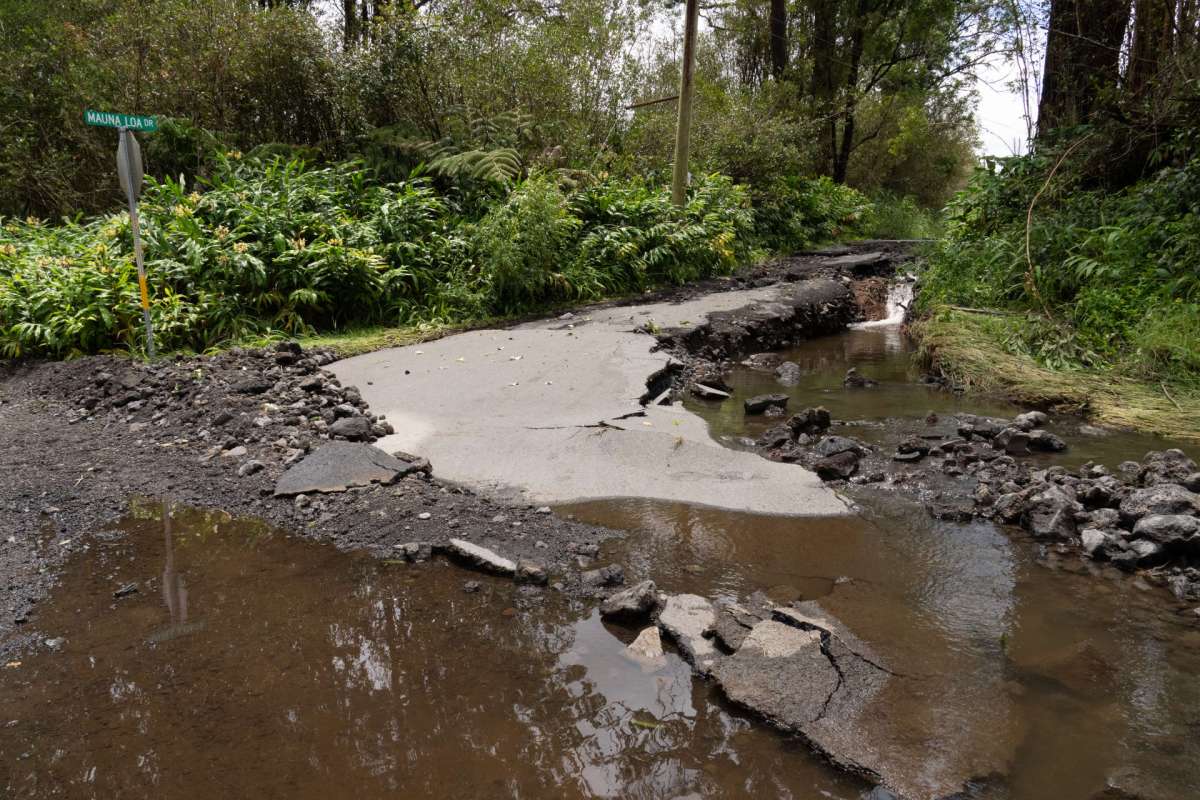
Hurricane Lala may not have made an official landfall on Hawaiʻi's Big Island, but for residents of Kaʻū, that distinction meant little as floodwaters and high winds washed away homes, collapsed roads, and tore apart a cemetery across the rural district.
"It's complete and utter devastation," said State Rep. Jeanne Kapela, whose District 5 includes Kaʻū, according to nonprofit news organization Honolulu Civil Beat.
Here's what to know
After weakening to a tropical storm, Lala still struck Hawaiʻi, dumping the equivalent of 1.9 million Olympic-size pools of water across the islands, according to University of Hawaiʻi News.
Honolulu Civil Beat reported that some of the worst damage was in Kaʻū on the Big Island. Some areas saw winds top 80 miles per hour, while major roads became impassable and dozens of homes were destroyed.
"The entire community is impacted," Kapela said.
Hawaiʻi Mayor Kimo Alameda, after surveying the damage in Kaʻū from the air, said, per the Civil Beat, "I counted six bridges that are destroyed or almost destroyed."
TCD Picks » Quince Spotlight
💡These best-sellers from Quince deliver affordable, sustainable luxury for all




In Nāʻālehu, floodwaters also unearthed caskets and headstones, scattering cemetery debris through town. Oʻahu, Maui, and Kauaʻi also experienced downed trees, power outages, road closures, and flooding, though not at the scale of destruction seen in Kaʻū.
More background
The storm showed how extreme weather can leave rural communities cut off from roads, utilities, and emergency access all at once.
In Kaʻū, Highway 11 — a critical link for the district's communities — was washed out, according to the Civil Beat, making relief efforts and access to basic needs such as medication, fuel, and clean water even more difficult.
Even in areas that escaped the worst of the storm, residents were left coping with outages, debris, supply runs, and uncertainty over travel and recovery.
What's being done?
County crews, first responders, the Hawaiʻi National Guard, and local volunteers have already begun what will likely be a long recovery process.
"We have community leaders and hometown heroes using their own equipment to try and clear the road from the inside out," Kapela said, per the Civil Beat.
Alameda also plans to pursue federal funding with Gov. Josh Green, while crews in Kaʻū remained focused on clearing roads and restoring access.
Rebuilding homes, bridges, and basic infrastructure could shape daily life in Kaʻū for a long time. AccuWeather reported that Lala caused an estimated $3 to $5 billion in financial damages.
"It was a very emotional night for all of us here," Jolynn Grimes, who lives in rural Kaʻū, told the Civil Beat. "You know, we're all we got. We're our one family. You know, we're not blood related, but we're all family here."

Get TCD's free newsletters for easy tips, smart advice, and a chance to earn $5,000 toward home upgrades. To see more stories like this one, change your Google preferences here.







