


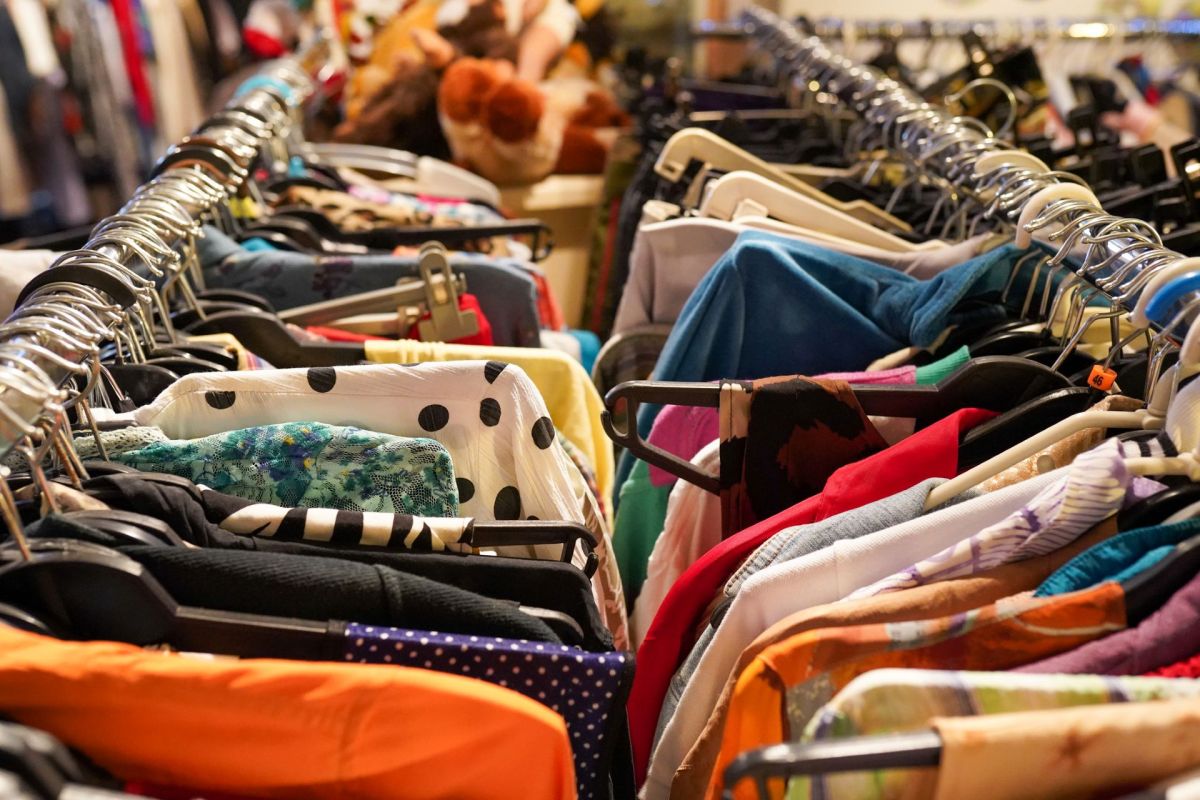
A growing number of thrift stores in Canada are struggling to keep up with donations, as clothing piles up faster than they can sell, reuse, or give away.
Oversaturation is leaving many stores with no choice but to send unsold items to the dump — an expensive and troubling outcome.
The scoop
Hand in Hand — a non-profit thrift store in Halifax — is dealing with daily overflow.
"It's a treadmill. It doesn't end, it keeps coming and going," executive director Kathy Broussard told CBC News.
Oversized donation bins outside fill up every day, the basement is crammed, and some clothing that cannot be sold or otherwise passed along winds up in a dumpster. Broussard said Hand in Hand has not had a surplus clothing buyer, and the store has had to increase dumpster pickups by 50%.
CBC News reported that thrift operations across Canada are running into similar trouble as long-used resale channels for surplus clothing begin to falter.
TCD Picks » Quince Spotlight
💡These best-sellers from Quince deliver affordable, sustainable luxury for all




"Clothes really shouldn't go in the dumpster. But there's just so many clothes being generated now with fast fashion," she said.
CBC also spoke with Charlotte Genge, a textile circularity consultant, who said, "We're seeing just such an abrupt end to that collection mechanism," adding that the shift is costly for stores and will likely send even more textiles to local landfills.
The National Diabetes Trust told CBC News it has "temporarily paused" thrift-store pickups in Nova Scotia, Ontario, Manitoba, Saskatchewan, and British Columbia because of shifting market conditions, rising inventory, and processing constraints.
Why is this significant?
Welcome to the fallout from fast fashion, which floods the market with cheap clothing that wears out quickly, only to be replaced just as fast.
It's a costly cycle for consumers, who are having to repeatedly buy low-quality garments, and it also carries steep environmental and social consequences. Fast fashion contributes to water contamination, air pollution, and supply chains that often rely on exploitative labor practices.
For years, thrift stores would direct unsold donations to secondary uses such as rags, stuffing, and insulation, and, in some cases, to overseas markets. But Genge said "that market is rupturing," and the fallout is spreading throughout the sector.
With fewer of those downstream options available, charities are stuck with larger textile backlogs and fewer inexpensive ways to deal with them.
Steven Bethell, head of used-clothing exporter Bank & Vogue, said export demand for used clothing remains strong, but inflation, fuel costs, war risk fees, import levies, and tougher competition are putting pressure on the system.
What can be done?
Experts say the solution is not simply to find more room for unwanted clothes but to reduce how much disposable clothing is produced and purchased in the first place.
Genge said one policy option is extended producer responsibility, which would put more of the end-of-life burden on manufacturers. She also pointed to rules requiring higher recycled-textile content, a step that could help recycled fibers compete more effectively with cheaper virgin materials.
One practical step is to buy fewer, better-made garments and keep them in use longer through repair, resale, and swapping. These actions can help cut household waste while sparing people from repeatedly spending money on low-quality clothing that isn't built to last.
Broader investment in textile recycling infrastructure could create alternatives to dumping and help recover value from materials currently treated as waste.
As Genge put it, "Waste is a resource. And we should be looking at not waste management, but resource development from the waste perspective."
Editor's note: The CBC updated its article after this story went to publish, saying, "After publication Value Village clarified that all goods donated at its stores are accepted on behalf of charities and it pays the charities for them." This article has been updated accordingly to remove the reporting saying that Value Village was "relying more on donations made directly to the company than on bulk purchases from nonprofit partners." Value Village has clarified that this was incorrect.

Get TCD's free newsletters for easy tips, smart advice, and a chance to earn $5,000 toward home upgrades. To see more stories like this one, change your Google preferences here.






