


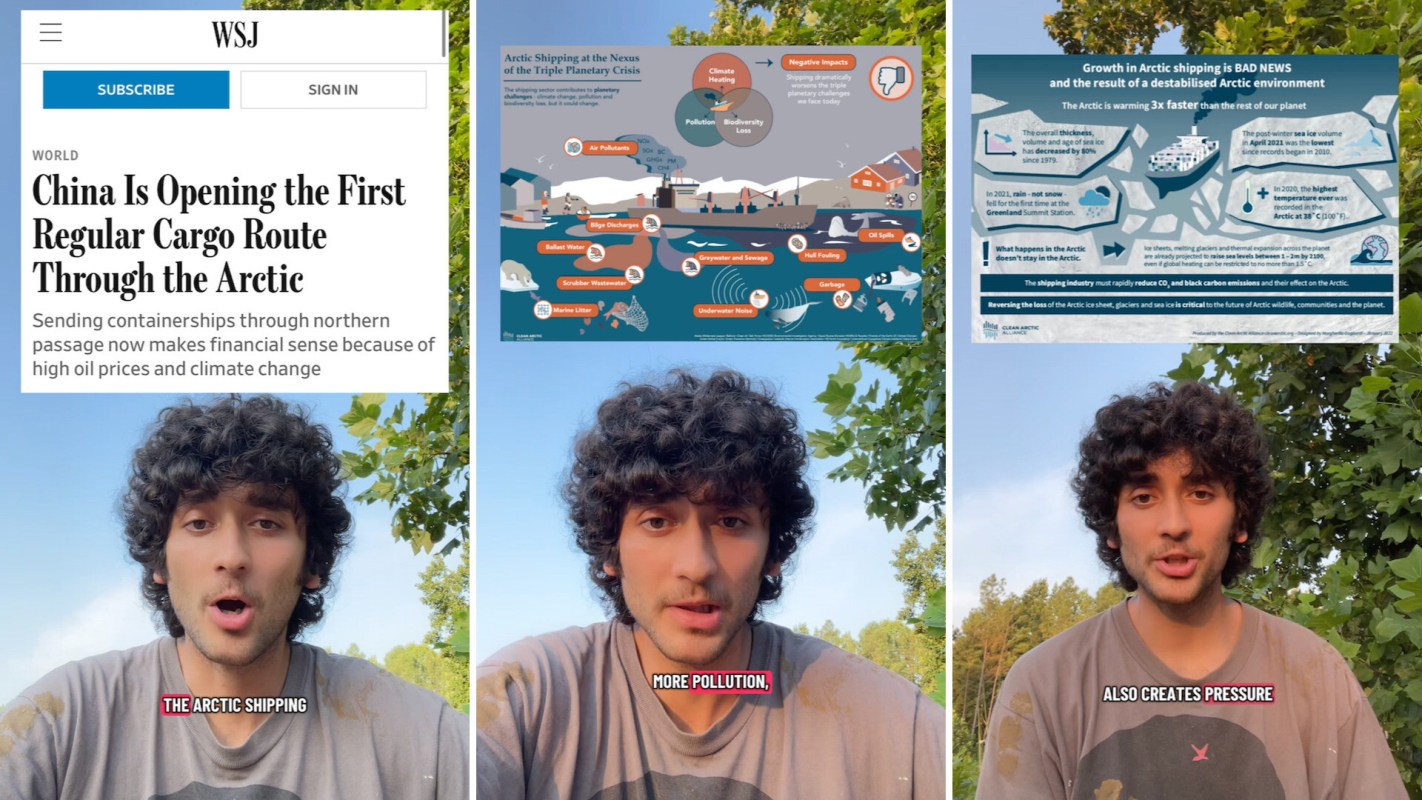
As Arctic ice recedes, a sea passage that was long barely usable is drawing interest from shipping companies as a quicker connection between Asia and Europe.
Environmental advocates see that development as a warning rather than a breakthrough: global warming is turning one of Earth's most delicate regions into a new industrial corridor.
Here's what to know
In a TikTok video, the environmental account Grow Foundation (@growfoundation.co) said retreating ice is allowing regular commercial shipping travel along Russia's Arctic coast.
It also said a China-based shipping company has started a scheduled Arctic container service between China and Europe, cutting trip times compared with traditional routes.
"For the first time in human history, the Arctic shipping route is now open because of climate change," the host said.
@growfoundation.co Climate change is rapidly transforming the Arctic. As sea ice retreats, shipping companies are increasingly using the Northern Sea Route to move cargo between Asia and Europe. But an Arctic shipping boom could bring more pollution, emissions, noise, ship strikes, spills, and pressure on one of Earth's most fragile ecosystems. #climatecrisis #ClimateChange #arctic #climateaction #pollution ♬ Stoic Solitude - Sabedoria
Heavier shipping in the area would bring several risks at once: more fuel use, more underwater noise, more pollution, and a higher chance of accidents such as chemical or oil spills in a region where cleanup is especially difficult.
TCD Picks » Quince Spotlight
💡These best-sellers from Quince deliver affordable, sustainable luxury for all




"This is so upsetting," one commenter wrote.
Another added, "Greed sickens me."
More background
The loss of Arctic sea ice is not just a sign of warming; it is also making the region easier for polluting industries to access.
"We're turning a symptom of climate change into a new economic opportunity," Grow Foundation summarized.
The Arctic plays a major role in regulating the global climate. A busier shipping corridor could mean more ship strikes and add pressure for new extraction projects and infrastructure.
More fossil fuel use and more pollution slow progress toward a safer, more stable future for everyone.
What can be done?
At the biggest scale, this is a policy and industry problem. Governments, regulators, and shipping companies can limit the harm by setting stricter rules for fuel use, routing, speed, noise, and spill prevention in Arctic waters, while resisting efforts to treat melting ice as a blank check for expanded extraction and traffic.
Paying attention to how goods move around the world — and supporting leaders and policies that prioritize climate action and stronger environmental safeguards — can help push companies away from the most destructive shortcuts.
Cutting unnecessary consumption, choosing longer-lasting products, and supporting climate solutions can reduce dependence on harmful fuels.
"The Arctic isn't an empty wasteland," Grow Foundation said. "It's a complex ecosystem supporting whales, seals, polar bears, seabirds, fish, microorganisms, and indigenous communities."

Get TCD's free newsletters for easy tips, smart advice, and a chance to earn $5,000 toward home upgrades. To see more stories like this one, change your Google preferences here.






