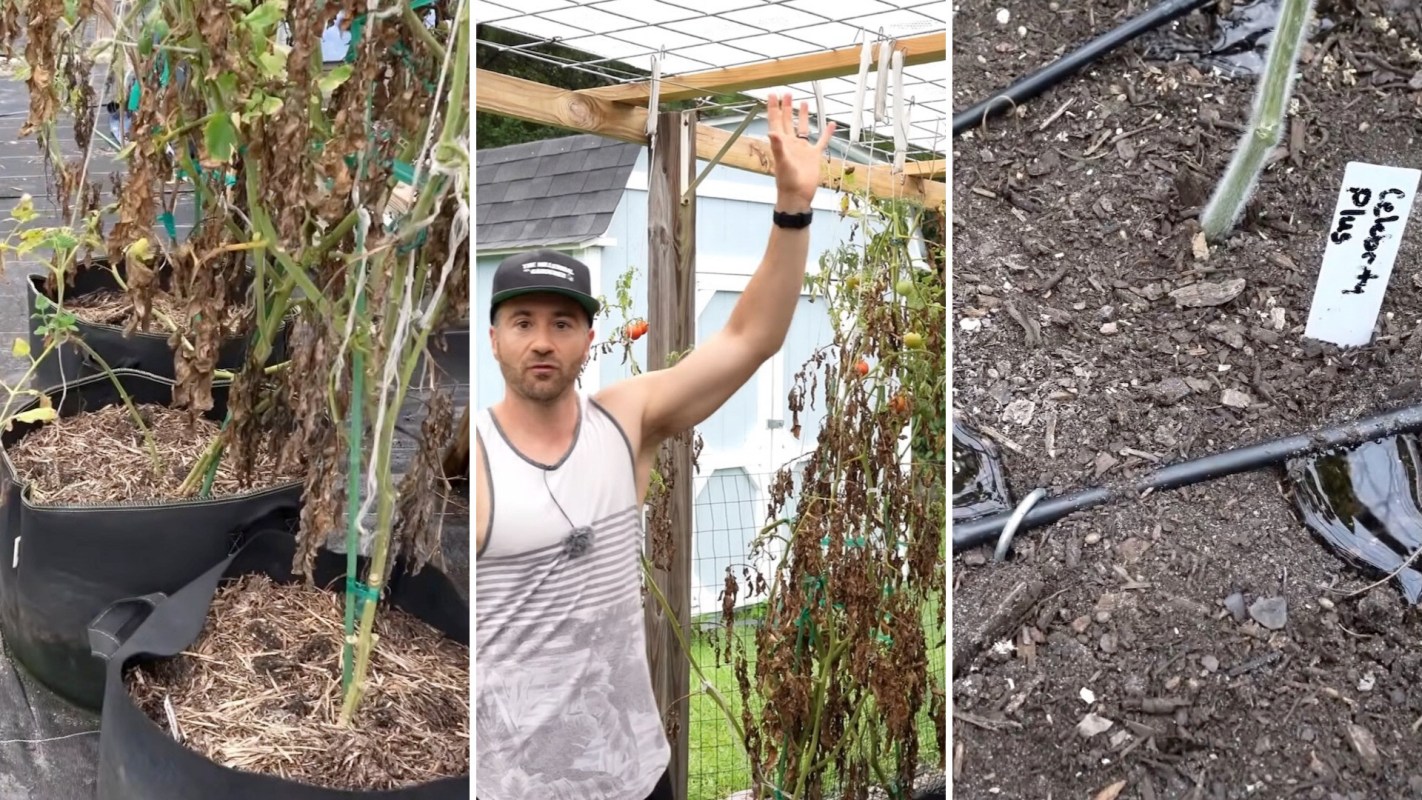
Known for posting huge harvests, a North Carolina gardening creator said his raised beds kept performing, while his container garden largely failed.
Instead of dwelling only on what worked, he used the setback to spell out lessons that could help other gardeners avoid the same outcome.
Here's what to know
In a YouTube video, The Millennial Gardener content creator blamed the season on four preventable problems: delayed mulching, no drip irrigation, too little shade, and soil preparation that started too late.
He said the space began the season with about 16 grow bags and finished with only six, many of them looking rough.
Elsewhere in the garden, the protected raised beds told a very different story: his peppers stayed healthy much later into the season, and some cherry tomatoes grew to 12 feet tall.
One user said, "Your advice on using the shade cloth saved my garden. Worth every penny!"
TCD Picks » Quince Spotlight
💡These best-sellers from Quince deliver affordable, sustainable luxury for all




More background
The creator walked viewers through the failed season and pointed out exactly where things went wrong.
Container gardening is often marketed as an easy option for beginners, renters, and people with limited yard space. But containers can be far less forgiving than in-ground beds, since the soil tends to dry out faster, heat up more quickly, and depend more heavily on consistent watering and mulch.
A setup that seems convenient can quickly turn into a daily maintenance challenge if it is not planned properly from the start.
What can be done?
His advice centered on doing the preventive work earlier: get the soil ready well before planting, add shade before the hottest stretch, install drip irrigation in the offseason, and mulch containers before heat stress begins.
He also suggested that gardeners should not feel obligated to plant more than they can reasonably keep up with.
Lower-maintenance landscaping can reduce how much watering, fertilizing, and upkeep a yard requires in the first place. Replacing part of a traditional lawn with native plants, clover, buffalo grass, or xeriscaping can save money and time on lawn maintenance while lowering water bills.
Even a partial lawn replacement can offer those benefits while creating a more resilient yard, such as upgrading to a natural lawn and rewilding your yard.
One user commented, "This is why I appreciate your content. You talk about things that didn't go well and not just make everything about your successes. It makes you more relatable.❤"

Get TCD's free newsletters for easy tips, smart advice, and a chance to earn $5,000 toward home upgrades. To see more stories like this one, change your Google preferences here.