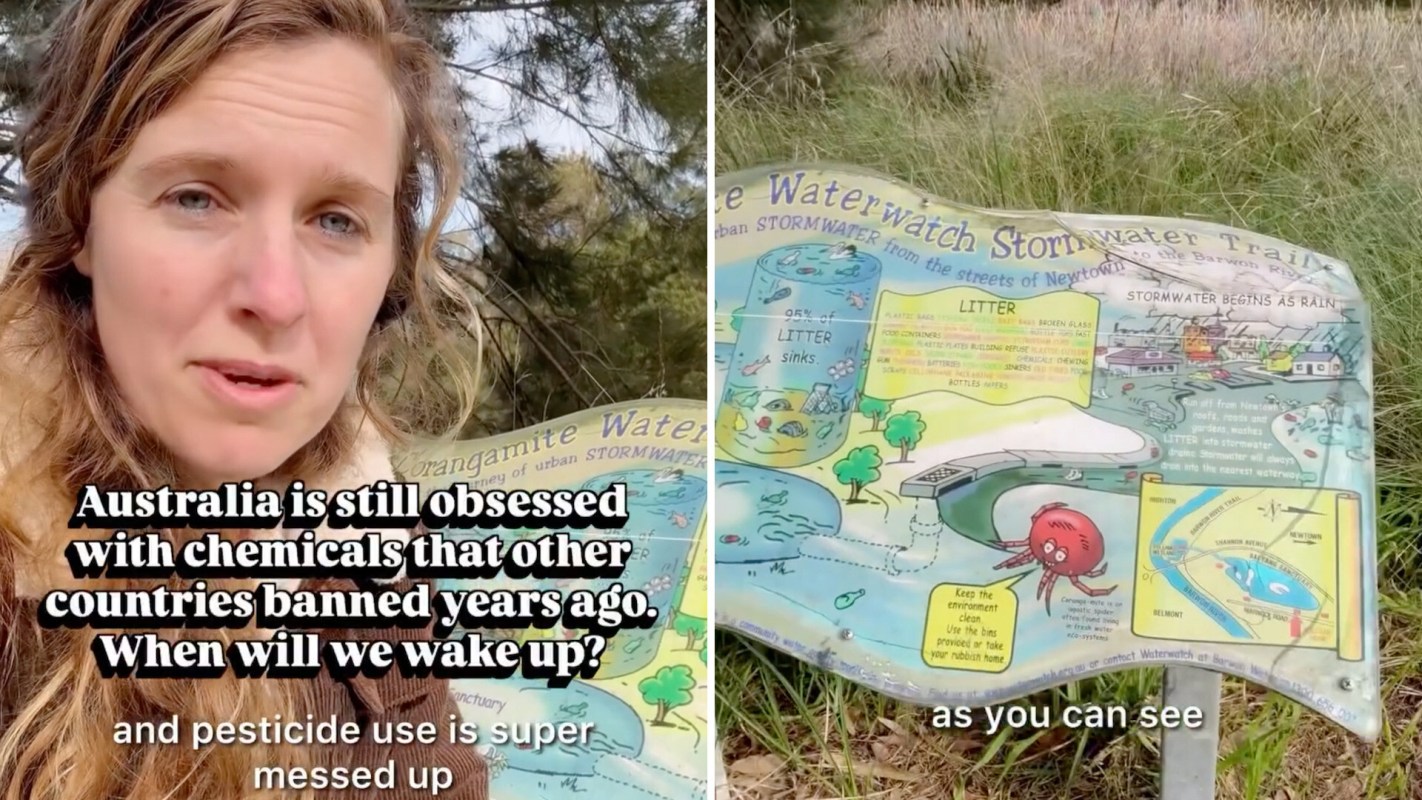
A video from a bird sanctuary is drawing frustrated reactions because it appears to show two conflicting messages about chemical use: one on a public sign, the other in the land management visible behind it.
Here's what to know
According to Sarah Bradford (@sarah.the.feral.life), herbicide had been sprayed near a bird sanctuary waterway even though a sign at the site tells residents not to use household chemicals that could wash into it.
She made that point in a recent Instagram post, saying the spray ran "along the entire edge of that same waterway."
"This grinds my gears!!" she wrote, presenting the video as an example of public warnings clashing with how public land is handled.
Her caption expanded on the issue beyond that particular location, stating: "Public parks where children play. Botanic gardens — places that are supposed to celebrate and protect plants — with signs up warning visitors that herbicide and pesticide spraying is in use."
More background
Sarah continued: "This is a bird sanctuary. There were children playing here today. And the edges of the water were soaked in herbicide."
TCD Picks » Quince Spotlight
💡These best-sellers from Quince deliver affordable, sustainable luxury for all




The side-by-side contrast in the footage was glaring to viewers.
"After 10 years in bushland management I couldn't agree more .. it's wrong and doesn't work," one person wrote.
Another Instagram user added: "It's absolutely terrible I agree we need to move against this glyphosate use."
More broadly, the post raises a question of public trust. Communities may feel environmental responsibility is being asked of residents even as public land appears to be managed to a different standard.
What can be done?
One practical step is to document it clearly — signage, timing, and location — and ask local councils or land managers what product was used and why.
Residents can also ask whether nonchemical options were considered, especially in sensitive places such as waterways, bird habitats, playgrounds, and high-foot-traffic public parks.
Manual removal, mowing, and other lower-impact methods may not fit every situation, but communities can still push to prioritize those options when possible.
Another user commented: "It's disgusting that people are still using these things but it's unforgivable that they spray it near water. UNFORGIVABLE!"
In the post's caption, Bradford concluded: "We cannot keep doing this and calling it land management."

Get TCD's free newsletters for easy tips, smart advice, and a chance to earn $5,000 toward home upgrades. To see more stories like this one, change your Google preferences here.