


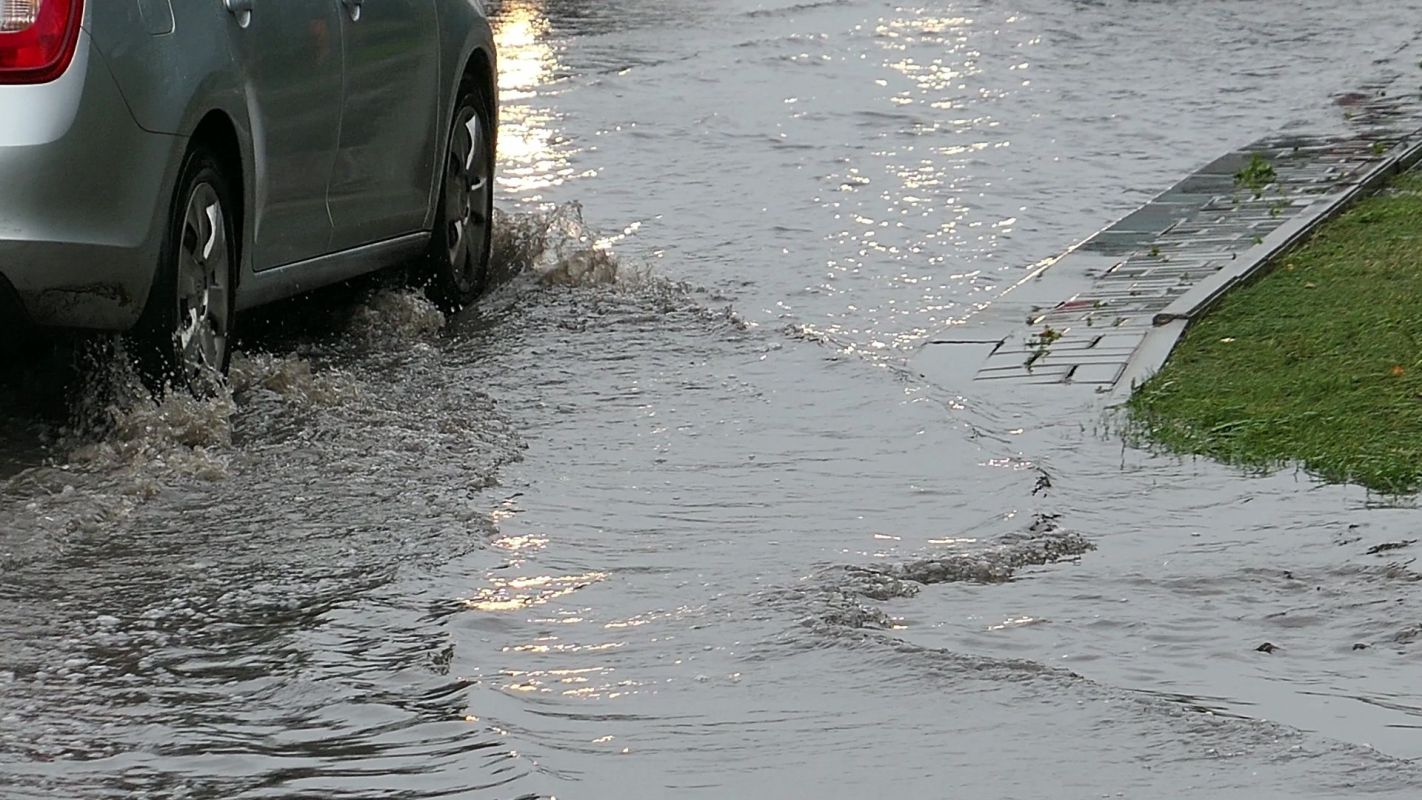
State officials refused to help pay for repairs in Esto, a small Florida Panhandle town, after deciding the threatened street did not qualify as a "critical asset," despite engineers warning that ongoing erosion could cause part of a residential road to collapse.
Here's what to know
Home to 375 people, Esto got $235,000 from Florida's Resilient Florida program in 2024 to examine its flood issues. That work concluded that First Avenue was at "a high risk that portions of the roadway could collapse" if erosion kept worsening.
That study did not lead to funding for construction. In 2025, the town sought $3.2 million for repairs, but the state deemed the proposal ineligible, according to WUSF.
According to Town Clerk Ben Tew, the rejection made it hard to see the value of requiring small communities to finish planning studies before they can seek implementation funding.
"We've done all this planning work," Tew said, "but if there is no implementation money, then what was the use?"
The situation points to an imbalance in how the program's funding has been distributed. Since Resilient Florida launched in 2021, coastal-county communities have received 347 implementation grants, compared with 30 for inland counties. Coastal communities have secured more than $1.6 billion toward project costs, almost 20 times the inland total.
TCD Picks » Quince Spotlight
💡These best-sellers from Quince deliver affordable, sustainable luxury for all




That disparity comes as inland flooding continues to worsen.
Kerry Cook, a professor researching climate change at the University of Texas at Austin, said, "We are seeing increases in inland flooding in association with intensification of storms."
More background
Resilient Florida was created to help local governments prepare for flooding linked to sea level rise, stronger storms, and heavier rainfall. Inland towns with aging infrastructure and limited tax bases appear to have a harder time competing for funds.
In Esto, more than 4,000 travelers pass through daily on roads the town says are deteriorating under repeated flooding.
Experts say this kind of funding gap can slow efforts to build safer, more resilient communities.
Yoca Arditi-Rocha, CEO of The CLEO Institute, described the program as important but not enough, saying, "The state is not keeping pace with the demand."
The stakes can be even higher in rural areas, where a relatively small amount of funding can have an outsized effect.
As Roy Baker, who leads regional economic development group Opportunity Florida, put it: "A $5 million grant is nothing when you send it to Miami, but a $5 million grant to a rural county is a big deal."
What's being done?
Florida has awarded more than $1.8 billion through Resilient Florida for both planning and implementation. The program also uses flood modeling and vulnerability studies to help communities document their risks and compete for funding.
Some adjustments have been made. In 2024, lawmakers updated cost-share rules so more communities could qualify for reduced local matches, easing one barrier for places that cannot afford to cover half of a multimillion-dollar project.
Still, demand continues to outpace available funding. Lawmakers approved a record-low $172 million in one year, and a governor's veto brought the budget down to $160 million. Environmental groups and business leaders have pushed for much higher annual funding.
For Tew, the message from Esto is straightforward: "I know Florida's big on the coast, and maybe that's what the main focus of this sort of resilient grant program is, but we are still Floridians here inland."

Get TCD's free newsletters for easy tips, smart advice, and a chance to earn $5,000 toward home upgrades. To see more stories like this one, change your Google preferences here.






