


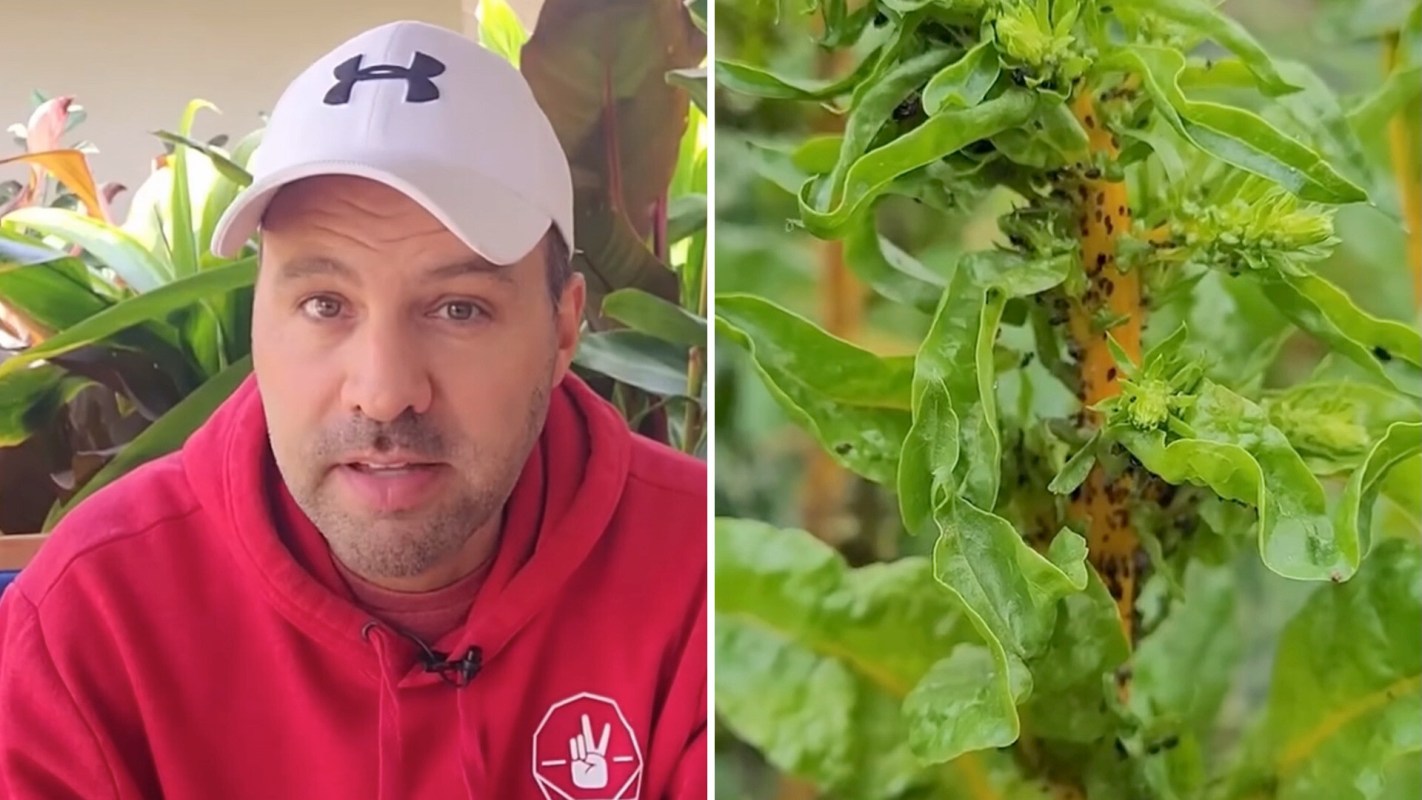
A productive garden bed can be overrun by aphids with surprising speed, leaving behind sticky residue and curled growth. Because these insects feed by sucking sap and tend to gather in dense clusters, seedlings and other soft new growth can be hit especially hard.
For people growing tomatoes, peppers, brassicas, or flowers at home, putting prevention first can go a long way.
Here's what to know
In a recent YouTube video, Brian Lowell of Next Level Gardening (@NextLevelGardening) walked through eight natural ways to prevent and treat aphids without relying on harsh chemicals.
One of the clearest signs is distorted new growth, along with leaves that look shiny from a sticky coating known as honeydew. Aphids themselves are usually not hard to spot either, since they gather in groups and can appear in several colors.
Ants can be a giveaway too. Lowell said they often "farm" aphids for that sugary substance and help protect them while they feed on plants.
The video framed prevention in terms of plant health: give each plant the light and moisture it needs, and be careful with fertilizer.
TCD Picks » Quince Spotlight
💡These best-sellers from Quince deliver affordable, sustainable luxury for all




The gardening creator explained that the best prevention is to keep your plants in good health by giving each plant the light and moisture it needs and being careful with fertilizer. In particular, the Gardener warned against too much nitrogen, especially from synthetic products, because that produces the soft leafy growth aphids prefer.
Another suggestion was to use trap plants. The creator highlighted nasturtiums and milkweed as plants that can pull aphids away from crops.
One commenter wrote, "Thank u for the great tips. Aphids stunted my pepper seedlings indoors even! After I heard about chives and green onion, and used them, and haven't had aphids at all."
More background
Regular garden checks are important because aphid infestations often start small before the insects rapidly multiply.
Home gardening can help families save money on produce, provide fresher, better-tasting food, and support mental and physical health through time spent outdoors planting, watering, and harvesting. Losing crops to pests can undercut all of those benefits.
The creator also discouraged one common store solution for aphids: buying ladybugs. A better approach, the creator said, is to attract native beneficial insects rather than releasing store-bought ladybugs, which may be collected from the wild, may carry parasites, and often fly off soon after release.
What can be done?
If aphids are already present, a forceful spray of water directed at the affected part of the plant for several days in a row can be a fast way to knock them back.
Lowell also said alliums such as onions, garlic, chives, and green onions may help repel aphids, particularly when paired with flowers that attract beneficial insects. Among the flowers named in the video, umbel-type blooms, zinnias, and sunflowers stood out as strong choices for drawing in ladybugs and other aphid predators.
When a spray is needed, the video identified neem oil and diatomaceous earth as two options that can be effective if used carefully.
The creator stressed that either one should be limited to the problem area rather than applied across the whole garden, and that it should be used early or late in the day to lower the chance of harming bees. Any time you can control pests without chemicals is a win for the environment.
One commenter shared a success story, writing, "I planted 3 chives around my pepper plants! And it worked like magic." Lowell added, "And if you can get on top of the problem when it's small, it's a lot easier to fix than when it's big."

Get TCD's free newsletters for easy tips, smart advice, and a chance to earn $5,000 toward home upgrades. To see more stories like this one, change your Google preferences here.






