


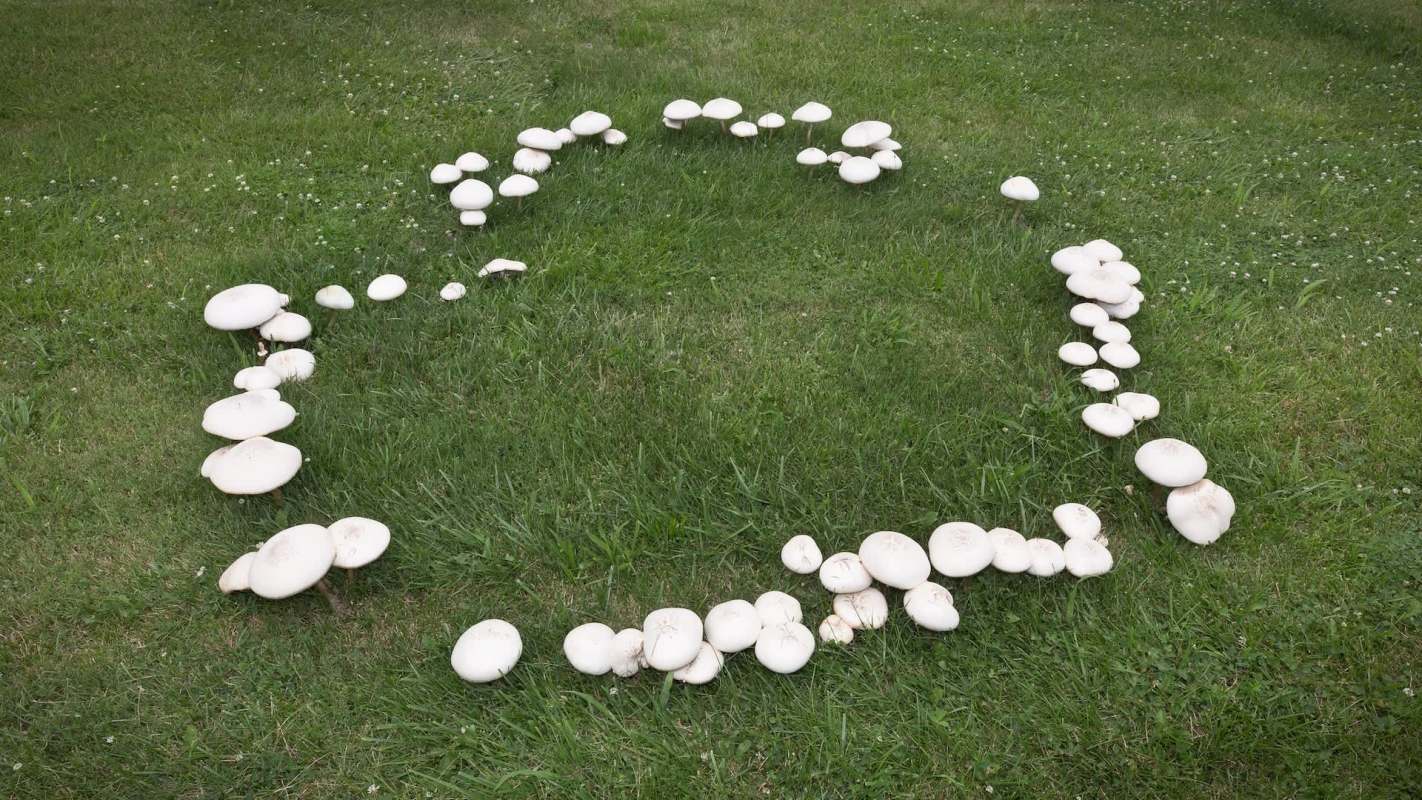
A perfect ring of mushrooms can look like something pulled straight from folklore. But a study from researchers in Sweden has suggested the strange pattern may have a practical explanation underground.
The Swedish researchers found signs that fungi-forming rings keep growing outward as they leave behind less favorable conditions.
Here's what to know
According to ScienceAlert, Stockholm University mycologist Hanna Johannesson led research on Marasmius oreades, the species also known as the fairy ring mushroom or Scotch bonnet.
At two fairy rings in a cemetery in Uppsala, Sweden, the team combined soil DNA analysis with a fungal transplantation test.
The samples showed the fungus' DNA was concentrated around the ring, especially at its outer boundary. Soil from the middle of the circles contained about as much DNA as soil outside them, indicating the buried mycelium forms a ring instead of a solid disk.
Fairy rings are not limited to one mushroom species. More than 100 fungi have been observed creating them, suggesting the pattern could reflect a rule about how some fungi grow in the wild.
TCD Picks » Quince Spotlight
💡These best-sellers from Quince deliver affordable, sustainable luxury for all




The researchers wrote in the journal Royal Society Open Science, "The results were most consistent with a transient-escape hypothesis, and suggest that the mycelium avoids inhibitory factors present at the back edge of the mycelial growth front."
More background
Legends about fairy rings have circulated for centuries, attaching these precise circles to fairies, witches, elves, and the devil. Yet scientists have continued trying to pin down why the fungus belowground spreads in such orderly rings.
What appears above the surface is just the mushroom's fruiting body. Most of the organism exists underground as thread-like mycelium intertwined with a soil ecosystem that is hard to examine without disturbing it.
To test how the rings behave, the researchers removed sections, rotated or relocated them, and then checked the sites again 14 months later. The outcome suggested that short-term conditions left behind the advancing edge, helping drive the fungus outward.
Fungi help shape the landscapes people rely on — from forests and meadows to public green spaces — by recycling organic matter and interacting with nutrients belowground.
What's being done?
Sequencing DNA straight from soil samples showed that fungal growth can be studied where it naturally occurs.
That could help researchers build a clearer understanding of how fungi influence ecosystems that communities depend on, including the soils that support biodiversity, green space, and environmental resilience.
The study also found that whatever makes the center of a ring temporarily unfavorable does not last forever. Fungi replanted into the middle of a ring were still able to continue growing, which could help narrow future explanations, including nutrient depletion or temporary toxins.
More research is still needed, including data from additional rings and laboratory experiments.
The researchers noted, "This will provide new insight and ignite new questions regarding the processes behind the fairy ring structure and growth pattern."

Get TCD's free newsletters for easy tips, smart advice, and a chance to earn $5,000 toward home upgrades. To see more stories like this one, change your Google preferences here.






