


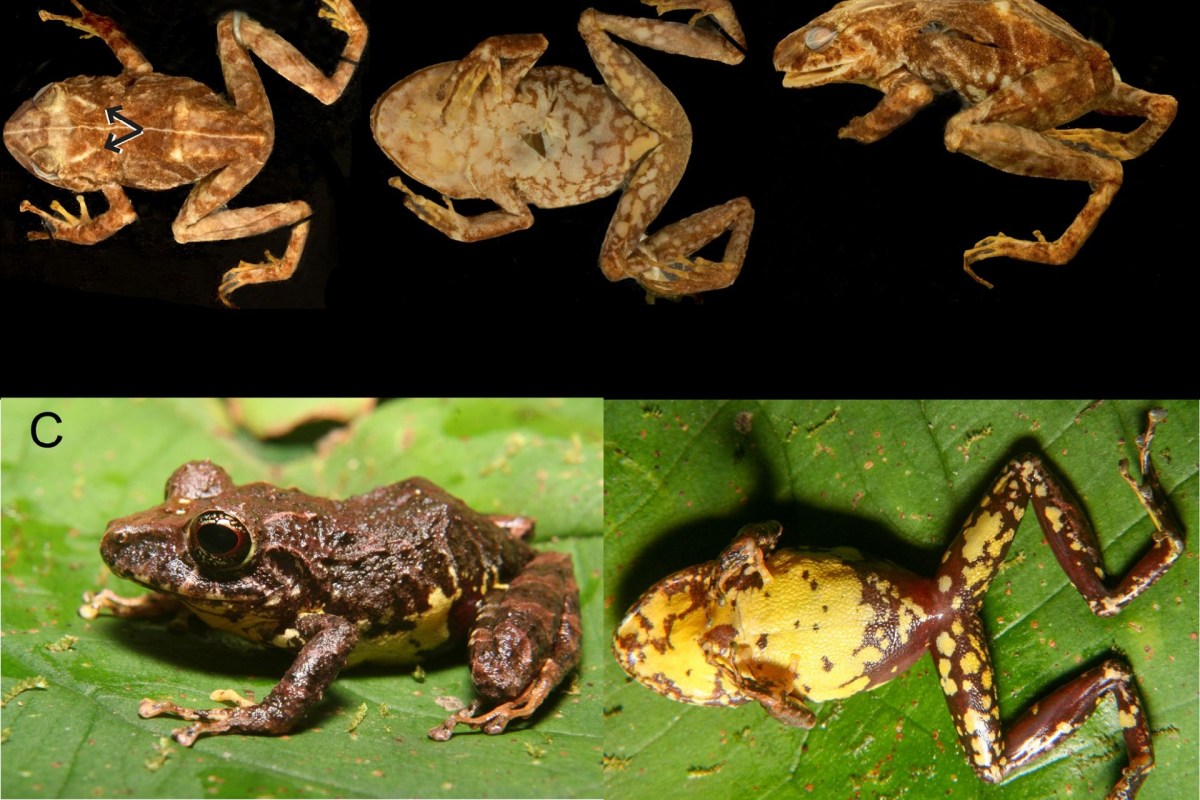
Scientists have officially recognized Ecuador's Milpe robber frog as a distinct species after more than a century of being mistaken for another frog species, Newswise reported.
Here's what to know
According to Newswise, in a new description published in ZooKeys, scientists at the Pontificia Universidad Católica del Ecuador, recognized the Milpe robber frog as its own unique species.
While most new species classifications come from animals that have never been seen or described by humans before, the Milpe robber frog is a unique case that has long been confused with a similar species. ZooKeys stated that this was Pristimantis subsigillatus. According to iNaturalist, this frog is also known as the Salidero robber frog or engraved rainfrog.
Scientists noted that a "click"-like call at night helps distinguish this frog, which is common across western Ecuador and southern Colombia.
According to Newswise, as part of the effort to clarify the taxonomy, lead study author Santiago Ron of PUCE went to England to study 19th-century Ecuadorian "type" specimens at the Natural History Museum in London.
More background
Researchers compared historical material with living frog populations from the Ecuadorian Chocó rainforest and concluded that the original specimens had been assigned to the wrong species.
TCD Picks » Quince Spotlight
💡These best-sellers from Quince deliver affordable, sustainable luxury for all




According to Newswise, female Milpe robber frogs have orange or pale blue coloring on the groin and thighs marked with black spots. Males are generally more uniformly colored.
What's being done?
The new classification will hopefully provide more clarification for scientists in the coming years. When researchers make these new discoveries, it becomes easier to map habitats, assess conservation status, and monitor ecological change over time.
This is also another piece of evidence that samples stored for decades or even centuries can still yield new information during study when paired with new technology.
Jhael Ortega, a Virginia Tech doctoral student and study co-author, told Newswise, "That such a common species has gone unnoticed under the wrong name for decades highlights the importance of correctly connecting scientific names with living populations in nature."

Get TCD's free newsletters for easy tips, smart advice, and a chance to earn $5,000 toward home upgrades. To see more stories like this one, change your Google preferences here.







