


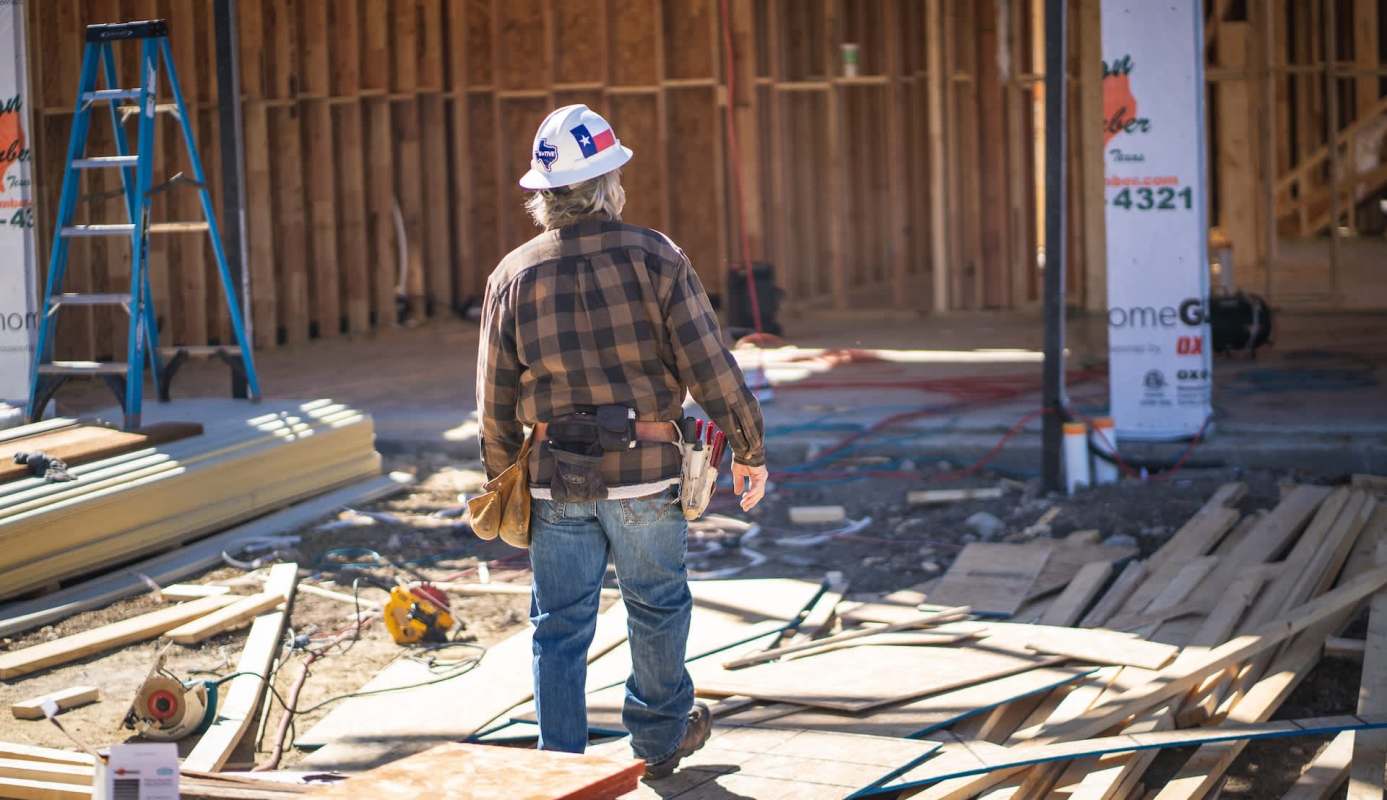
A steep decline in construction jobs across Texas' Rio Grande Valley is raising concerns about rising housing and grocery costs, as local builders warn the economic fallout is spreading well beyond construction sites.
A report argues that immigration enforcement is not only disrupting workers' lives but also making everyday essentials more expensive for families across the state.
Here's what to know
Citing America's Voice's report, "End the Ice Tax," MyRGV reported that construction employment in the Rio Grande Valley fell 5% in the third quarter of 2025, the worst quarterly decline the region has recorded.
The report found that the Valley accounted for nearly one-fifth of U.S. Immigration and Customs Enforcement arrests in Texas, with more than 9,100 people arrested there. In Laredo, the report said monthly arrests jumped from an average of about six to more than 800.
Ronnie Cavazos, board president of the South Texas Builders Association, said the downturn already looks severe: "Business is down significantly. If we continue on this trajectory, we will see a lot of businesses fail."
America's Voice said the government's "mass deportation agenda is contributing to an increase in price and depressing economic activity," adding that the added cost shows up for families who don't normally think of immigration policy as a kitchen-table issue.
TCD Picks » Quince Spotlight
💡These best-sellers from Quince deliver affordable, sustainable luxury for all




More background
Some of the biggest increases were in items and services tied to immigrant labor, the report said. Lettuce prices rose 32.1%, whole milk 9%, apples 7.1%, fresh citrus 6.3%, home healthcare 10.7%, and landscaping 10.8%. By comparison, federal price data showed nationwide core prices, excluding food and energy, rose 2.6% in the 12 months through June 2026.
Because so much farm work, caregiving, and homebuilding depends on immigrant labor, a sudden loss of workers can be felt across a community through higher prices, slower construction, and weaker business activity.
Beyond Texas, the report identified California, Florida, Nevada, New Jersey, and New York as states especially reliant on immigrant labor and said they are facing similar economic strain, with parts of Texas showing the same pattern. In housing, fewer workers can delay projects and raise the cost of new homes, making it harder for families to find affordable places to live.
Benigno Melendez, president of the South Texas Builders Association's Government Affairs Committee, said the damage extends beyond the economy into people's day-to-day lives.
"It's been tough economically and, how can I put it, humanity-wise," he said.
What can be done?
Melendez said one immediate step would be to grant work permits rather than arrest workers, which he argued would help stabilize the labor force and ease pressure on businesses. He also pushed back on the idea that higher wages alone would solve the problem, saying many jobs already pay around $15 an hour yet still struggle to attract enough workers because the work can be demanding.
He said the slowdown does not stop with builders themselves. Construction companies buy lumber, gas, meals, and household goods, meaning that when projects stall, stores and restaurants across the community can also see less business.
"It's also separating a lot of families," Melendez said. "It's not only about the money. I know that's all we hear on the news: money, money, money. But, more than that, more important than that, what about the dignity of the community?"

Get TCD's free newsletters for easy tips, smart advice, and a chance to earn $5,000 toward home upgrades. To see more stories like this one, change your Google preferences here.






