


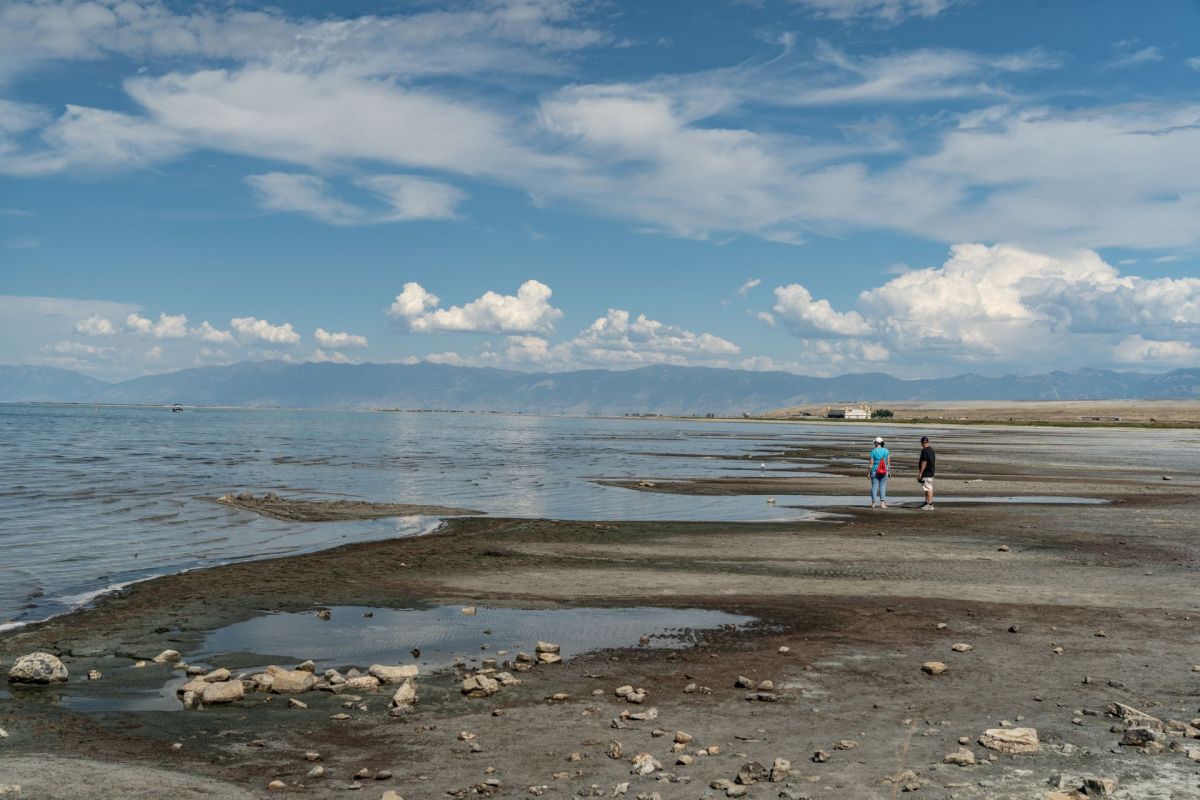
In Utah, one of the country's most remarkable natural wonders is slowly disappearing: the Great Salt Lake. Its continued decline could have serious consequences for the state, from worsening ecological damage to increased exposure to pollutants.
As more of the lakebed is exposed, strong winds can carry dust and contaminants trapped underwater for decades toward nearby communities, potentially creating a public health concern.
Here's what to know
Science communicator Astrum Earth took to YouTube to talk about air pollution in Utah.
According to the short clip, the Great Salt Lake's water volume has dropped 73% since 1850.
Arsenic, lead, and uranium are reportedly among the materials tied up in that lakebed. The creator said those pollutants accumulated over more than a century of mining, industry, and urban runoff, and that the receding shoreline is exposing more contaminated sediment.
These windblown dust events occur about 3 to 8 times a year, according to the video. During them, strong winds can lift tiny particles from the exposed lake bed and carry them across the Salt Lake Valley toward Salt Lake City, where about 200,000 people live.
TCD Picks » Quince Spotlight
💡These best-sellers from Quince deliver affordable, sustainable luxury for all




In one of the storms discussed in the video, the level of PM10 pollutants — air particles less than 10 micrometers across, small enough to enter human lungs — rose to four times the healthy range.
More background
The problem does not stay at the lake.
A drying ecosystem can become a direct threat to nearby neighborhoods, schools, and workers who breathe the air every day because contaminated dust that can blow into populated areas.
In addition to protecting the Great Salt Lake to support public health, it also matters for wildlife habitats.
Water management, conservation, and pollution prevention can all be part of a more comprehensive response. Problems created over decades by runoff, industry, and shrinking water supplies are too large to be solved by household choices alone.
For people living in places affected by windblown dust and poor air quality, paying attention to local air alerts can help reduce personal exposure during severe events. Limiting time outdoors when dust levels spike and taking steps to protect indoor air can help, especially for children, older adults, and people with respiratory issues.
Astrum Earth summed up the stakes this way: "Saving this lake isn't just about protecting an ecosystem, it's about protecting an entire population, too."

Get TCD's free newsletters for easy tips, smart advice, and a chance to earn $5,000 toward home upgrades. To see more stories like this one, change your Google preferences here.






