


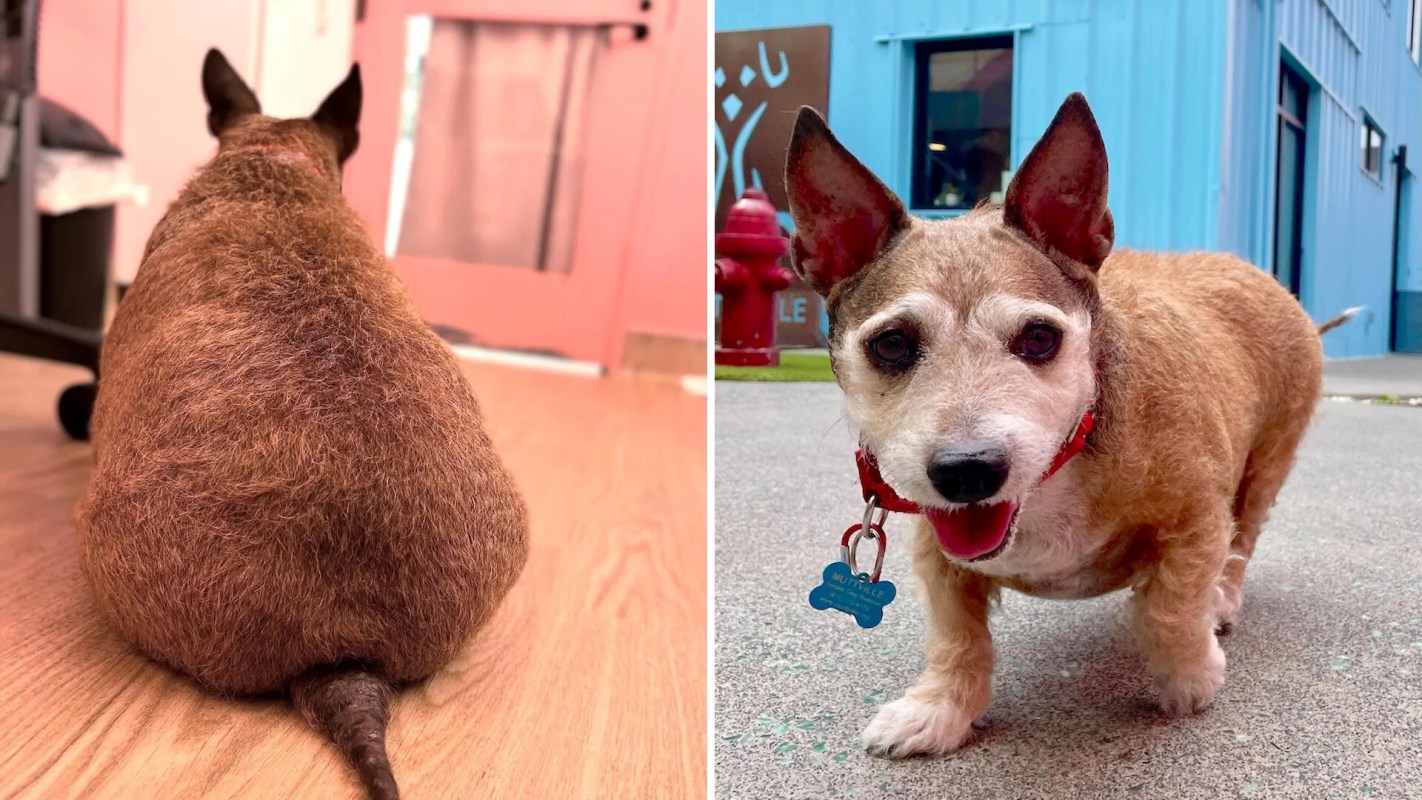
Less than a year after finding a new home, an 11-year-old corgi mix in San Francisco is moving easily again after losing nearly half his body weight.
Earlier, staff at a senior dog rescue had joked that his shape made him look like a capybara. His adopter said the dog — first Rocky, then Juggles, and now Hockey — is "a new dog."
Here's what to know
Rocky reached Muttville Senior Dog Rescue on August 31 last year at 34 pounds, and walking was difficult for him.
Forbes reported that his previous owner, who had dementia, had been unintentionally overfeeding him.
Before he was adopted, veterinarians ruled out thyroid problems and other medical explanations for his weight, while the rescue addressed his skin issues and removed about a dozen teeth.
He then went home with San Francisco couple Eden Godsoe and Jim King, who hoped he would fit in with their energetic 70-pound Labrador retriever, Gidget.
TCD Picks » Quince Spotlight
💡These best-sellers from Quince deliver affordable, sustainable luxury for all




"They were happy going on a walk together," Godsoe said. "They were sniffing each other. There was just no fear. And I just kind of fell in love with him. He's so sweet and very friendly."
Measured portions, prescription kibble, and gradually longer walks eventually brought Hockey to 18 pounds, the goal set by his veterinarian.
More background
Hockey's story also highlights a common challenge for people living with Alzheimer's disease or other forms of dementia.
"As the disease progresses, changes in short-term memory can make it difficult for a person to remember whether, or how recently, they fed their pet," said Jennifer Reeder, senior director of education and social services for the Alzheimer's Foundation of America. "Over time, repeated feeding or offering frequent treats can contribute to weight gain and related health concerns for the pet."
That kind of overfeeding can be an unintended effect of memory loss, not something that should be treated as blameworthy. Pets can also offer people with dementia comfort, routine, companionship, and a sense of purpose.
For Hockey, the effects of weight loss have been immediate and visible.
"Now he gets up and down stairs and on and off sofas all by himself," Godsoe said. "He really is a new dog."
What can be done?
Reeder said that families who help a loved one with dementia care for a pet can reduce the risk of accidental overfeeding by putting simple routines in place. Those can include pre-portioned meals, a feeding checklist, and a clear way to show whether the pet has already eaten that day.
Tools like these can let someone remain involved in caring for a pet while also safeguarding the animal's health, especially when a food-motivated pet begs often enough to prompt extra meals.
His progress also reflects what steady exercise over time can do. Godsoe said he started with only very short walks, but those outings gradually became longer, and Hockey's playful bond with Gidget helped keep him active.
"There is something truly magical about senior dogs," Godsoe said. "They just have so much love to give. And you really can give them a whole new fresh life."

Get TCD's free newsletters for easy tips, smart advice, and a chance to earn $5,000 toward home upgrades. To see more stories like this one, change your Google preferences here.






