


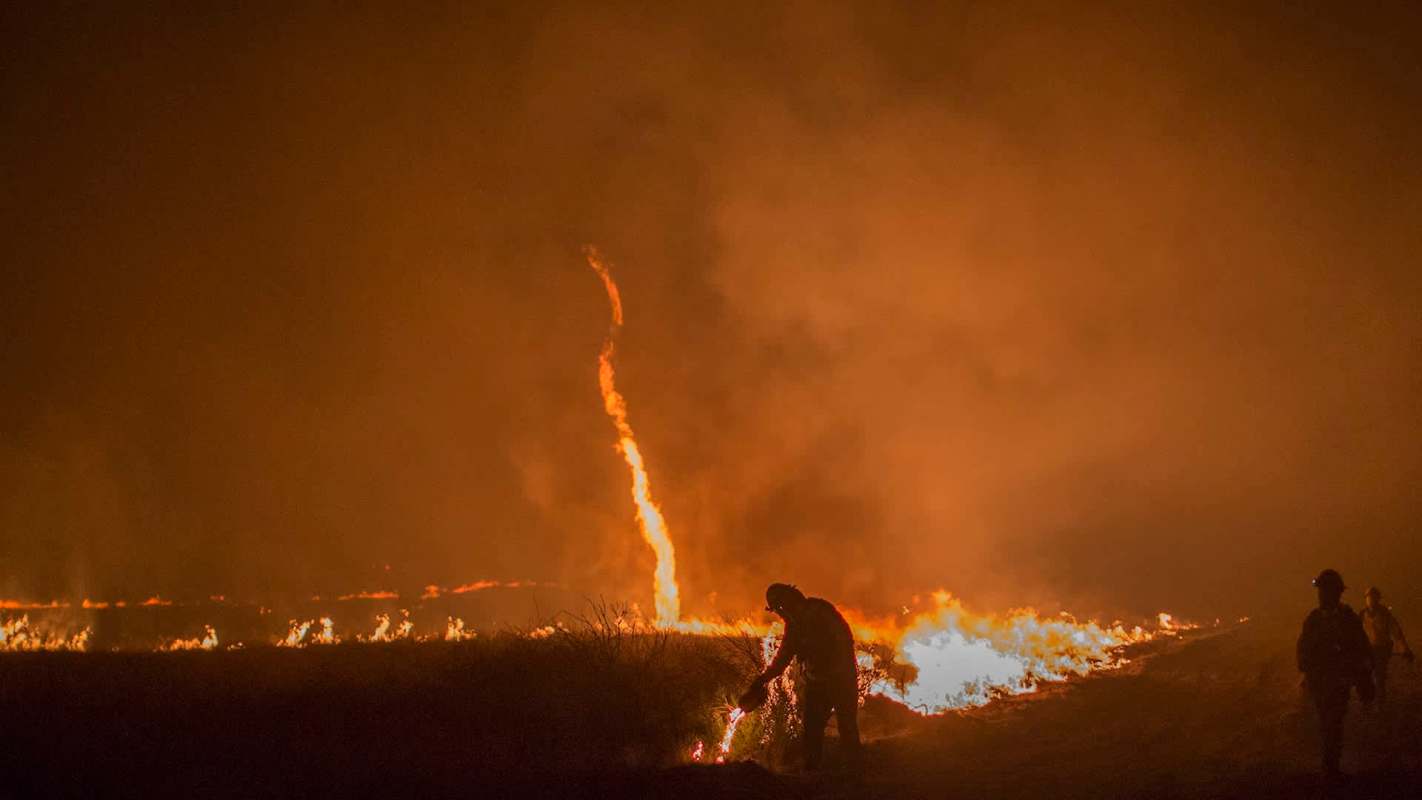
Wildfires are dangerous enough on their own. But as wildfire activity intensifies across the Western United States, forecasters are warning that under the right conditions, these blazes can also unleash spinning columns of flame and smoke known as firenadoes.
Here's what to know
At its core, a firenado is created by extreme heat from a wildfire. When that heat drives air upward fast enough, the rising column can begin to rotate.
Once that spin develops, nearby winds can be pulled inward and wrapped tighter. The result is a vortex made up of smoke, ash, and flame.
The danger is not just the spectacle. These whirls can throw burning embers far beyond containment lines, potentially starting new fires, complicating evacuations, and creating rapidly changing conditions for firefighters on the ground.
For scale, The Weather Channel pointed to California's Carr Fire near Redding in 2018 as the most extreme example. Its firenado produced EF3-level rotational winds and temperatures above 2,000 degrees Fahrenheit, making it one of the most violent such events ever documented.
More background
These events sit at the point where wildfire behavior begins to resemble severe weather. They signal that a fire has become powerful enough to influence the surrounding atmosphere in dangerous and unpredictable ways.
TCD Picks » Quince Spotlight
💡These best-sellers from Quince deliver affordable, sustainable luxury for all




A fire that begins behaving erratically can spread faster and in directions that are harder to anticipate. For example, a firenado can carry embers well ahead of the main fire front, potentially threatening homes, roads, utility infrastructure, and escape routes.
It also raises the risk for first responders. Firefighters already face extreme heat, smoke, and shifting winds, but rotating fire columns can intensify all of those threats at once. Once a fire starts generating localized conditions around itself, it can become much harder to contain safely.
The Carr Fire is a notable example of how severe these events can become. Its firenado showed that, under extreme conditions, wildfire behavior can rival the destructive force of a traditional tornado while adding the hazards of intense heat and active flames.
What can be done?
People living in wildfire-prone parts of the West can prepare long before a fire is visible. That includes knowing evacuation routes, signing up for local emergency alerts, and keeping a go-bag ready in case conditions change quickly.
Homeowners can also reduce risk by clearing dry vegetation and other flammable materials from around structures.
Creating defensible space will not stop a large wildfire on its own, but it can improve the odds that a home survives if embers are blown into the area.
When a wildfire is active nearby, following official guidance closely is critical. Because firenadoes can spread embers beyond expected fire lines, waiting too long to leave can be especially dangerous in fast-moving situations.
Better forecasting and fire-behavior monitoring can help emergency officials respond more effectively.
The more experts understand about when extreme heat and wind conditions could produce firenadoes, the better communities can prepare for one of wildfire season's most volatile threats.
Wildfires do not need a towering flame vortex to become destructive, but firenadoes show how quickly conditions can worsen.

Get TCD's free newsletters for easy tips, smart advice, and a chance to earn $5,000 toward home upgrades. To see more stories like this one, change your Google preferences here.






