


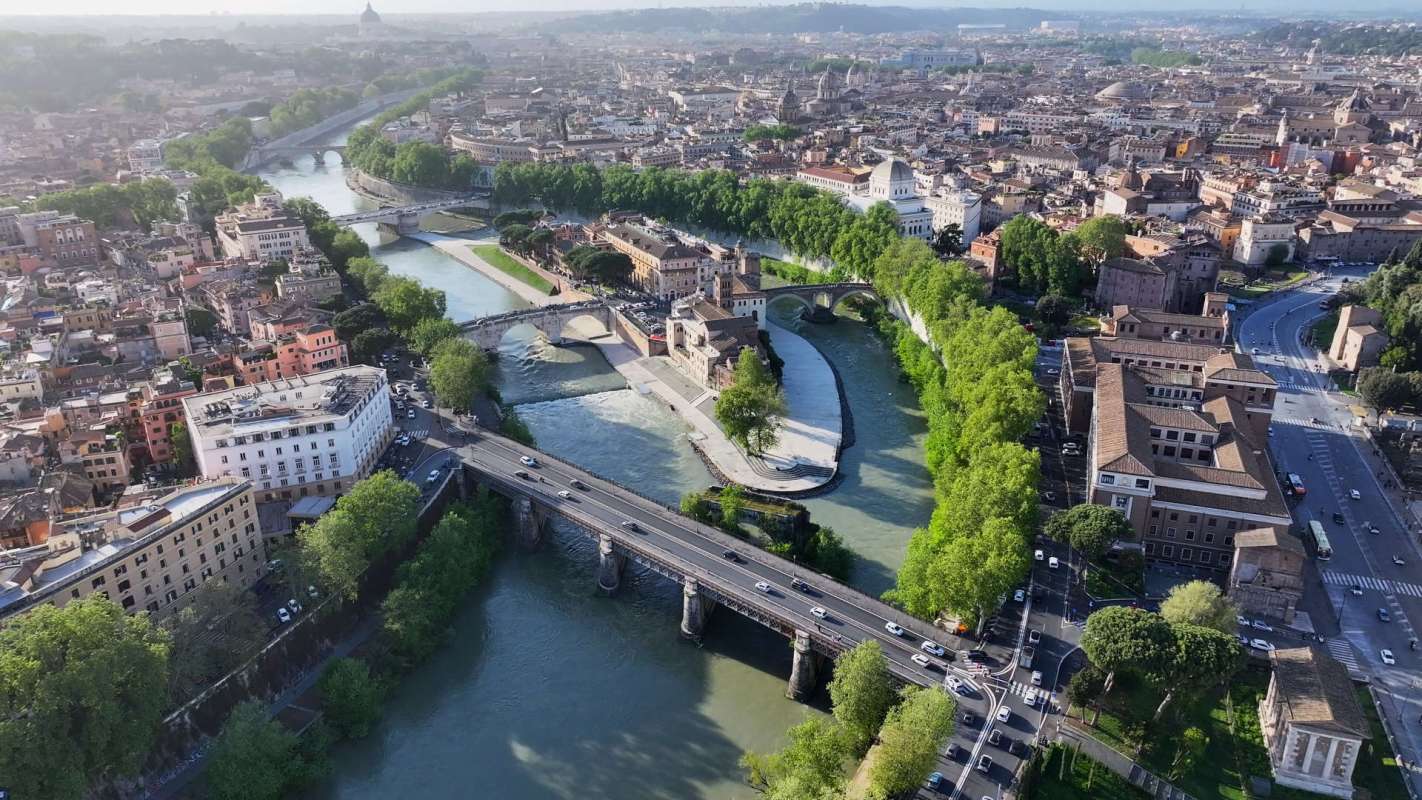
After weeks of extreme heat and little rain, the Tiber in Rome has receded enough to reveal parts of a nearly 2,000-year-old bridge from the city's imperial era.
While the sight may seem like a rare archaeological marvel, it is also a warning sign of a deepening water crisis, according to CNN.
Here's what to know
Parts of Nero's Bridge, known as the Pons Neronianus, are now visible because drought has lowered the Tiber below the level of a structure that is normally submerged.
According to Rome civil protection coordinator Giovanni Giganti, the river is flowing at less than about 2,825 cubic feet (80 cubic meters) per second, around half the national average.
Most historians date the bridge to around 39 AD and attribute its construction to Emperor Caligula, who is thought to have built it as a triumphal monument.
Although Caligula likely built it, the bridge later became associated with his nephew, Emperor Nero, who renamed several older structures during his rule from 54 to 68 AD.
TCD Picks » Quince Spotlight
💡These best-sellers from Quince deliver affordable, sustainable luxury for all




In ancient Rome, the bridge connected the Campus Martius district to the Circus of Nero, the stadium that was the site of St. Peter's martyrdom.
That location was later occupied by St. Peter's Basilica and Vatican City, which gives the remains unusual cultural and religious significance.
The unusually low water has revealed more than ancient stone.
Upstream, the river's retreat has also uncovered abandoned electric bikes, scooters, refrigerators, and even a car.
More background
The bridge's reappearance has drawn interest from both tourists and archaeologists.
Long dry periods and intense heat do more than alter landscapes; they strain drinking water supplies, disrupt farming, increase wildfire risk, and raise health dangers for people exposed to extreme temperatures.
Drought and heat can threaten public health through dehydration and heat-related illnesses, reduce community safety by straining water systems and emergency services, and undermine economic stability by hurting agriculture, tourism, transportation, and local businesses.
For archaeologists in Rome, the Tiber's low level has provided a rare chance to examine sections of the bridge that are usually inaccessible.
A similar drought exposed the bridge's remains in 2022 as well, underscoring that this is not an isolated event.
What can be done?
At the community level, monitoring river flow and water availability is critical during prolonged dry periods.
Officials can use those measurements to guide restrictions, emergency planning, and public warnings as conditions worsen.
Giovanni Giganti, Rome's civil protection coordinator, told the Associated Press that the bridge's reappearance was a symptom of a serious problem.
"We are facing a major water crisis. And it is a crisis that is also due to the fact that this winter we did have quite abundant rainfall, but then the dry periods were quite long," he explained.

Get TCD's free newsletters for easy tips, smart advice, and a chance to earn $5,000 toward home upgrades. To see more stories like this one, change your Google preferences here.






