


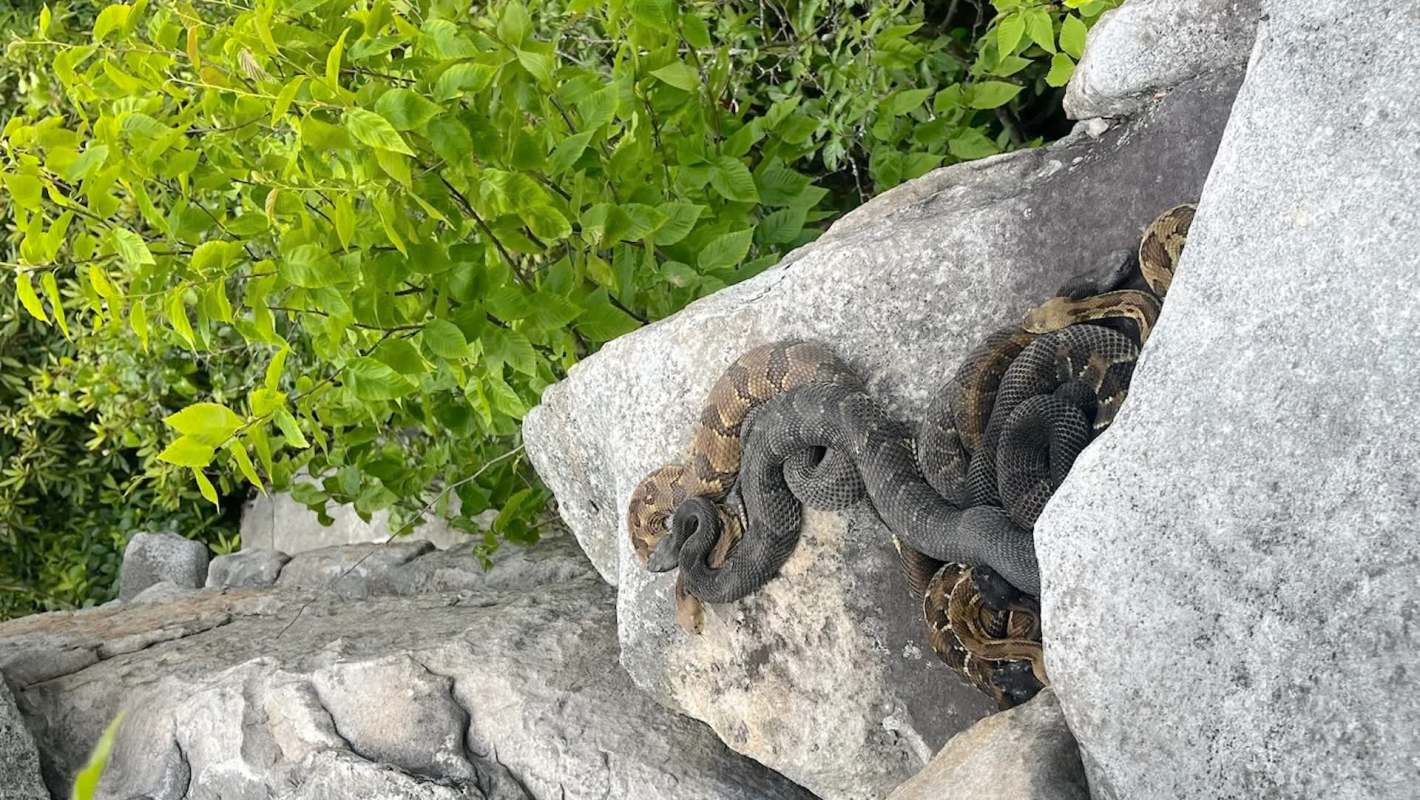
A cluster of timber rattlesnakes spotted on a cool Pennsylvania morning has drawn attention from snake fans online while also pointing out the importance of handling wildlife sightings carefully.
The photos showed multiple dark-colored rattlesnakes gathered on a ridge in the Laurel Highlands, an unusual sight even for locals familiar with the species' presence in the state.
Here's what to know
In a post on Reddit, the original poster wrote: "Got lucky seeing these guys all huddling together on a cool morning. Very happy seeing so many of these guys healthy in PA. At least 10 were on this ridge." They shared multiple photos of the snakes clustered together along the rocks.
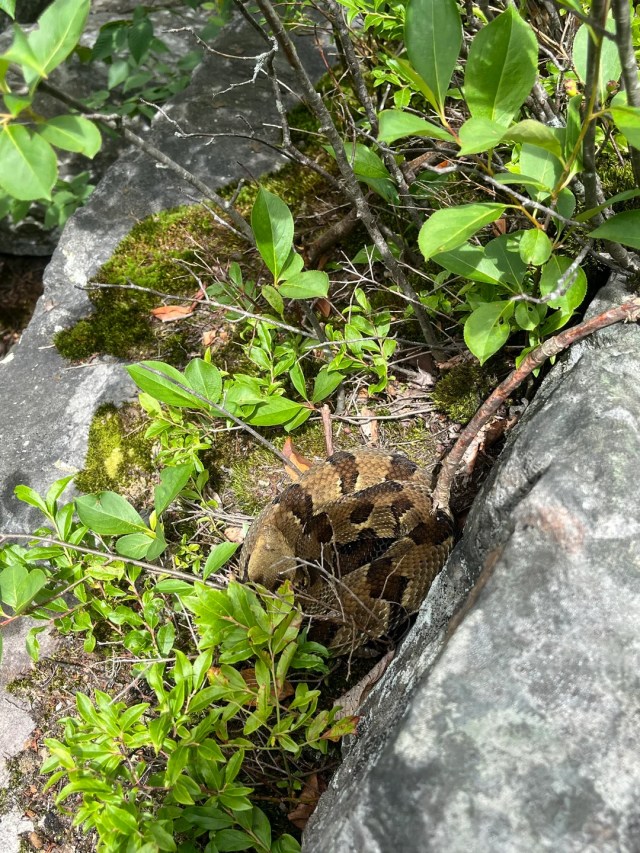
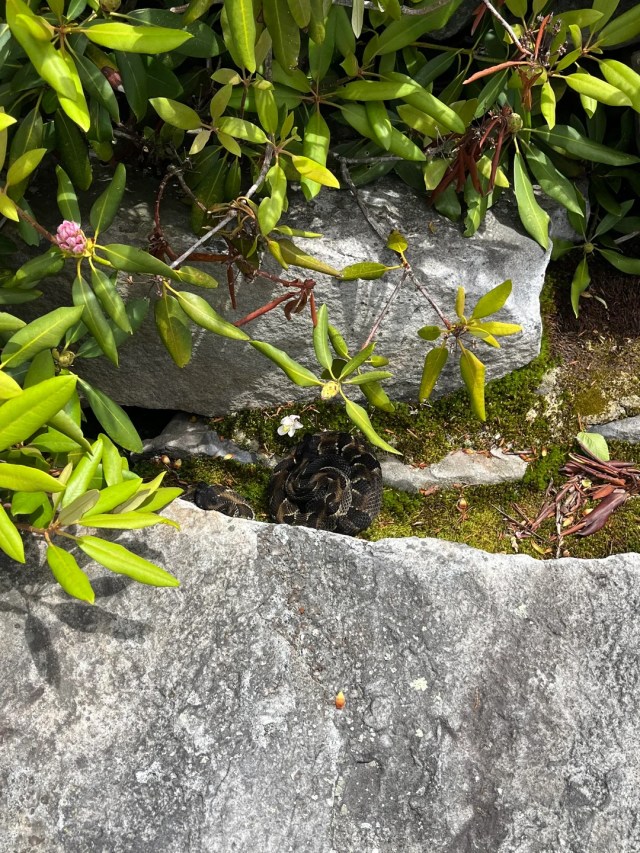
The discovery struck commenters as the kind of sighting wildlife officials should know about. One wrote, "Wow! You should report the location to your state wildlife service so they can be sure to protect it. I bet there's a big den nearby."
Concern about keeping the snakes protected came up again and again. After moderators removed overly precise location details and warned that "Poachers and people wishing to do snakes harm trawl electronic boards," another commenter added: "But for the love of puppies and kittens, DO NOT give out the location to anyone who asks here or anyone besides the state wildlife service."
Timber rattlesnakes are venomous, but they are also vulnerable in parts of their range, and several people in the thread noted how unusual and encouraging it was to see so many healthy snakes together in Pennsylvania.
TCD Picks » Quince Spotlight
💡These best-sellers from Quince deliver affordable, sustainable luxury for all




More background
Their coloring was part of what surprised readers, since timber rattlesnakes can look far darker than the standard rattlesnake image many people expect. One commenter wrote, "I had no idea timbers could be so dark!!!" Another replied, "They can be entirely black!"
Native snakes are often misunderstood, and that misunderstanding can lead to fear, harassment, or outright killing.
In this case, the animals appeared to be basking peacefully and undisturbed. But once an image is posted online, public attention to a sighting can create new risks for the animals if location information is shared.
Human activity may also help explain why encounters like this can feel increasingly common, or at least more visible.
More hikers, more digital sharing, and human developments encroaching on wildlife habitat can all raise the risks for species that depend on specific denning areas.
What can be done?
The most immediate step is also the simplest: keep your distance and avoid sharing exact locations publicly. That helps protect both the snakes and the people who might otherwise feel tempted to approach them.
There is also a formal way to log a sighting without exposing a sensitive site. One user wrote, "You can report to PARS (Pennsylvania Amphibian and Reptile Survey), they will obscure the exact location and they track data on all herps in the state." That kind of reporting can help researchers and wildlife officials monitor populations without exposing sensitive sites.
Because most bites happen when people try to handle, capture, or kill snakes, the safest response after encountering a venomous one is simply to back away and leave it alone.
The original poster appeared to understand that balance between excitement and responsibility: "Absolutely! These are my favorite species and I love seeing such healthy populations around PA. Gotta keep these ones undisturbed."

Get TCD's free newsletters for easy tips, smart advice, and a chance to earn $5,000 toward home upgrades. To see more stories like this one, change your Google preferences here.






