


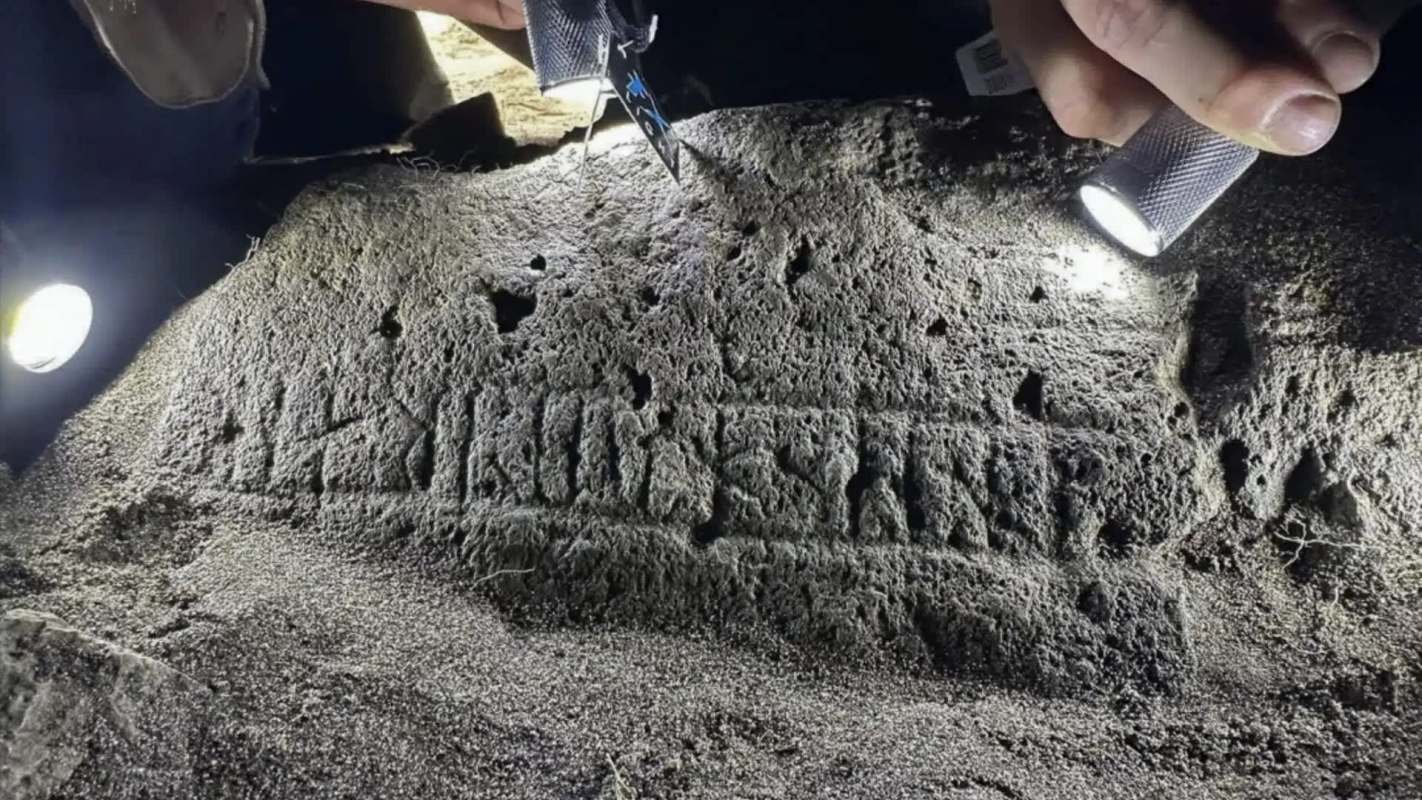
A worn stone lifted from beneath the floor of a ruined chapel in the Faroe Islands is giving archaeologists both a major breakthrough and an enduring mystery.
What remains on the artifact points to an Old Norse inscription, but time has erased much of the original message, Daily Galaxy reported.
Here's what to know
Excavators found the runestone at Á Sondum on Sandoy during work carried out by the Faroe Islands National Museum, Aarhus University, and Denmark's Moesgaard Museum.
The site has already helped researchers better understand settlement history across the islands.
Researchers believe the stone had been laid into the floor of a medieval chapel or small prayer house, as Daily Galaxy reported.
Early analysis suggests that the surviving words read "her hvílur," which can be translated as "here lies" or "here rests."
TCD Picks » Quince Spotlight
💡These best-sellers from Quince deliver affordable, sustainable luxury for all




That wording suggests the stone may once have marked a burial or memorial. Few runic inscriptions have survived in the Faroe Islands, making the find especially unusual.
But because the stone is broken and heavily worn, much of the text is still illegible.
More background
The Faroe Islands, in the North Atlantic between Iceland and Scotland, have a long medieval past shaped by Norse settlement and the later arrival of Christianity.
Archaeologists also uncovered fragments of a small statue of the Virgin Mary and baby Jesus, along with a kola, a type of small oil lamp.
The structure's east-to-west orientation and western entrance match features seen in medieval religious architecture, supporting the idea that it served as an oratory, or small prayer site.
Similar religious ruins have also been identified elsewhere in the Faroes, including Bønhúsberg on Mykines, Bønhústoft in Leirvík, and Bakki in Velbastaður.
What's being done?
To protect the fragile artifact from further wear, the stone has been moved to the Faroe Islands National Museum.
Archaeologists have also brought in a rune specialist to study the inscription more closely.
The central question is whether the stone was tied to a grave, created as a memorial, or served some other symbolic purpose inside the chapel.
A 3D scan is also being prepared to create a detailed digital model of the stone.
That should allow experts to examine faint carvings more carefully without repeatedly handling the original.

Get TCD's free newsletters for easy tips, smart advice, and a chance to earn $5,000 toward home upgrades. To see more stories like this one, change your Google preferences here.






