


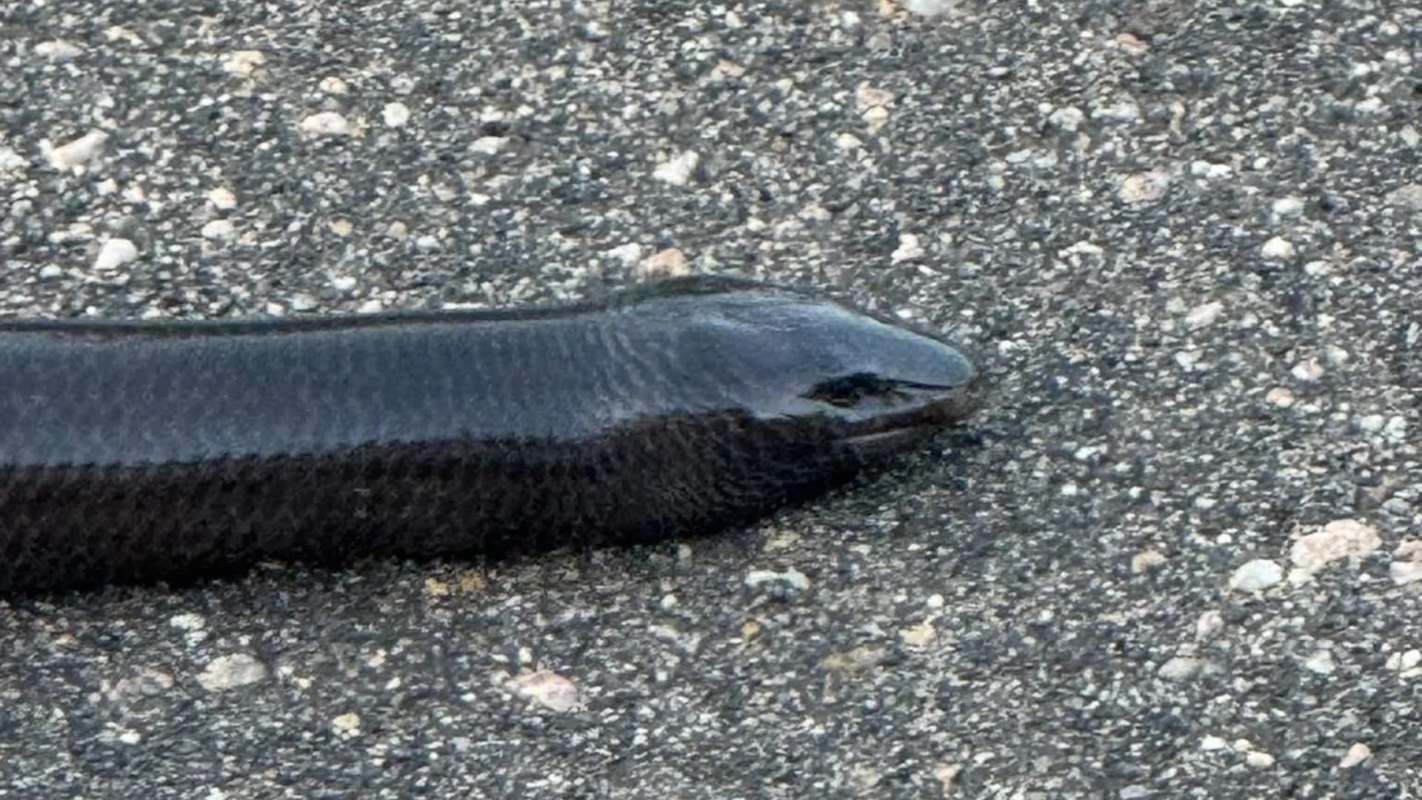
A creature gliding across a paved road in South Africa's Kruger National Park looked like a snake at first glance, but online wildlife fans on the r/whatisthissnake subreddit quickly noted that the animal was something even more unusual.
What happened?
In the initial post, the person who recorded the sighting and shared two photos added no details other than that they spotted it in Kruger National Park in South Africa.
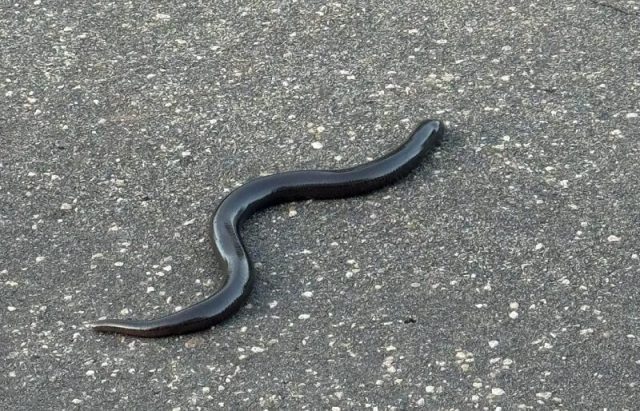
"It was slowly slithering along the tar road, and I was lucky enough to catch it on video," they later added in a follow-up.
Commenters quickly clarified that the animal was not a snake at all.
"This is not actually a snake, but a lizard," one user explained. "It's the Giant Legless Skink (Acontias plumbeus). Very very cool, I am jealous."
The animal identified in the comments, Acontias plumbeus, is a member of the Scincidae lizard family.
TCD Picks » Quince Spotlight
💡These best-sellers from Quince deliver affordable, sustainable luxury for all




Wikipedia notes that it is also known as the giant legless skink or giant lance skink and that it is found in South Africa, Eswatini, Mozambique, and Zimbabwe.
The site cited a study that described the species as living in dry savanna and in humus and leaf litter on woodland and forest floors. The entry also says it can appear in several colors, including light brown, dark brown, black, and intermediate gray.
Why does it matter?
The sighting happened on a tar road running through protected habitat. The skink was not doing anything unusual for a wild animal moving through its environment, but the human-built road made the encounter visible.
Roads, tourism traffic, and other forms of development often create the conditions for people to cross paths with wildlife more often than they otherwise would. In this case, the moment was harmless and memorable, but such encounters can also put animals at risk from vehicles.
Closer contact between people and wildlife is often shaped by human activity. Even when there is no attack or conflict, shared space can change animal behavior and increase stress or danger.
In this case, Redditors thought the snake might be satisfied with the encounter.
"Look at that smug eye in the second pic!" a user exclaimed. "He is probably so proud of himself that he tricked someone into thinking he is a snake! I'm proud of him too."
What can I do?
For visitors in parks and rural areas, the practical step is simple: slow down and stay alert on roads that cut through wildlife habitat. Animals that are small, camouflaged, or unexpected, like a legless lizard mistaken for a snake, can be easy to miss.
It is also important not to approach, touch, or try to move unfamiliar animals. Keeping a safe distance protects both people and wildlife, especially when identification is uncertain.
If an animal is on or near a roadway, observing it from a vehicle or reporting it to park staff, when appropriate, is often the safest choice. That kind of caution helps reduce stress on the animal while lowering the risk of injury.
Learning the difference between snakes and snake-like lizards, and understanding which species live in a region, can make outdoor travel safer and more rewarding without turning wildlife into a spectacle.
"His cranky little face is absolutely sending me," a user remarked. "So serious."

Get TCD's free newsletters for easy tips, smart advice, and a chance to earn $5,000 toward home upgrades. To see more stories like this one, change your Google preferences here.






